Sparta has a reputation that outpaces what you find when you arrive - and that contrast is itself worth understanding. The ancient Spartans famously rejected monumental architecture, which is why their city left fewer ruins than nearly any other major Greek power. What the modern city of Sparta offers instead is one of the Peloponnese’s best archaeological museums, a scattering of ancient site fragments, and a position at the centre of one of the richest day-trip networks in Greece: Mystras is 6km away, the Mani peninsula begins 50km south, and Kalamata is 60km west.
This is what to do in Sparta. All prices are approximate as of 2026.
Top Tours at a Glance
| Tour | Duration | Price (from) | Group Size | Highlights |
|---|---|---|---|---|
| Sparta & Mystras: Full-Day Guided Tour | Full day | from €55 | Small group | Byzantine ghost city, frescoed churches, Laconian landscape |
| Peloponnese: Sparta, Mystras & Mani Day Trip from Athens | Full day | from €70 | Up to 15 | Three Peloponnese highlights in one day from Athens |
| Mystras UNESCO Site: Private Guided Tour | 3–4 hrs | from €45 | Private | Despot’s Palace, Pantanassa Monastery, panoramic views |
| Sparta: Laconian Olive Oil & Food Tasting Tour | 3 hrs | from €35 | Small group | Local produce, olive groves, traditional Laconian cuisine |
Browse all Sparta and Peloponnese tours → GetYourGuide
Archaeological Museum of Sparta
Address: Agiou Nikonou 71, central Sparta Opening hours: Tuesday–Sunday 08:30–15:30 (verify current hours before visiting; summer hours may extend) Entry: Approximately EUR 6 as of 2026
The Archaeological Museum of Sparta is the non-negotiable first stop. The collection spans Neolithic to Roman periods and draws heavily on finds from Sparta itself and the surrounding Laconia region. The highlights are the Archaic-period sculpture gallery - including remarkable carved reliefs of Spartan warriors, unique votive offerings from the sanctuary of Artemis Orthia, and some of the earliest depictions of Spartan life in stone. There are also carved stelai (grave markers), terracotta masks, and bronzes that give a more textured picture of Sparta than the purely militaristic one most people arrive with.
The museum is small enough to cover in 90 minutes and well-curated. If you read the labels carefully you come away with a genuine sense of what made Laconian culture distinctive - the austerity, the communal values, the particular Spartan religious practices. Budget 2 hours if you read everything.
The Ancient Ruins of Sparta
Location: North of the city centre, signposted from the main road Entry: Free
The ancient ruins of Sparta are scattered and modest - which is historically accurate. Sparta was never meant to impress. The Spartans built with perishable materials (timber, unfired brick), kept buildings functional rather than decorative, and relied on their military reputation rather than their skyline as a deterrent. What survives is an acropolis with a theatre cut into the hillside (partly excavated), a sanctuary area, and sections of later Roman construction.
The theatre is the most visually satisfying part. It dates primarily to the Roman period but sits on Hellenistic foundations, and the views from the upper tiers - across the Eurotas river valley toward the Taygetos mountains - are exactly what you would hope for. The mountain backdrop is stunning. Budget 45–60 minutes for the ruins themselves; the walking approach through the olive groves takes about 20 minutes from the city centre.
The Sanctuary of Artemis Orthia (about 1km east of the city centre near the Eurotas river) is the other significant ancient site - this is where Spartan youths were subjected to ritual endurance tests, and where many of the museum’s votive offerings were excavated. The remains on-site are limited, but a visit puts the museum objects in context.
Mystras: The Byzantine Ghost City
Distance from Sparta: 6km west; 10 minutes by car or taxi (approximately EUR 10–12) Entry: Approximately EUR 12 as of 2026 Opening hours: Daily 08:30–15:30 (extended hours in summer - verify before visiting)
Mystras is the most significant site in the immediate area and deserves a half-day. It is a UNESCO World Heritage Byzantine city built on a steep spur of the Taygetos mountains - a fortified town that was the final flourishing of Byzantine culture before the Ottoman conquest in 1460. The population reached around 20,000 at its peak; today it is abandoned and entirely preserved.
The site climbs steeply through three levels: the lower town (with the Metropolis cathedral, the oldest church, dating to 1291), the upper town (the Despot’s Palace, the largest secular Byzantine building surviving in Greece), and the fortress at the summit. The frescoes in the churches - particularly those in the Perivleptos Monastery and the Pantanassa Convent - are extraordinary: 14th-century Byzantine painting at its finest, some of the best-preserved in Greece.
Wear proper walking shoes. The site involves significant climbing on uneven stone paths, and in summer the heat builds quickly above the tree line. Start early - 08:30 opening - and bring water. Allow 3–4 hours for a thorough visit; 2 hours if you focus on the highlights (Metropolis, Pantanassa frescoes, Despot’s Palace).
Leonidas Statue and Central Square
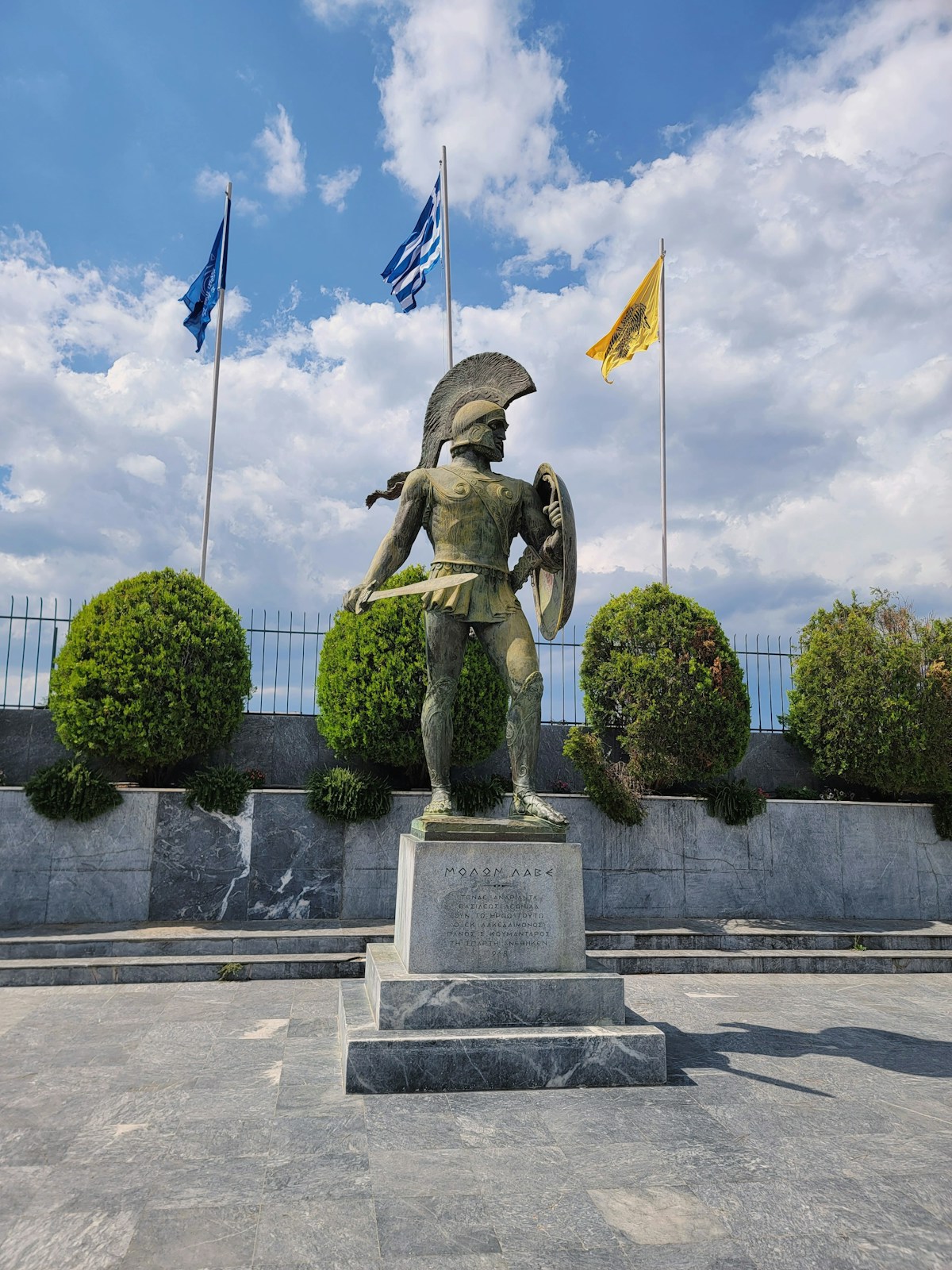
The bronze statue of Leonidas at the top of the main avenue (Konstantinou Paleologou) is the centrepiece of modern Sparta’s public space. It stands in front of the city’s central park and is surrounded by cafes - a good place for coffee after a morning at the museum. The square hosts a small evening promenade culture (volta) and is the social heart of the city. Entry free.
The Olympic Museum of Sparta (adjacent to the main square area) provides context on Sparta’s role in ancient athletics and the Olympic Games - the Spartans were dominant in the early Olympic Games before the city’s power declined. Entry approximately EUR 3–4 as of 2026.
Olive Oil Museum of Laconia
Location: On the road toward Mystras, approximately 2km from Sparta centre** Entry: Approximately EUR 4 as of 2026
The Laconia region produces some of the finest olive oil in Greece - the local variety (Athinolia) is among the most prestigious in the country. This small museum covers olive cultivation history, traditional pressing methods, and the role of olive oil in Laconian culture from antiquity onward. It is compact (45–60 minutes) but well-done. Local producers also sell oil at the museum shop at prices significantly better than supermarket rates.
Walking the City
Sparta itself is a pleasant walking city. The grid plan (it was redesigned by Otto’s German planners in the 1830s) is easy to navigate, and the combination of orange trees lining the main avenue, the Taygetos mountains visible from almost every street, and the general absence of tour groups makes for an unusually calm experience. The market street (Paleologou and side streets off it) has butchers, greengrocers, and kafeneions where the coffee is cheap and the clientele is entirely local.
A morning walk from the museum to the ancient ruins and back through the market takes about two hours and gives a better sense of the real Sparta than any single site.
Practical Notes
Getting around: Sparta city centre is walkable. For Mystras, take a taxi (EUR 10–12 one-way) or the local bus from the central bus station (several departures daily; approximately EUR 1.80 as of 2026). For the ancient ruins and Artemis Orthia sanctuary, both are within 25-minute walks of the centre.
When to visit: Spring (March–May) and autumn (September–October) are ideal - comfortable temperatures for walking, fewer visitors. Summer (July–August) is hot (regularly above 35°C) and the ancient sites offer little shade; start very early. Winter is mild and quiet; most sites remain open but verify hours.
Getting to Sparta: Direct buses from Athens (KTEL Lakonias, Athens terminal at Kifissos; approximately 3.5 hours, EUR 23–28 as of 2026). From Kalamata: approximately 60km, 1 hour by car. No train service currently operates to Sparta.