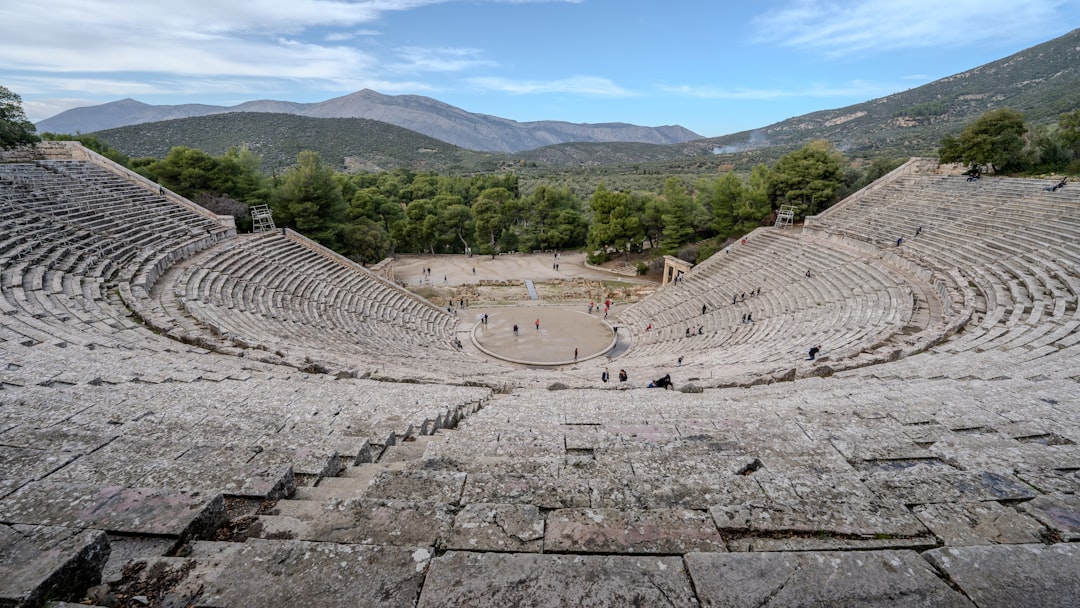
Nafplio is positioned at the centre of the Argolid - the corner of the Peloponnese that contains more significant ancient sites per square kilometre than almost anywhere else in Greece. Epidaurus, Mycenae, Tiryns, and Argos are all within 45 minutes. The beaches south of town are within 20. This makes Nafplio one of the most productive bases in the Peloponnese for visitors who want to cover serious archaeological ground without covering serious distances. Here is what to do with each day, with transport details and entry fees. All prices are approximate as of 2026.
Top Tours at a Glance
| Tour | Duration | Price (from) | Group Size | Highlights |
|---|---|---|---|---|
| Athens: Nafplio, Mycenae & Epidaurus Day Trip | 12 hrs | from €75 | Up to 20 | Lion Gate, Treasury of Atreus, ancient theatre acoustics |
| Nafplio: Mycenae Half-Day Guided Tour | 4 hrs | from €40 | Small group | Cyclopean walls, grave circles, museum entry |
| Nafplio: Epidaurus Ancient Theatre Tour | 3 hrs | from €35 | Small group | Theatre acoustics demonstration, Asklepion sanctuary |
| Nafplio: Peloponnese Wine and Olive Oil Experience | 4 hrs | from €55 | Small group | Nemea winery, olive grove, Agiorgitiko tasting |
Browse all Nafplio tours → GetYourGuide
Epidaurus
Distance: 30km east | Time needed: 3–4 hours
The ancient Sanctuary of Asklepios at Epidaurus was the most celebrated healing centre of the ancient world - a precursor to the hospital, where suppliants came to sleep in the sanctuary precinct and receive cures, with the god Asklepios appearing in their dreams to prescribe treatment. The complex also included baths, a gymnasium, a stadium, and the theatre that makes Epidaurus world-famous.
The Theatre of Epidaurus is the finest surviving ancient Greek theatre anywhere - 14,000 seats carved into a hillside in the 4th century BCE, with acoustics so precise that a coin dropped on the orchestra floor is clearly audible from the top tier. The geometry produces this effect naturally through the limestone seating and a suppression of low-frequency background noise. The Epidaurus Festival runs performances here every summer (June–August), mostly of classical tragedy and comedy; tickets sell out months in advance for prominent productions.
Beyond the theatre, the sanctuary complex itself is extensive: the abaton (the dormitory where patients slept for divine healing), the Tholos (a mysterious circular building whose function is still debated), the stadium, and the propylaia. The Archaeological Museum on site is small but well-organised, with architectural models that help contextualise the various structures.
Entry: Approximately EUR 12 as of 2026 (combined ticket for theatre and sanctuary).
Opening hours: Daily 8am–8pm (summer), 8am–3pm (winter). Confirm before visiting.
Getting there: By car, approximately 35–40 minutes on the coastal road from Nafplio. A KTEL bus runs from Nafplio bus station - check timetables, as services are limited to 2–3 per day. Guided day tours from Nafplio combining Epidaurus and Mycenae run approximately EUR 40–60 per person.
Mycenae
Distance: 25km northwest | Time needed: 2–3 hours
The citadel of Mycenae was the centre of the most powerful Bronze Age civilisation in Europe from approximately 1600 to 1100 BCE. At its peak, the Mycenaean empire controlled most of the Aegean, conducted trade across the Mediterranean, and may have inspired or participated in the Trojan War tradition. The site today is one of the most evocative in Greece - a fortified hilltop settlement with walls made of stones so large the ancient Greeks thought only the giants called Cyclops could have moved them.
The entrance to the citadel is through the Lion Gate - the only large-scale relief sculpture from prehistoric Europe still in its original position. Above the lintel, two lions flank a column in a composition that has been studied, interpreted, and replicated for 3,000 years. Beyond the gate is Grave Circle A (where Heinrich Schliemann excavated royal shaft graves in 1876), the remains of the palace, and, from the highest point, views across the Argolid plain to the sea.
The Treasury of Atreus (the so-called “Tomb of Agamemnon”), just outside the main fortification, is one of the most impressive Bronze Age structures in Europe: a corbelled tholos tomb 14 metres high, built without mortar, with the largest single stone lintel in ancient Greek architecture.
Entry: Approximately EUR 12 as of 2026 (combined ticket for citadel and treasury).
Opening hours: Daily 8am–8pm (summer), 8am–3pm (winter).
Getting there: By car, approximately 30 minutes north of Nafplio. KTEL buses run from Nafplio to Mykines village (adjacent to the site) 3–4 times daily.
Tiryns
Distance: 5km north | Time needed: 1–1.5 hours
Tiryns is Mycenae’s predecessor and contemporary - a Bronze Age citadel occupied since 5000 BCE and at its height between 1400 and 1200 BCE. The walls are among the most impressive Cyclopean masonry examples in Greece: the main fortification walls are up to 7.5 metres thick and 10 metres high in places, made of limestone blocks weighing up to 10 tonnes each.
The distinctive feature of Tiryns is the interior corbel-vaulted gallery system - a series of tunnels running through the thickness of the walls, with roofs formed by progressively overlapping stone slabs. Walking through them is a tangible demonstration of Mycenaean engineering at a scale Mycenae itself doesn’t provide.
Entry: Approximately EUR 6 as of 2026.
Combination: Tiryns is directly on the road north from Nafplio towards Mycenae - visit both in a half-day loop without significant backtracking.
Tolo
Distance: 12km south | Time needed: Half day to full day
Tolo is Nafplio’s beach resort - a small town 20 minutes south with a long, gently curving sand beach facing the Argolic Gulf. The bay is sheltered from the north by the Argolid hills, making the water calm most days. The beach itself is wide enough not to feel crowded except on peak August weekends; facilities include beach bar services, sunbed rental (approximately EUR 8–12 per pair as of 2026), and several tavernas behind the beachfront.
For swimming only, Karathona beach (2km south of Nafplio on the coastal footpath) is closer and quieter, but Tolo has much better facilities and more space.
Getting there: By car, 20 minutes south. KTEL buses run from Nafplio bus station to Tolo multiple times daily in summer (approximately 30 minutes, EUR 2–3).
Argos
Distance: 15km northwest | Time needed: 2–3 hours
Argos is one of the oldest continuously inhabited cities in Europe - settled since approximately 5000 BCE - with an archaeological museum that rivals Nafplio’s for the quality of its Argolid collection. The ancient theatre (one of the largest in ancient Greece, with capacity for 20,000) and the ruins of the ancient agora sit on the edge of the modern city, which most visitors drive past without stopping.
Argos is primarily of interest if you have a strong appetite for ancient history. If you’re choosing between Mycenae and Argos on the same day, Mycenae has more to see. If you have extra time, the Argos Archaeological Museum on the main square is excellent.
Entry: Approximately EUR 6 for the Argos Archaeological Museum as of 2026. The theatre and agora ruins are typically free access.
For what to see in Nafplio itself, see our Nafplio things to do guide. To plan a broader Peloponnese circuit, see our Peloponnese road trip itinerary.
Book Nafplio tours and day trips with GetYourGuide. Compare car hire options in Greece - essential for exploring beyond the main towns. Pick up a Greece eSIM before you fly - keeps you connected without roaming charges.
Search hotels in Nafplio, Greece on Booking.com
See Also
- Nafplio Travel Guide - full city guide
- Things to Do in Nafplio - in-city sights
- Best Restaurants in Nafplio - dining in the old town
- Epidaurus Guide - the ancient theatre, 35km southeast
- Mycenae Guide - the Bronze Age citadel, 25km north
- Peloponnese Road Trip Itinerary - the full Peloponnese circuit
- Kalamata Travel Guide - the Peloponnese’s second essential base
- Athens Day Trips - Nafplio is one of the most popular Athens day trips