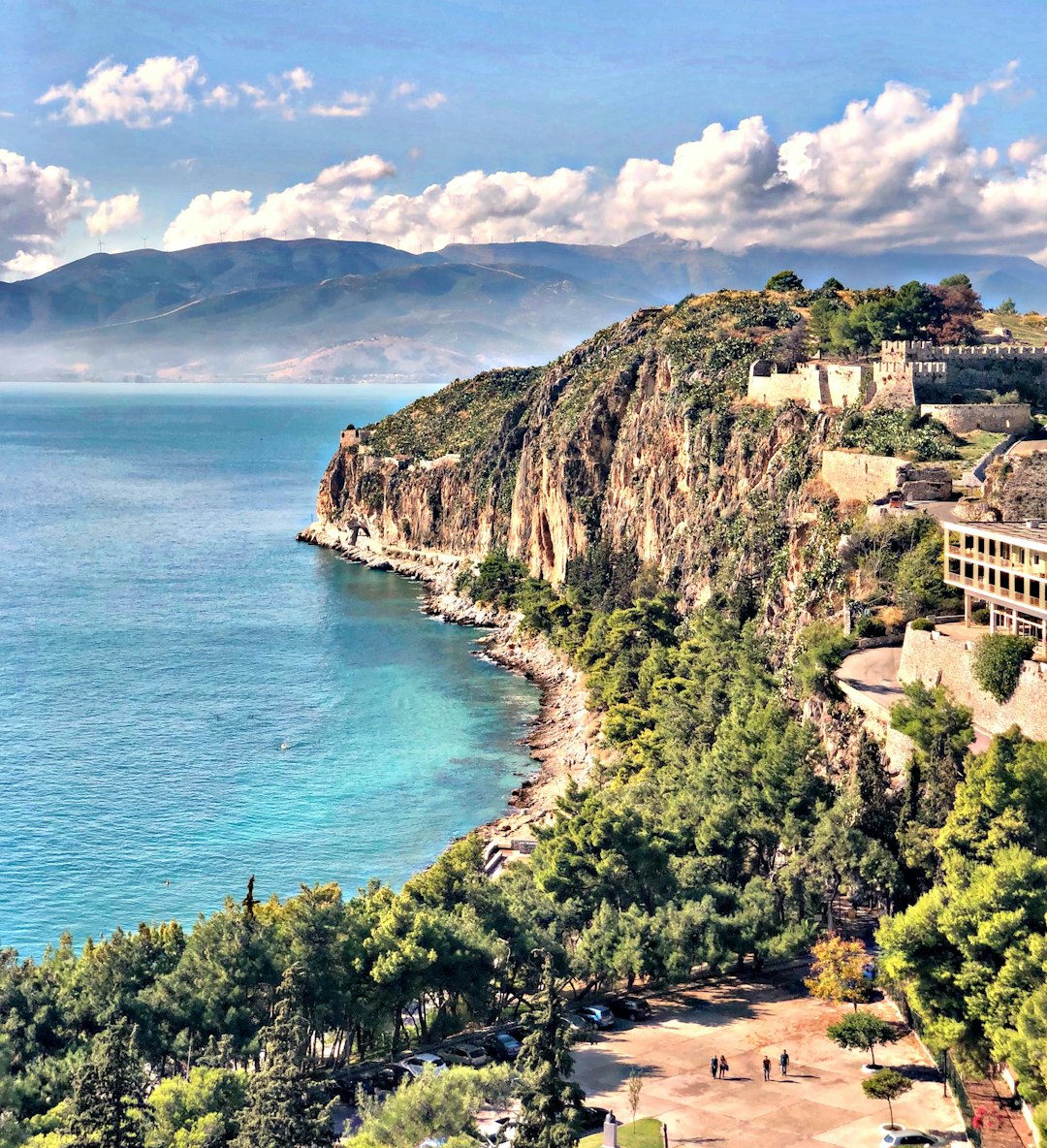
Nafplio was the first capital of modern Greece - a brief but consequential distinction that left the town with an Italian-designed old quarter, two imposing Venetian fortresses, and a neoclassical dignity that the subsequent capital Athens never quite matched in terms of human scale. Today it is one of the most satisfying small towns in Greece: compact enough to walk everywhere, serious enough historically to reward proper attention, and close enough to the major sites of the Peloponnese to work as a base for several days of archaeology.
Here is what to do in Nafplio and its immediate surroundings. All prices are approximate as of 2026.
Top Tours at a Glance
| Tour | Duration | Price (from) | Group Size | Highlights |
|---|---|---|---|---|
| From Athens: Mycenae, Nafplio & Epidaurus Day Tour | Full day | from €60 | Small group | Lion’s Gate, ancient theatre, Nafplio old town free time |
| Nafplio: Old Town Walking Tour | 2.5 hrs | from €25 | Up to 12 | Venetian architecture, Bourtzi history, local food stops |
| From Nafplio: Mycenae, Corinth Canal & Epidaurus | 8 hrs | from €55 | Small group | Three UNESCO-level sites in one day, expert commentary |
| Nafplio: Insider Tour with Mycenae & Epidaurus | Full day | from €85 | Private | Private guide, flexible itinerary, photo opportunities |
Browse all Nafplio tours → GetYourGuide
Palamidi Fortress
The Palamidi is the dominant feature of Nafplio’s skyline - a Venetian fortification built between 1711 and 1714 on a rocky hill 216 metres above sea level. It is large, well-preserved, and the views from the ramparts across the Argolic Gulf and the Peloponnese interior are among the best from any fortress in Greece.
The fortification is not a single castle but a cluster of eight semi-independent bastions connected by internal walls and passages. The most significant are the Miltiades bastion (with the main fortification museum) and the Andreas bastion, which was used as the prison of Kolokotronis - the commander of the Greek War of Independence - from 1833–1834.
Access: 999 steps from the old town (the most dramatic approach), or by road from the back of the hill (signposted from the Nafplio ring road). By car, there is a small car park near the main entrance.
Entry: Approximately EUR 8 as of 2026.
Opening hours: Daily 8:30am–7:30pm (summer), 8:30am–3pm (winter). Confirm hours before visiting.
Tip: Climb the steps in the morning or late afternoon - midday in summer at these heights and sun exposure is uncomfortable.
Bourtzi Island Fortress
The Bourtzi is a small fortress sitting on a rocky islet in the middle of Nafplio harbour, 500 metres offshore. It was built by the Venetians in the 15th century to control the harbour entrance. For much of the 19th and early 20th century it served as the residence of the public executioner - who was required to live on the island, separate from the town.
The island is accessible by small boat from the main waterfront promenade (Bouboulinas Street). Boats run throughout the day in summer, approximately every 30 minutes.
Cost: Approximately EUR 5 return boat trip as of 2026. Entry to the fortress itself is included.
Opening hours: Subject to weather and season - check with the boat operators on the quayside.
Nafplio Old Town
Nafplio’s old town - the area below the Palamidi and Acronafplia rocks, bounded by the sea on two sides - was substantially redesigned during the Venetian and Ottoman periods and then remodelled again under Bavarian rule when Nafplio was the Greek capital (1823–1834). The result is an unusually coherent townscape of Venetian townhouses, neoclassical civic buildings, and Ottoman fountains, all at a scale that remains walkable and human.
Syntagma Square: The main square of Nafplio, at the heart of the old town. The Venetian warehouse on the north side is now the Archaeological Museum; the old parliament building (where the Greek constitution was first drafted) is on the south side; and a second Venetian building houses the Bank of Greece. The mosque in the square - one of two surviving Ottoman mosques in Nafplio - was used as a parliamentary cinema during the capital years.
Staikopoulou Street: The main pedestrian shopping street of the old town, lined with neoclassical buildings. This is where most of the cafes, shops, and tourist restaurants concentrate.
Acronafplia: The older fortification hill above the old town (lower than Palamidi) accessible by a lift from Polyzoidou Street or by steps from the old town. The fortress itself is now partially a hotel, but the paths and ramparts above are walkable and offer close-up views of the Bourtzi and the harbour without the full Palamidi climb.
Nafplio Archaeological Museum
Located in the Venetian warehouse on Syntagma Square, the Archaeological Museum holds artefacts from the wider Argolid region - Mycenae, Tiryns, Argos, and Nafplio itself. The collection includes full Mycenaean bronze armour (the Dendra armour, dating to approximately 1400 BCE) and a well-presented Linear B tablet collection.
Entry: Approximately EUR 6 as of 2026.
Opening hours: Tuesday–Sunday 8:30am–4pm (summer hours may extend). Closed Monday.
Arvanitia Beach and Waterfront Walk
Arvanitia is a small pebble beach tucked below the Palamidi fortification walls, a 10-minute walk from the old town along the coastal path. The water is clear, the setting is excellent (the fortress walls rise directly above), and a beach bar operates through the summer with sunbeds at approximately EUR 8–12 per pair as of 2026.
Beyond Arvanitia, the coastal path continues south around the headland towards Karathona beach (approximately 35 minutes on foot) - a longer, sandier stretch with good swimming and beach tavernas.
Komboloi Museum
A small private museum on Staikopoulou Street dedicated to the Greek worry bead (komboloi) - an object with roots in Ottoman prayer beads that became a secular object of contemplation and habit in 20th-century Greek culture. The collection covers worry bead history across the Mediterranean and the Levant. Entry approximately EUR 4 as of 2026.
For where to eat in Nafplio, see our Nafplio restaurants guide. For day trips to Epidaurus, Mycenae, and Tolo, see our Nafplio day trips guide. For the full Peloponnese context, see our Peloponnese road trip itinerary.
Book Nafplio tours and day trips with GetYourGuide. Pick up a Greece eSIM before you fly - keeps you connected without roaming charges.
Search hotels in Nafplio, Greece on Booking.com
See Also
- Nafplio Travel Guide - full city guide with accommodation and getting there
- Best Restaurants in Nafplio - old town dining and the best waterfront tavernas
- Day Trips from Nafplio - Epidaurus, Mycenae, Argos, and Tolo
- Epidaurus Guide - the ancient theatre, 35km from Nafplio
- Mycenae Guide - the Bronze Age citadel, 25km north
- Peloponnese Road Trip Itinerary - the full Peloponnese circuit
- Athens Travel Guide - 2.5 hours north, the common arrival point
- Kalamata Travel Guide - the other essential Peloponnese base