Most travellers dismiss winter as a closed season for Greece. They are missing something real. From December through February, the country drops its tourist mask entirely. Prices fall by 40–60% on accommodation. The Acropolis, Delphi and Olympia are walkable without a crowd at any gate. Athens and Thessaloniki run proper Christmas celebrations - not manufactured Christmas markets but genuinely festive city atmospheres with lights, nativity scenes, food, and music. And in Crete, the south coast stays mild enough for long coastal walks and al fresco lunches well into January.
This guide covers what actually happens across Greece’s main winter destinations, what the weather looks like by region, and the practical things you need to know before you go.
Why Visit Greece in Winter
The case for winter Greece is straightforward once you’ve done the summer once. In July and August, Santorini runs at 8,000 cruise passengers per day (with an official cap now in place), hotel prices in Athens hit €250–€350 per night for midrange rooms, and queues at the Acropolis entrance stretch 45 minutes before the gates even open.
In January, a four-star hotel in central Athens costs €80–€120 per night. The same Acropolis ticket - €30 in high season - costs €15 from November through March. Meteora’s monasteries, which in summer feel like a conveyor belt, become meditative in the mist and cold. You can spend a morning at the ruins of Delphi with perhaps 20 other visitors in the entire site.
Beyond price and crowd dynamics, winter has its own events. Greek Orthodox Christmas is celebrated on 25 December, with Epiphany (Theophania) on 6 January - one of the most important dates in the Greek calendar, marked by the Blessing of the Waters ceremony in every coastal town and island harbour. In Thessaloniki, the food culture is better appreciated in winter, when the meze bars and tavernas are full of locals rather than tourists.
The honest caveat: if your Greece consists of beach time, boat trips and café terraces in the sun, winter is the wrong season. Most island businesses close entirely between November and Easter. The Aegean islands - Mykonos, Santorini, Paros, Naxos - operate at skeleton capacity in January, with few restaurants open and irregular ferry schedules. Greece in winter works best when your priorities are history, food, walking and the feeling of a place being lived in rather than performed.
Athens in Winter
Athens in winter is the most underrated version of the city. The light is cooler and clearer than the bleached-out brightness of August. The Plaka neighbourhood, usually gridlocked with tour groups, becomes a neighbourhood again - locals eating lunch at outdoor tables on mild afternoons, shopkeepers with time to talk.
The main sites stay open year-round, though with reduced winter hours (typically 08:00–15:00 rather than 20:00). The Acropolis Museum charges €15 entry (full price: €20 in summer) and is rarely crowded. Plan 90 minutes minimum - it’s one of the finest archaeological museums in Europe and deserves more than a rushed pass-through. For the Acropolis itself, arriving at opening time means you can walk the Parthenon in near-solitude; aim for a weekday in January or February.
Christmas in Athens runs from early December through Epiphany. Syntagma Square hosts a large Christmas tree and lights. The neighbourhood of Monastiraki is strung with fairy lights and the market (already permanent) leans into a festive mood. Restaurants don’t close early and the city doesn’t empty - Athens has a year-round population of nearly 4 million.
Epiphany (6 January) is particularly worth seeing in Piraeus, the port district. Priests bless a wooden cross and throw it into the water; young men dive in to retrieve it, with the one who succeeds believed to receive good luck. Similar ceremonies take place in coastal Attica.
Practical Athens winter details:
- Average January temperature: 9°C low / 13°C high
- Rain: January and February are Athens’s wettest months, averaging 10–12 rainy days
- Hotel prices: €80–€130/night for 3-star; €120–€200 for 4-star (vs. €200–€350 in July)
- Athens city guide covers neighbourhoods, restaurants and getting around
Thessaloniki in Winter
Thessaloniki has a serious argument for being Greece’s best winter destination. The city’s food culture - Byzantine, Ottoman, Jewish, Macedonian - is best engaged in winter tavernas over long lunches of loukaniko sausages, grilled peppers, and the local white wine from Naoussa. The Modiano and Kapani markets are fully operational year-round, and the city doesn’t orient itself towards tourists in the way that Athens does.
The White Tower on the waterfront promenade is one of those monuments that actually improves in winter grey - the Thermaic Gulf behind it is a metallic blue, and the walk along the waterfront to the old walls of the Upper Town (Ano Poli) is pleasant on any dry afternoon.
Byzantine churches: Thessaloniki’s UNESCO-listed Byzantine churches (Hagia Sophia, Rotunda, Osios David) are open year-round and rarely crowded in winter. Entry to most is free or €2–€4. The Rotunda is currently undergoing partial restoration but the interior remains accessible.
Christmas and New Year in Thessaloniki is among the liveliest in Greece. The Aristotelous Square tree and lights installation is substantial, and the city runs a series of free outdoor concerts through December. Greeks from across Northern Greece come to Thessaloniki for the New Year period - hotel prices spike 20–30% on New Year’s Eve specifically, so book ahead if that’s your target date.
Weather: Thessaloniki is colder than Athens - average January lows hit 3–4°C with occasional overnight frost, and snow falls 2–4 times per winter, typically in January and February. Rain is more frequent than Athens and the tramontane wind off the mountains can make the waterfront cold. Pack layers.
- Average hotel price: €60–€100/night for 3-star in January
- Thessaloniki city guide covers all neighbourhoods and what to see
- Things to do in Thessaloniki has the full museum and site rundown
Crete in Winter
Crete in winter is the open secret that long-stay travellers have known for years. The island is large enough that it never fully closes - Heraklion operates as a working city of 140,000 people year-round, and Chania retains a skeleton of open restaurants and hotels. The south coast, sheltered by the White Mountains, has the mildest winter climate in Greece: average January highs of 15–16°C in Palaiochora and Sougia, which is enough for coastal walks and occasional outdoor lunches.
Heraklion is the practical base. The city itself has a full range of services, a functioning nightlife, and two of Greece’s most important winter-ready sites: the Heraklion Archaeological Museum (covering Minoan civilisation, entry €15, open year-round) and the Palace of Knossos, 5km south, which has shorter queues in January than any other month. Knossos entry is €15 in high season; free on the first Sunday of the month November through March.
Chania in winter retains enough open restaurants and cafés to be genuinely pleasant. The Venetian harbour is at its most atmospheric in low light, and the old town is walkable without the summer boutique-crawl atmosphere. Expect 15–20% of businesses to be closed; the rest welcome the off-season custom.
Rethymno is increasingly popular with digital nomads in winter for its combination of affordable long-stay rentals (from €500–€700/month for a furnished apartment), reliable WiFi infrastructure, and mild enough climate to sit outside in December.
For the full picture: Heraklion city guide and the Crete things to do page.
Meteora in Winter
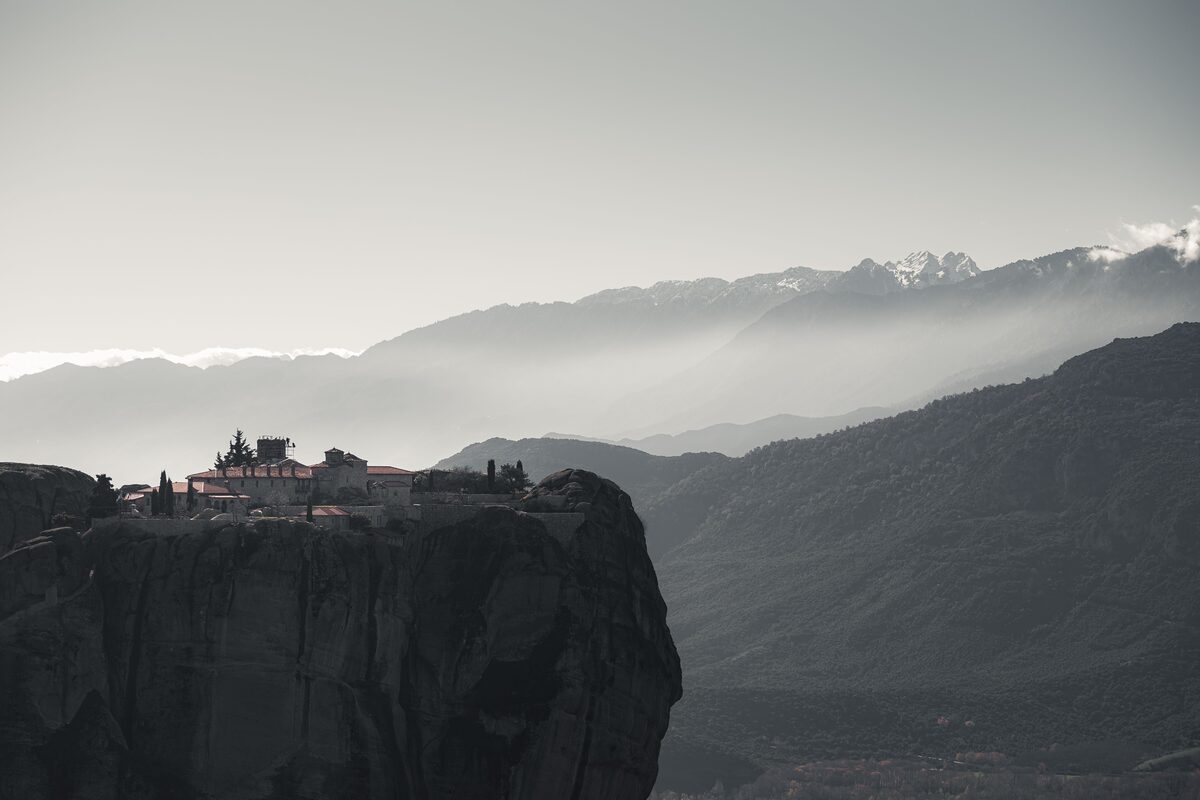
Meteora is, genuinely, more atmospheric in winter than in summer. The famous mist that fills the valleys between the rock pillars is a winter phenomenon - it forms in the cold mornings and lifts slowly, leaving the monasteries appearing to float. Snowfall occurs 2–4 times per winter on the rocks themselves; when it does, the scene is extraordinary.
The six active monasteries open to visitors (Great Meteoron, Varlaam, Rousanou, St. Nicholas, Holy Trinity, St. Stephen) operate reduced winter hours: typically 09:00–13:00 and 15:00–17:00, closed one weekday each (vary by monastery). Entry per monastery is €3. All six are within walking or cycling distance of each other; a full day visit covers all of them.
The nearest town, Kalambaka, has year-round hotel infrastructure at winter prices (€50–€80/night for midrange). The town’s restaurants serve hearty Thessalian cuisine - grilled meats, pies, local cheeses - suited to cold weather. Kastraki, the smaller village immediately below the rocks, is quieter and closer to the walking trails.
Getting there: Thessaloniki to Kalambaka by train takes 3.5 hours (from €15). Athens to Kalambaka is 4 hours by intercity bus or train (from €18). Car rental opens up the surrounding mountain roads, which are driveable in most winter weather except after heavy snow.
- Meteora city guide covers accommodation, monastery hours and hiking routes
- Meteora tours for guided monastery visits from Kalambaka
Weather Across Greece: December–February at a Glance
| Region | Dec high/low | Jan high/low | Feb high/low | Rain days/month | Snow? |
|---|---|---|---|---|---|
| Athens | 14°C / 8°C | 13°C / 9°C | 14°C / 9°C | 10–12 | Rarely |
| Thessaloniki | 10°C / 4°C | 9°C / 3°C | 11°C / 4°C | 9–11 | 2–4 days/winter |
| Meteora | 9°C / 2°C | 8°C / 1°C | 10°C / 2°C | 10–13 | 4–6 days/winter |
| Heraklion (Crete) | 17°C / 11°C | 16°C / 10°C | 16°C / 10°C | 9–11 | No |
| Chania south coast | 17°C / 12°C | 16°C / 11°C | 16°C / 11°C | 7–9 | No |
| Ioannina | 8°C / 2°C | 7°C / 1°C | 9°C / 2°C | 12–15 | Yes - regular |
| Northern Greece (Kavala, Xanthi) | 9°C / 3°C | 8°C / 2°C | 10°C / 3°C | 10–12 | Occasional |
The Aegean islands - Cyclades, Dodecanese - are mild but often wet and windy, with ferry disruptions common December through February. Most island accommodation and restaurants close. Only consider the islands in winter if you’re content with minimal services.
Practical Winter Travel Tips
Transport: Domestic flights and trains run normally. Inter-island ferries operate reduced schedules and are subject to weather cancellations - always check the day before and have a flexible itinerary if island hopping in winter. Athens–Thessaloniki is well served by intercity train (5.5 hours, from €25) and regular bus (6 hours, from €20).
Accommodation: Book directly with hotels rather than through large booking platforms when possible - off-season rates are negotiable by phone or email, and direct bookings often include extras (breakfast, airport pickup) not available through OTAs. In January, Athens has genuine bargains at properties that run high-season waiting lists.
What’s closed: Expect many restaurants in tourist-facing areas (Santorini, Mykonos, most Cyclades) to be closed. In Athens and Thessaloniki, closures are minimal. In Crete, aim for Heraklion or Chania rather than resort towns like Hersonissos or Malia.
Clothes: Athens and Thessaloniki require a proper winter coat for evenings - temperatures feel colder than they are due to the northern wind (vardaris in Thessaloniki). Crete is warmer but coastal winds are sharp. A waterproof layer is essential everywhere.
ETIAS from 2026: If you’re entering from a country that requires ETIAS (EU travel authorisation), make sure to apply in advance - Greece ETIAS guide covers the current requirements.
Budget: January is the cheapest month to visit. A realistic mid-range budget (decent hotel, two meals out, one site entry per day) runs €80–€120 per person per day in Athens and Thessaloniki; less in Meteora or Crete outside Heraklion.
Month-by-Month Winter Breakdown
We have detailed guides for each winter month if you want the full picture:
- Greece in December - festive atmosphere, Christmas events, the best prices of the year
- Greece in January - the quietest month, Epiphany, lowest prices
- Greece in February - Carnival (Apokries) in Patras and elsewhere, first wildflowers, prices starting to rise
For broader seasonal context, our best time to visit Greece guide covers all 12 months with honest trade-offs.
Plan Your Trip
Winter suits a slower, immersive trip rather than a beach tick-list. Athens is at its most liveable - queue-free Acropolis, half-price hotels, good coffee weather. Meteora in snow is among the most striking sights in Europe and the monasteries stay open year-round. Patras Carnival (January–February) is the biggest street festival in Greece. Crete’s south coast rarely drops below 15°C even in January, making it the warmest winter destination in the country.
✈️ Book flights to Greece - lowest fares of the year 🛡️ Travel insurance - especially if skiing at Parnassos 🗺️ Meteora tours - dramatic in winter conditions 📱 eSIM for Greece