Meteora Travel Guide: Sandstone Monasteries & Kalambaka
Six Orthodox monasteries perched on sheer sandstone pillars, UNESCO World Heritage-listed, and how to visit from Kalambaka without the crowds.
Guides for Meteora
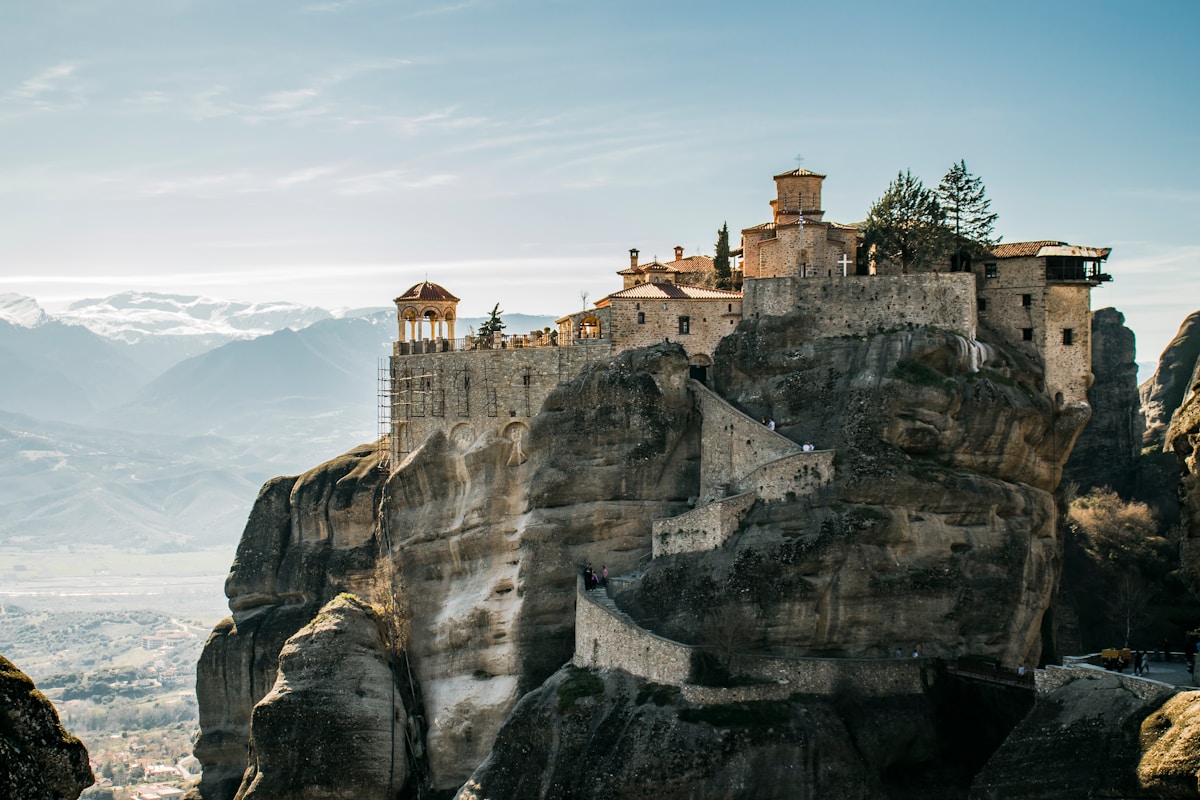
Meteora means “suspended in the air” in Greek - an apt description of 24 Byzantine monasteries built on the summits of sandstone pillars that rise abruptly from the plain of Thessaly. The monks who built them (from the 14th century onward) were deliberately seeking inaccessibility from the secular world; they hauled construction materials and themselves up the rock faces in rope nets and retractable ladders. Today the site is a UNESCO World Heritage cultural and natural landscape - one of the most dramatic in Europe.
The Monasteries
Six monasteries remain active (all founded in the 14th–16th centuries). They are listed here in the standard circuit order:
Great Meteoron (Holy Monastery of the Transfiguration): The largest and oldest monastery (founded 14th century) - houses a good Byzantine museum and a treasury. Entry €3 adult. Closed Tuesday. Open 9am–5pm (4pm in winter).
Varlaam: The second-largest, with excellent 16th-century frescoes and a working trapeza (refectory) still in original condition. Entry €3 adult. Closed Thursday. Open 9am–4pm (3pm in winter).
Roussanou (St Barbara): A nunnery built on a narrow pinnacle - the most precarious position of all six monasteries. The church frescoes (16th century) are particularly vivid. Entry €3 adult. Closed Wednesday.
Holy Trinity: The most remote and dramatic monastery - used as a filming location in the James Bond film For Your Eyes Only (1981). Access via 140 steps cut into the rock face. Entry €3 adult. Closed Thursday.
St Nicholas Anapafsas: The smallest monastery, with frescoes by the Cretan master Theophanes (1527) - excellent condition and relatively uncrowded. Entry €3 adult. Closed Friday.
St Stephen: The most easily accessible (no steps - connected to the plateau by a footbridge). Now a nunnery; houses an excellent Byzantine museum with manuscripts and ecclesiastical objects. Entry €3 adult. Closed Monday.
Opening hours vary by season and monastery - confirm current hours at the Kalambaka tourist information office or at your accommodation before planning your day.
Hiking
Meteora has a trail network connecting the monasteries and traversing the rock formations - an excellent alternative to the circuit by road or tour bus. The main trail system (marked with red-and-white waymarkers) links all six monasteries.
The monastery circuit trail: Approximately 10km, 4–5 hours at a relaxed pace. The path passes below rock faces, through woodland, and between pinnacles - a very different perspective from the road.
Sunset viewpoints: The main car park above Holy Trinity monastery offers the most photographed sunset view. The viewpoint above St Stephen gives good views of the entire rock formation from the east. Both fill with visitors in the late afternoon in season.
Climbing: Rock climbing on the Meteora pillars was banned inside the protected zone for several years but has been partly reopened on designated routes. Contact the Kalambaka climbing club for current access information.
Kalambaka
The base town for Meteora - a practical rather than beautiful place, rebuilt after WWII destruction. The old quarter (Kastraki, 2km from Kalambaka centre) is more atmospheric and closer to the rock formations.
Where to stay:
Kalambaka: Meteoritis Hotel (central, from approximately €75/night), Alsos House (well-run family hotel, from approximately €65/night), Guesthouse Stefani (basic but clean, from approximately €50/night).
Kastraki village: Pyrgos Adrachti Hotel (boutique hotel with rock formation views, from approximately €110/night), Kastraki Hotel (simple, quiet, from approximately €60/night), Doupiani House (family-run, rock views, from approximately €70/night).
Where to eat:
Meteoritis Taverna (Kalambaka): Reliable traditional food in the town centre, good for a straightforward dinner before the next day’s monastery circuit. Approximately €15–22 per person.
Taverna Gardenia (Kastraki): Good home cooking in the quieter village, approximately €14–20 per person.
Taverna Panellinia (Kalambaka): The most consistently recommended restaurant in town - traditional Thessalian dishes, grilled meats, approximately €18–25 per person.
For a more detailed guide to accommodation in Kalambaka and Kastraki, see our where to stay near Meteora guide.
Getting Around Meteora
The monastery circuit road is accessible by car, organised tour, or the Meteora bus (from Kalambaka main square - a limited service that covers most monasteries in season, approximately €1.80 per journey). Most visitors hire a car or join a guided tour for the most flexibility.
Walking: From Kastraki village, all six monasteries are within 3–6km on foot - manageable if you start early and are comfortable on uneven paths.
Guided tours: Offered from Kalambaka, Thessaloniki, and Athens. Athens-based day tours are very long (3.5 hours each way) and rushed; an overnight is strongly recommended for any meaningful visit.
History of the Monasteries
The first hermit monks arrived in the Meteora rock formations in the 11th century, living in natural caves. The formal monastery community developed under Saint Athanasios Meteorites, who founded the Great Meteoron monastery in the mid-14th century. The 14th and 15th centuries saw rapid expansion - at the peak, 24 monasteries were active on the rock summits.
Access was deliberately impossible: construction materials, food, and the monks themselves were hauled up in rope nets and wooden ladders drawn up after use - the original form of security. Permanent stairs were only cut into the rock in the 1920s. The monasteries survived Ottoman occupation relatively intact because of their inaccessibility, and their libraries and treasuries contain manuscripts and icons that are among the most valuable in the Orthodox world.
Six monasteries remain active today; the other 18 are abandoned ruins, visible as dark shapes on the smaller pinnacles. The active monasteries maintain small monastic communities - Great Meteoron has approximately 12 monks, others fewer.
Practical Information
Dress code strictly enforced: Women in skirts below the knee (not trousers - check each monastery’s specific rules). Men in long trousers. Shoulders covered for both. Most monasteries provide wraps at the entrance for visitors who arrive underprepared. Photography is generally permitted in the courtyards and exterior, not inside churches.
Entry fees: €3 per monastery (as of 2026). Six monasteries = €18 total. No combined ticket - each monastery has its own admission.
Photography note: The interior frescoes of the monasteries are some of the most valuable paintings in Greece - extremely old and fragile. Flash photography is prohibited inside the churches. Use high ISO settings or simply look rather than photograph.
Best time to visit: Early morning (9–10am) and late afternoon (after 3pm) have fewer tour groups. Midday (11am–1pm) is peak crowd time, when multiple tour buses arrive simultaneously.
For more detail, see our guides to day trips from Meteora and Meteora tours.
Book Meteora monastery tours and guided hikes with GetYourGuide.
See Also
- Things to Do in Meteora - monastery visits, hiking trails, and sunset viewpoints
- Best Restaurants in Meteora - dining in Kalambaka and Kastraki villages
- Day Trips from Meteora - Thessaloniki, Trikala, and the Vikos Gorge region
- Meteora Tours - guided monastery tours, sunrise hikes, and rock climbing
- Thessaloniki Travel Guide - the nearest major city, 4 hours south
- Delphi Travel Guide - the other great pilgrimage site on the mainland
- 1-Week Greece Itinerary - placing Meteora in a broader Greece trip plan
- Getting Around Greece - trains and buses to Kalambaka
- Best Time to Visit Greece - when Meteora monasteries are least crowded
Frequently Asked Questions
- How do I get to Meteora?
- By train: Athens Larissa Station to Kalambaka (approximately 4.5 hours, change at Paleofarsalos, from €15 - the most scenic approach). By bus: KTEL from Athens Liosion Terminal to Kalambaka (approximately 4.5 hours, from €28). By car: approximately 3.5 hours from Athens (335km via the A1 motorway). Kalambaka is the base town; the monasteries are 2–6km above the town.
- How many monasteries can you visit in Meteora?
- Six of the original 24 monasteries remain active and open to visitors. Each has its own opening hours and a weekly closure day - no two monasteries close on the same day, so spreading visits across two days allows you to see all six. A single day gives you 3–4 monasteries comfortably.
- What is the dress code at Meteora monasteries?
- Strict. Women must wear skirts below the knee (not trousers - skirts specifically at some monasteries). Men must wear long trousers. Both must cover shoulders. Most monasteries provide wraps for visitors who arrive unprepared. Entry is refused to those not meeting the dress code.
- Is Meteora worth visiting?
- Meteora is one of the genuinely unmissable sights in Greece - the combination of vertical sandstone pillars rising 300–500m from the plain, with Byzantine monasteries balanced on their summits, is unlike anything else in the world. UNESCO listed both the monasteries and the landscape. It is worth two nights: one day for monasteries, one day for hiking.
Book an experience
Top experiences in Meteora
Explore the best tours and activities in Meteora, with instant confirmation and free cancellation on most bookings.