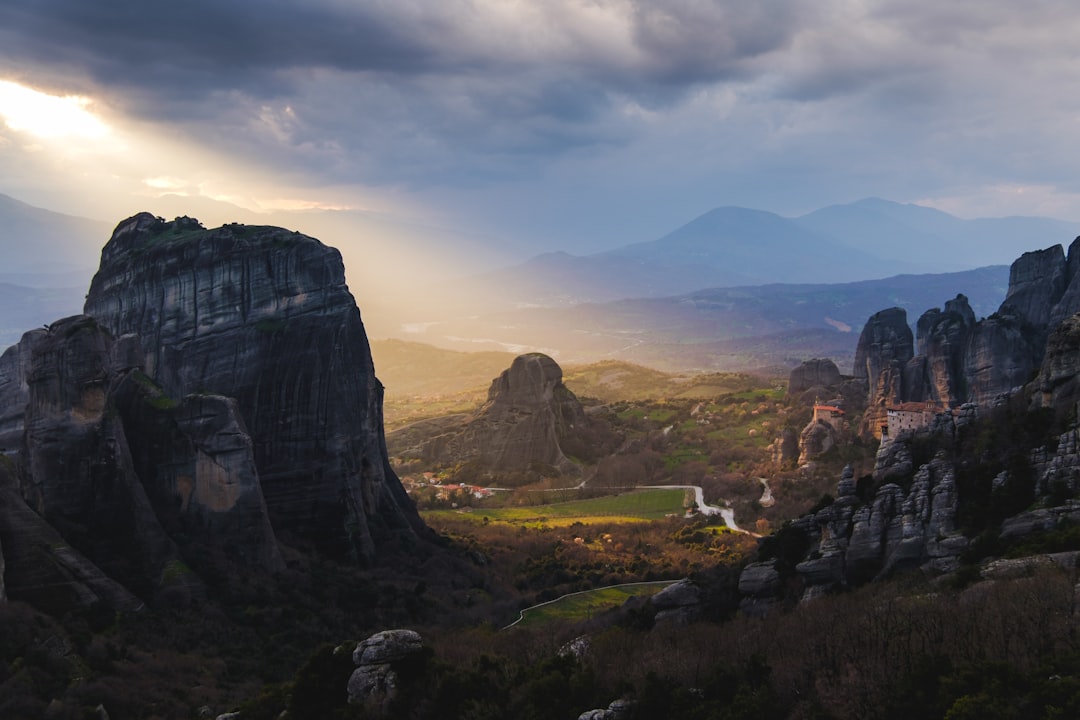
Meteora is not a city or a town - it is a geological phenomenon. Twenty-four monasteries were built on top of near-vertical sandstone pillars rising up to 400 metres from the Thessaly plain, beginning in the 14th century when hermit monks retreated to the existing caves in the rock. Six of those monasteries survive and are open to visitors today. The result is one of the most singular places in Greece: a UNESCO World Heritage Site that manages to be simultaneously a functioning religious community and one of the most visited landscapes in the country.
Here is what to do when you get there, with practical details for each. All prices are approximate as of 2026.
Top Guided Tours in Meteora
| Tour | Duration | Price (from) | Group Size | Highlights |
|---|---|---|---|---|
| Meteora Monasteries Half-Day Tour | 4 hrs | from EUR 25/person | Small group | Two or three monasteries, EUR 3 entry each, expert guide |
| Meteora Sunrise Private Tour | 3 hrs | from EUR 45/person | Private | Pre-dawn departure, best light on the rock pillars, viewpoints |
| Meteora Guided Hiking Tour | 5 hrs | from EUR 25/person | Small group | Trail network below the rocks, forest paths, monastery road |
| Meteora Rock Climbing Introduction | 4 hrs | from EUR 50/person | Small group | Sandstone pillar routes, beginner-friendly, no experience needed |
Browse all Meteora tours → GetYourGuide
Visit the Monasteries
The six open monasteries are the core of any Meteora visit. They are not identical - each sits on a different rock formation, each has a different character, and they reward visiting more than one rather than treating them as a single checkbox.
Great Meteoron (Holy Monastery of the Transfiguration): The largest and oldest of the Meteora monasteries, founded in the mid-14th century. The catholicon (main church) dates to the 16th century and contains frescoes, carved wooden iconostases, and a collection of manuscripts and vestments in the attached museum. The rock it sits on is the highest in Meteora.
Entry: Approximately EUR 3 as of 2026. Open: Wednesday–Monday (closed Tuesday). Hours approximately 9am–4pm (winter), 9am–5pm (summer). Confirm hours before visiting.
Varlaam: The second-largest monastery, directly across from Great Meteoron and arguably the most photogenic from the road below. The 16th-century All Saints church has some of the finest preserved frescoes in Meteora. The original ascent mechanism - a net winched by rope - is preserved in a small tower at the rock’s edge.
Entry: Approximately EUR 3. Open: Saturday–Thursday (closed Friday).
Rousanou (St Barbara): The monastery perched on a narrow spire with what many consider the most dramatic position in Meteora - the drop on all sides is nearly vertical. Inhabited by nuns. The courtyard garden, maintained with considerable effort given the rock position, is unexpectedly lush.
Entry: Approximately EUR 3. Open: Thursday–Tuesday (closed Wednesday).
Holy Trinity: Made internationally famous by the 1981 James Bond film For Your Eyes Only, though most visitors recognise it without knowing why. The approach involves climbing 140 carved steps cut into the rock face. Worth the effort for the views from the summit.
Entry: Approximately EUR 3. Open: Saturday–Thursday (closed Friday).
St Stephen: Easiest to access - entered via a small bridge rather than stairs. Large terrace with panoramic views across the Thessaly plain towards Kalambaka. Inhabited by nuns.
Entry: Approximately EUR 3. Open: Tuesday–Sunday (closed Monday).
Dress requirements: Long trousers for men, skirts (or wraps provided at the gate) for women. Shoulders must be covered. The monasteries provide fabric wraps for those who arrive underprepared.
Viewpoints
The monasteries have their own dramatic views, but Meteora’s viewpoints - accessible without paying monastery entry fees - are worth seeking out separately.
Rousanou Viewpoint: On the road between Varlaam and Rousanou, a rocky ledge gives a direct view across to the Rousanou monastery spire and back towards Kalambaka. This is the most photographed composition in Meteora and gets extremely crowded at sunset. Arrive early.
Doupiani Rock Viewpoint: At the Kastraki end of the rock complex, a short walk from the village gives views across the full span of the pillars with the town in the foreground. Less visited than the main road viewpoints.
Holy Trinity Viewing Terrace: Before descending to the Holy Trinity monastery, a natural terrace gives views northeast towards the Thessaly plain and south towards the Pindus mountains. One of the better orientating panoramas in Meteora.
Hiking the Meteora Trail Network
The path network through and below the rock formations is the best way to experience the scale of Meteora without sharing the road with tourist coaches.
The Main Loop (approximately 14km, 4–5 hours): Starts from Kastraki village, passes through the forest below the main rock formations, climbs to the monastery road level, connects several of the monasteries via the walking paths between them, and returns to Kastraki. Elevation gain is moderate but consistent - expect around 400m total ascent.
Kastraki to Kalambaka via the Rocks (approximately 2km, 45 minutes): A shorter path through the lower rock formations connecting the two base towns. Good option for a morning or evening walk without committing to the full loop.
What to bring: Hiking boots or sturdy shoes, water (no sources on the trail), sun protection. The path is exposed in sections between June and September.
For guided hikes with local experts, see our Meteora travel guide. Guided hiking tours typically run EUR 25–45 per person and include transport to the trailhead.
Rock Climbing
Meteora has developed into one of Europe’s more distinctive rock climbing destinations. The sandstone pillars offer routes ranging from single-pitch beginner climbs to multi-pitch trad routes on the main walls. The rock is generally good quality, though some sections are soft.
Guided climbing sessions with local operators in Kalambaka start from approximately EUR 50 per person for a half-day introduction. Most operators cater for complete beginners - no prior climbing experience required. Bookings through Kalambaka-based guiding companies.
Sunset and Sunrise Viewing
The light on the Meteora pillars at sunrise and sunset is genuinely exceptional - the sandstone turns amber and then deep red as the sun drops below the Pindus range. Sunrise requires getting there before most visitors arrive, which means the compositions from the main viewpoints are uncrowded.
For sunset, the stretch of road between Holy Trinity and Rousanou is the prime location. Cars park along the roadside and the viewpoints fill up from about 30 minutes before sunset in summer. If this crowds is too much, the approach path to Holy Trinity (before the 140 steps descent) gives comparable views with fewer people.
For where to eat after a full day of monastery visits, see our Meteora restaurants guide. To plan the full journey, including getting there from Athens and Thessaloniki, read our Meteora travel guide.
Book Meteora tours and excursions with GetYourGuide. Pick up a Greece eSIM before you fly - keeps you connected without roaming charges.
Search hotels in Meteora, Greece on Booking.com
See Also
- Meteora Travel Guide - full guide with accommodation and transport options
- Best Restaurants Near Meteora - dining in Kalambaka and Kastraki
- Day Trips from Meteora - Trikala, Thessaloniki, and surrounding areas
- Meteora Tours - guided monastery tours, hiking, and sunrise visits
- Greece Hiking Guide - the Meteora trails in context
- Delphi Travel Guide - the other great mainland pilgrimage site
- Thessaloniki Travel Guide - the nearest major city, 4 hours south
- 1-Week Greece Itinerary - including Meteora in a broader Greece trip
- Getting Around Greece - trains from Athens to Kalambaka