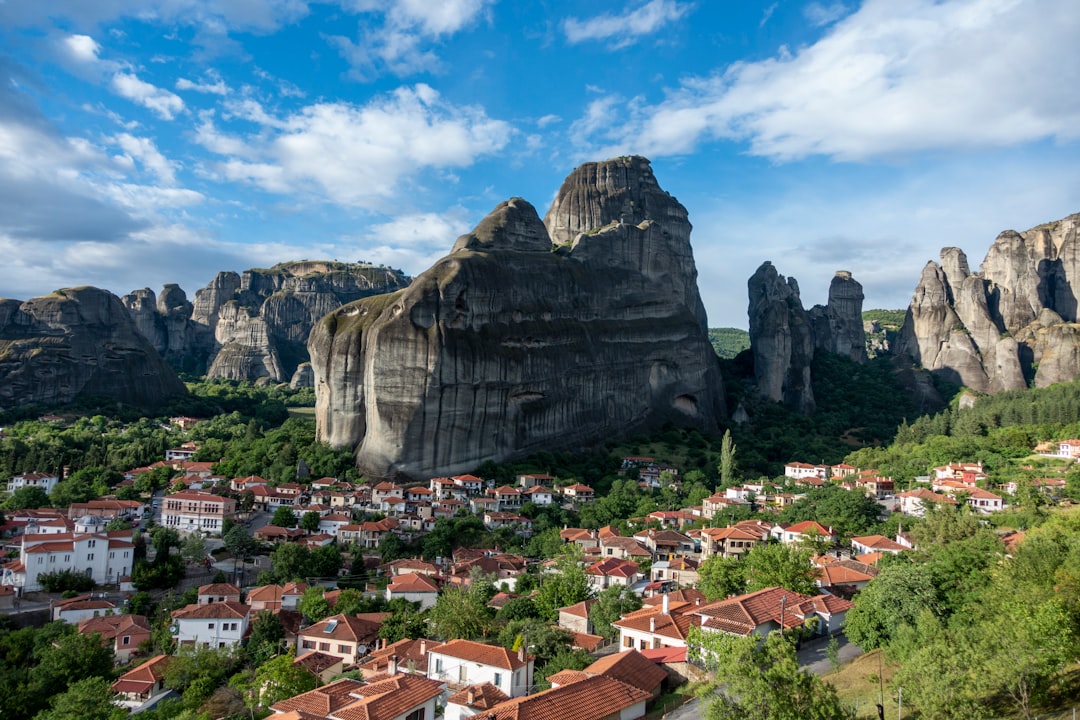
Meteora draws visitors for the monasteries and the landscape, not the food - which means the restaurants here operate in an environment where good food is quietly rewarded and tourist-trap pricing gets a pass more often than it should. The better tavernas in Kalambaka and Kastraki are genuinely worth knowing: central Greek cooking at its straightforward best, with slow-roasted lamb, excellent local cheeses, and the kind of simple bean and vegetable dishes that define this region’s kitchen.
Here is where to eat in both towns, with price expectations and what to order. All prices are approximate as of 2026.
The Kalambaka Food Scene
Kalambaka is the main town at the base of the Meteora rock formation - a working Greek town of around 12,000 people, not a purpose-built tourist village. The main square (Plateia Dimarchiou) and the streets leading off it have the bulk of the restaurants, from quick lunch stops to full tavernas for evening meals.
The street-level tourist pressure on the plateia means that some restaurants coast on location. The streets behind the main square, and the road towards Kastraki, generally deliver better food for the same or lower prices.
Taverna Gardenia - Central Kalambaka
One of the more consistent tavernas in Kalambaka, operating out of a large garden courtyard on the road between the plateia and the old Byzantine church of the Dormition. The kitchen does the central Greek standards reliably well: giouvetsi (lamb or beef baked with orzo pasta in a clay pot), roast lamb by weight, stuffed peppers. Good house wine from the barrel.
Budget: Approximately EUR 15–20 per person for a full meal.
Meteoron Panorama - Kalambaka Upper Town
Positioned partway up the hill towards the old town near the Byzantine church, with a terrace giving partial views towards the rock formation. The food is solid taverna cooking - grilled meats, village salad, fried zucchini, tzatziki - and the kitchen is consistent. Better value than the plateia equivalents. The terrace is the draw at dinner, particularly as the light fades on the pillars.
Budget: Approximately EUR 18–24 per person.
Platanos - Main Square
A long-running restaurant on the main plateia under a large plane tree. Not the cheapest option in Kalambaka, but the kitchen is reliable and the location is convenient for lunch between monastery visits. The pork chop (brizola) is well-executed; the Greek salad uses good local feta. Expect to pay slightly above average for the central location.
Budget: Approximately EUR 18–25 per person.
Kastraki: The Better Dinner Option
Kastraki is a village of fewer than 1,000 people, wedged between Kalambaka and the base of the rock pillars. It has a handful of tavernas, several small hotels, and the distinct advantage that most of the day-trip crowds never make it here - they come by coach, visit the monasteries, and leave without exploring the villages below. By 7pm, Kastraki is quiet in a way Kalambaka’s plateia never is.
Taverna Kastraki
The taverna closest to the base of the rock formation, with an outdoor terrace that looks directly up at the pillars - one of the more dramatic dining positions available near Meteora. The menu is traditional: lamb chops, roast chicken, village sausages (loukaniko), horta (wild greens boiled with olive oil and lemon), and the local bean soup. Simple and good.
Budget: Approximately EUR 14–20 per person.
Doupiani House Restaurant
Attached to the Doupiani House hotel on the western edge of Kastraki, this small restaurant serves a short menu focused on home-style Greek cooking: stuffed vine leaves, lamb stew, the daily soup. The setting - on a terrace facing the rock pillars - is exceptional in the early evening. Open to non-residents; reservations recommended in summer.
Budget: Approximately EUR 16–22 per person.
Taverna To Paramythi
A small family taverna on Kastraki’s main street, often missed by visitors who don’t look for it. The kitchen emphasises the local pites (pies): hortopita (wild greens and cheese in thin pastry), tyropita (cheese pie), and occasionally kreatopita (meat pie). These are not the flaky triangles from a bakery cabinet - they are the substantial, olive-oil-rich version made for a proper meal.
Budget: Approximately EUR 12–18 per person.
What to Order
Lamb in clay pot (arni exohiko or giouvetsi): Central Greece produces very good lamb - most restaurants near Meteora source it locally. The slow-roasted version in a sealed clay pot arrives at the table still in the vessel, the meat falling off the bone. The best version of this dish in the region is cooked for three to four hours and needs nothing added.
Trahanas soup: A fermented wheat and yoghurt soup, dried and reconstituted - one of the older dishes in the Greek repertoire. It has a slightly sour tang and a thick texture. Not on every menu, but worth ordering when it appears. Approximately EUR 5–7 for a bowl.
Village salad (horiatiki): The combination here is often better than in the islands - the local Epirus feta (a few hours north by road) is sharper and less commercial than what gets served to tourists in Athens. Ask if the feta is local.
Bulk wine (hima): Most tavernas serve house wine from a large barrel or demijohn. In the Thessaly region, this is typically a light red made from local varieties. Order it by the carafe - a 500ml jug runs approximately EUR 4–6 and is generally better value than the bottled options.
Breakfast and Coffee
The main bakeries in Kalambaka open early (before 7am) and sell tiropita (cheese pie), spanakopita (spinach pie), and fresh bread. A breakfast pie and a coffee runs approximately EUR 3–4.
For a sit-down coffee, the cafes on and around the plateia serve Greek coffee, frappé, and the standard Nespresso capsule options. Expect to pay EUR 2–4 depending on the option.
Guided Food Experiences Near Meteora
Eating around Meteora means eating in Kalambaka and Kastraki, where the Thessaly kitchen - lamb and goat roasted with local herbs, pies made with mountain greens, and the local trachanas grain soup - has remained largely unchanged by tourism. Guided food experiences in the area pair the monastic landscape with the village cooking traditions that sustained it: the specific herb-and-cheese fillings in the pites, the local honey from Pindus Mountain beehives, and the barrel wines produced from the vineyards on the plains below. A cooking experience combined with a monastery visit gives the day a dimension that sightseeing alone doesn’t.
Browse Meteora tours and food experiences → GetYourGuide
For where to spend your days beyond the monasteries, see our Meteora things to do guide. For the full overview of visiting Meteora, including accommodation options and getting there, see our Meteora travel guide.
Book Meteora tours and excursions with GetYourGuide. Pick up a Greece eSIM before you fly - keeps you connected without roaming charges. Cover your trip with travel insurance for Greece.
See Also
- Meteora Travel Guide - full overview including how to get there
- Things to Do in Meteora - the monasteries, viewpoints, and hiking trails
- Day Trips from Meteora - Trikala, Larissa, and the surrounding region
- Meteora Tours - guided tours including sunrise and cooking experiences
- Greek Food Guide - Thessaly and central Greek cuisine
- Thessaloniki Travel Guide - if combining Meteora with northern Greece
Need a base? Search hotels in Meteora.