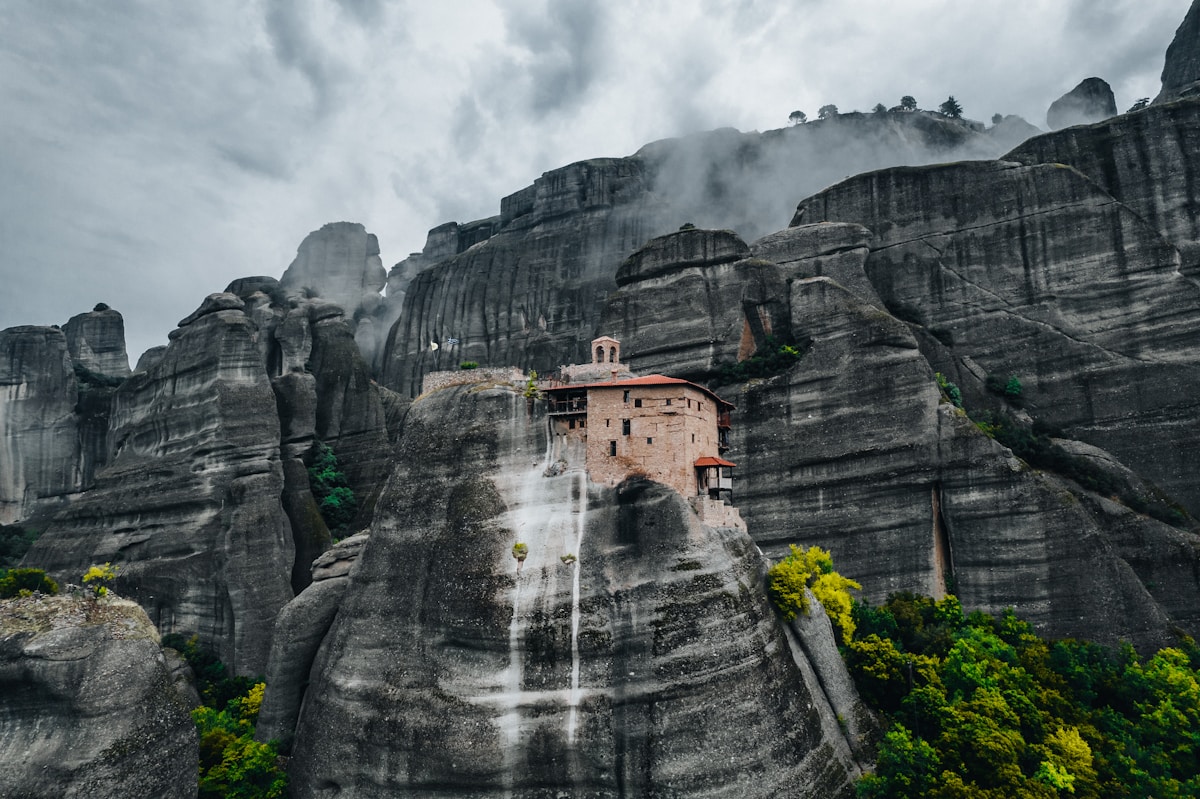
Meteora is one of the most extraordinary landscapes in Europe - 60 sandstone pinnacles rising up to 400 metres from the Thessalian plain, with Eastern Orthodox monasteries perched on their summits. The word means “suspended in the air” in Greek. Construction of the first monasteries began in the 14th century, requiring ropes and nets to haul building materials vertically up the rock faces. Today six remain active, connected by a winding ridge road. Here are the best ways to experience them.
Here’s a quick comparison of top-rated tours on GetYourGuide:
Top Tours at a Glance
| Tour | Duration | Price (from) | Group Size | Highlights |
|---|---|---|---|---|
| Meteora Day Trip from Athens - Coach | 16+ hrs | from €65 | Up to 50 | 3–4 monasteries, licensed guide, entry fees |
| Meteora Day Trip with Caves & Seaside Stops | Full day | from €85 | Up to 30 | Extra stops, scenic coastal route |
| Meteora Day Trip from Thessaloniki | Full day | from €55 | Up to 20 | Shorter transit, more on-site time |
| Meteora Sunset & Photography Tour (Kalambaka) | 3 hrs | from €35 | Up to 8 | Viewpoints, golden hour, no monastery entry needed |
| Meteora Rock Climbing - Half Day Intro | 4 hrs | from €60 | Up to 6 | All gear provided, 400+ bolted routes |
Browse all Meteora tours → GetYourGuide
Day Trip from Athens: Organised Coach Tour
Athens to Meteora is 350 km - too far for a comfortable self-drive day trip, but well within range for an organised coach tour with an experienced driver who handles the route while you sleep.
Most Athens-based operators depart from central Athens (usually Syntagma or Monastiraki area) between 6:00am and 7:00am. The coach journey takes approximately 4 hours. On-site time typically runs from midday to 4:00–5:00pm, visiting three or four monasteries. Return to Athens is usually around 10:00pm–midnight.
Athens One-Day Meteora Tour - the standard format runs EUR 65–90 per person including transport, a licensed guide, and monastery entry fees (approximately EUR 3 per monastery as of 2026). Groups of 15–50 passengers. The monasteries typically included are Great Meteoron (the largest), Varlaam (most visited), Rousanou (perched on a narrow pinnacle, dramatic views), and St Nicholas Anapafsas. Lunch in Kalambaka is usually at your own cost (EUR 12–18 at a local taverna).
Premium Private Athens to Meteora Day Tour - private vehicle with an English-speaking guide, from EUR 200–280 per person (minimum two passengers, cost goes down in a group). Flexible schedule, can prioritise monasteries based on interest, and the guide can explain architectural and religious history in depth. The extra flexibility is worth it for groups of four or more.
What’s included: Return coach/vehicle from Athens; licensed English-speaking guide; monastery entry; bottled water. What’s not: lunch, additional monastery entries, tips.
Tip: The best day-trip operators include time at the viewpoints between monasteries - the Theopetra viewpoint and the “Balcony of Epirus” lookout provide the classic wide-angle view of the rock formations. Not all tours include these stops, so check before booking.
Day Trip from Thessaloniki
Thessaloniki is 230 km from Meteora - closer than Athens and more practical for an independent day trip.
By car: Approximately 2.5 hours via the E75 motorway south through Larissa. This is the most efficient approach, allowing you to time monastery visits around opening hours. Depart Thessaloniki by 8:00am, arrive at the first monastery by 10:30am.
Organised day trip from Thessaloniki - several operators run small-group Meteora day tours from Thessaloniki for EUR 55–75 per person. Departures around 7:00am from central Thessaloniki, return around 9:00–10:00pm. A more compact schedule than the Athens version (shorter transit means more time on-site).
By train: Thessaloniki to Kalambaka: approximately 3 hours, change at Larissa, fare approximately EUR 15–20 as of 2026. The train is comfortable; this approach works if you stay overnight in Kalambaka rather than returning the same day.
Best from Thessaloniki: Spend two nights in Kalambaka - one day for the afternoon/sunset circuit of the main monasteries, one day for morning light photography and the less-visited St Stephen and Holy Trinity monasteries. Kalambaka has reasonable accommodation from EUR 50 per night (mid-range options) and good taverna dining along the main square.
Monasteries Self-Guided Circuit
If staying overnight in Kalambaka or Kastraki (the village at the foot of the rocks), a self-guided circuit of all six monasteries over two mornings is the best way to experience Meteora without the time pressure of a day trip.
The route: Most visitors start at Great Meteoron (the highest and largest, open Wednesday–Monday) and work their way around the ridge road clockwise: Varlaam → Rousanou → St Nicholas Anapafsas → Holy Trinity → St Stephen. The full circuit on foot is approximately 12 km; by car or scooter, the road connects all six with 1–2 km between them.
Great Meteoron Monastery (open Wednesday–Monday, 9:00am–4:00pm in winter, to 5:00pm in summer) was founded in the 14th century by the monk Athanasios. The main church contains important Byzantine frescoes dating from the 16th century, and the museum displays manuscripts, icons, and monastic artefacts. Entry EUR 3. The views from the terrace look directly down onto Kastraki village and across the valley to the Pindus mountains.
Varlaam Monastery (open Thursday–Tuesday, 9:00am–4:00pm) is the second-largest and arguably the most visually impressive from the outside - the building clings to a sheer pinnacle with a net-room (where supplies were once hauled up) still intact as a museum exhibit. Entry EUR 3.
Rousanou Monastery (St Barbara, open Thursday–Tuesday, 9:00am–5:00pm in summer) is the most dramatically sited - perched on a narrow rock with sheer drops on all sides, connected to the ridge road by a bridge. Particularly striking in autumn and winter when mist fills the valleys. Entry EUR 3.
Holy Trinity Monastery (open Saturday–Thursday, 9:00am–5:00pm) featured in the 1981 James Bond film “For Your Eyes Only.” The approach requires descending approximately 140 rock-cut steps. Entry EUR 3.
St Stephen Monastery (open Tuesday–Sunday, 9:00am–1:30pm and 3:30–5:30pm) is an active convent - the nuns maintain a small museum of icons and religious embroidery. The easiest to reach by road. Entry EUR 3.
Sunset and Photography Tours
Meteora at sunset is a different experience from the midday monastery circuit. The rock faces turn amber and orange as the sun drops toward the Pindus range in the west; long shadows pull across the valley floor; and the monasteries are often lit from a completely different angle than the tourist-hour midday light.
Evening sunset tour from Kalambaka - several local guides offer 3-hour sunset tours (approximately EUR 35–50 per person) starting around 5:00pm, visiting the best viewpoints rather than monasteries (which close before sunset). The “Balcony of Epirus” viewpoint, the road above Kastraki, and the rock ridge near Varlaam offer the best angles. These tours are specifically designed for photography and include viewpoint timing based on the day’s actual sunset time.
Photography workshop tours - longer format (5–6 hours, from EUR 80 per person) covering both golden hour and blue hour light, with a guide who knows which rocks face west and which monastery walls catch the last light. Particularly popular with serious amateur photographers.
Sunrise tours are less common but arguably more dramatic - mist frequently settles in the Thessalian plain overnight and burns off through the morning, producing the famous “monasteries in the clouds” effect. Some guide operators run 6:00am departures for this; check with local guides in Kalambaka.
Hiking and Climbing at Meteora
Beyond the monastery circuit, Meteora has a network of marked hiking trails and established rock-climbing routes.
Hiking: The trail from Kastraki village up through the rocks to the Great Meteoron is a 2.5-hour return hike through woodland and along cliff-edge paths, passing ancient hermitage caves and viewpoints that the road bypasses. Kastraki-based guide services (from EUR 40 per person) provide trail context and safety for groups unfamiliar with the terrain.
Rock climbing: The sandstone pinnacles are a serious rock-climbing destination with over 400 bolted routes graded 4b to 9a. The main climbing area is on the western side of the formation, away from the monastery zone. Several operators in Kalambaka offer guided climbing sessions for all levels, from EUR 60 per person for a half-day introduction. Gear provided; no prior experience necessary for introductory sessions.
Accommodation and Logistics
Where to stay: Kalambaka (the larger town, 1.5 km from the monasteries) has the broadest range of accommodation. Kastraki village (right at the base of the rocks) is smaller and more atmospheric - several small family-run guesthouses here have unobstructed views of the formations. Mid-range options in Kalambaka from EUR 60–90 per night including breakfast; Kastraki is similar.
Getting there independently:
- By train: Athens to Kalambaka approximately 4.5 hours (change at Paleofarsalos), fare EUR 20–30. Thessaloniki to Kalambaka approximately 3 hours, EUR 15–20.
- By car: Athens to Meteora via E75 is approximately 4 hours. Ample parking at all six monasteries.
- By KTEL bus: Athens Liosion terminal to Kalambaka, approximately 5 hours, fare EUR 25–30, several daily departures.
Dress code: All six monasteries enforce modest dress. Long trousers or skirts (below the knee) and covered shoulders. Sarongs are available to borrow at the entrance of most monasteries for those who arrive underdressed.
Best seasons: Spring (April–May) for green landscape and comfortable temperatures. Autumn (September–October) for atmospheric misty mornings. Summer is hot but functional; winter is dramatic but some monasteries reduce hours.
Book Meteora tours and excursions with GetYourGuide. Pick up a Greece eSIM before you fly - keeps you connected without roaming charges.
See Also
- Meteora Travel Guide - full planning guide to the monasteries and the town of Kalambaka
- Things to Do in Meteora - monastery circuits and hiking routes
- Day Trips from Athens - Meteora in context with other Athens excursions
- Best Tours in Thessaloniki - Meteora is also reachable from Thessaloniki
- Getting Around Greece - train and bus options to Kalambaka
- Greece Hiking Guide - trails between the rock pillars and surrounding mountains