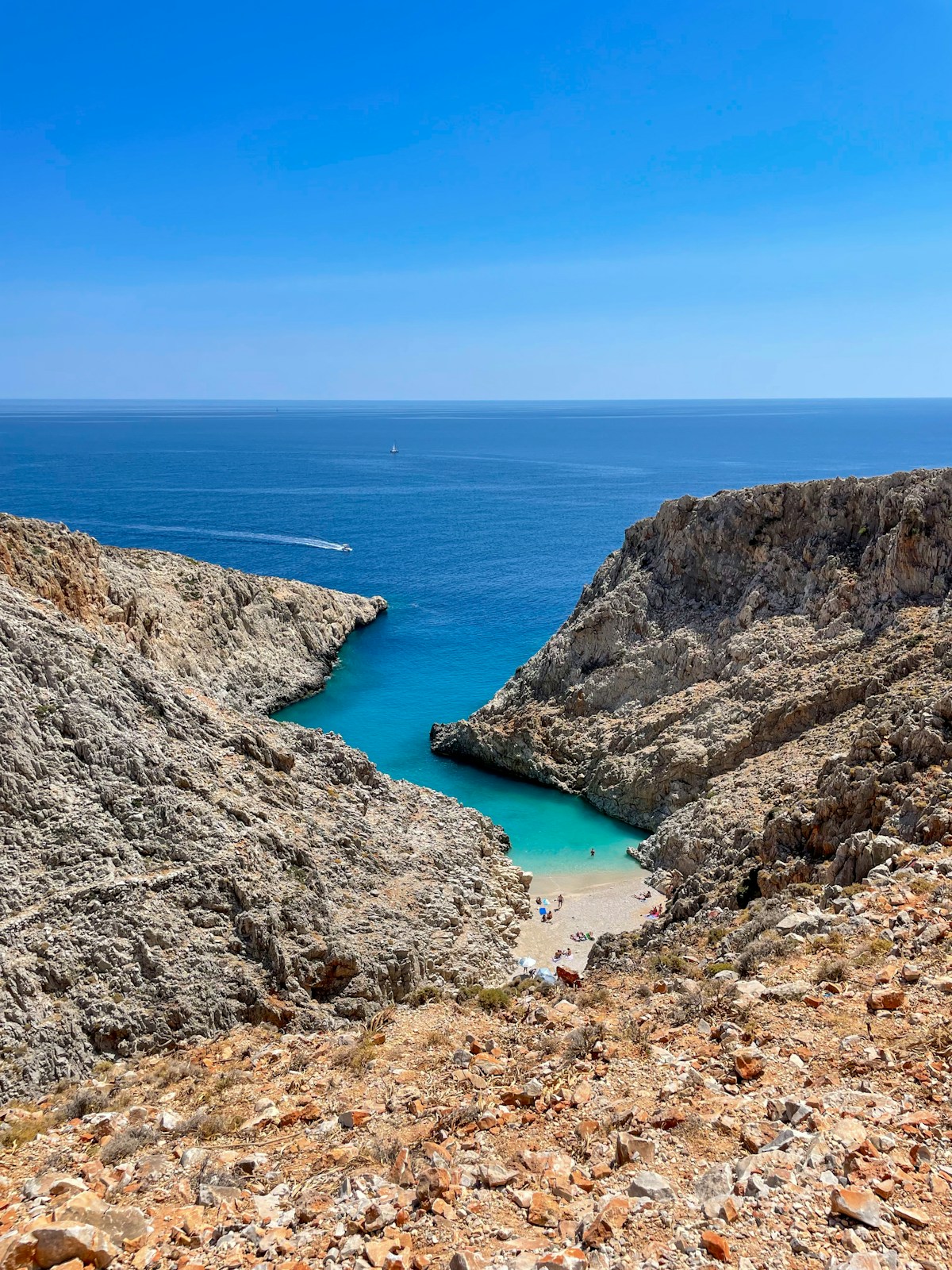
Crete is the largest Greek island and one of the most diverse - a 260km stretch of coastline backed by three mountain ranges, with Minoan archaeological sites, Venetian harbour towns, a famous long-distance gorge hike, and some of the most spectacular beaches in the Mediterranean. It requires a car and several days to do properly - hire a car in Crete before you arrive, especially in summer when rental desks sell out. Prices listed here are approximate as of 2026.
Top Tours in Crete
| Tour | Duration | Price (from) | Group Size | Highlights |
|---|---|---|---|---|
| Knossos Palace & Heraklion Guided Tour | 2.5 hrs | from €35/person | Small group | Minoan palace ruins, expert archaeologist guide, Museum visit |
| Samaria Gorge Guided Hike | 10 hrs | from €30/person | Small group | 16km gorge walk, iron gates narrows, boat back from Agia Roumeli |
| Chania Old Town Walking Tour | 2 hrs | from €20/person | Small group | Venetian harbour, lighthouse, covered market, Old Town laneways |
| Knossos, Winery & Olive Oil Full-Day Tour | 6 hrs | from €65/person | Small group | Palace + Heraklion Museum, Cretan winery, olive oil tasting |
| Cretan Cooking Class with Market Visit | 3.5 hrs | from €65/person | Small group | Heraklion market, hands-on cooking, 3-course Cretan meal |
Browse all Crete tours → GetYourGuide
Visit Knossos Palace
Knossos is the largest Bronze Age archaeological site in the Aegean - the palace of the Minoan civilisation that dominated the eastern Mediterranean from roughly 2000 to 1450 BC. The site covers several hectares and includes the throne room (one of the oldest surviving thrones in Europe), frescoed walls, storage magazines, and a complex of interlocking courts and chambers that gave rise to the myth of the Labyrinth.
Entry costs approximately €15 as of 2026. The site is open daily from 8am; arrive at opening to avoid the tour group buses that fill the paths from 10am. An audio guide or guided tour is strongly recommended - the reconstruction, done by British archaeologist Arthur Evans in the early 20th century, is controversial but the site without context is hard to interpret. Combine with the Heraklion Archaeological Museum the same day for the full picture - our Heraklion travel guide covers the museum, the city centre, and the best bases near Knossos.
Hike the Samaria Gorge
The Samaria Gorge is one of the longest gorges in Europe - 16km of walking from the White Mountains plateau at Xyloskalo (1,230m elevation) down through the gorge to the south coast village of Agia Roumeli. The narrowest point of the gorge, the Iron Gates, squeezes to 3.5m wide between walls 300m high.
The hike is one-way, finishing at Agia Roumeli where a ferry takes you back to Hora Sfakion or Paleochora for return transport. Allow 4 to 6 hours for the hike, plus ferry and bus time back to your base. Entry costs approximately €5 as of 2026. The gorge is open from early May through October - closed in winter when flooding makes it dangerous. The path is rocky rather than technical; good walking shoes and water are essential.
Explore Elafonisi Beach
Elafonisi, on the far south-west coast, is the most famous beach in Crete - a shallow lagoon of turquoise water where the seafloor has a pale pink tint from crushed shells. A small island (also called Elafonisi) is connected to the beach by a sandbar you can wade across.
The beach is approximately 75km from Chania - about 1 hour 15 minutes by car on winding mountain roads. Arrive early in summer; it gets extremely crowded by late morning. Facilities are limited (a few snack bars, seasonal sunbeds) - bring food and water. Entry is free. Recognised as one of the finest beaches in the Mediterranean.
See Balos Lagoon
Balos is another iconic Cretan beach - a turquoise lagoon enclosed between two peninsulas at the far north-west tip of the island, with pale sand and shallow, warm water. The views from the hillside above are extraordinary.
Getting there requires either a boat from Kissamos port (approximately €25 return as of 2026, journey 45 minutes, runs daily in summer) or driving a rough track to the parking area above and hiking 1.5km down to the beach. The track requires a proper 4WD or high-clearance vehicle - standard hire cars risk damage. The boat is the easier option.
Visit Spinalonga Island
Spinalonga is a small fortified island in the Gulf of Elounda on the north-east coast. It served as the last active leper colony in Europe, functioning until 1957. The Venetian fortress and the preserved colony buildings are open to visit by boat from Elounda or Plaka.
Entry to the island costs approximately €8 as of 2026; boat tickets from Elounda add approximately €12 return. Victoria Hislop’s novel The Island was set here and significantly boosted visitor numbers. The ruins of the colony are sobering and well-preserved; the Venetian fortifications are impressive. Allow 1.5 to 2 hours on the island.
Heraklion Archaeological Museum
The Heraklion Archaeological Museum is the finest Minoan collection in the world - the finds from Knossos and the other major Minoan sites across Crete, including the original frescoes (displayed in full-scale form), the famous Phaistos Disc, gold jewellery, carved stone vessels, and the remarkable Bull’s Head rhyton. Entry costs approximately €12 as of 2026.
This is the essential companion to a Knossos visit and can justify a visit without seeing the site itself. The museum was renovated in recent years and displays are excellent. Allow 2 to 3 hours.
Walk Rethymno’s Old Town
Rethymno is the best-preserved Venetian town in Crete - a compact old centre of narrow lanes, Venetian loggia, the impressive Fortezza fortress above the town (entry approximately €4), and a Venetian lighthouse at the mouth of the old harbour. Less visited than Chania but equally atmospheric.
The lighthouse and harbour are best in early evening. The Fortezza has panoramic views across the town and coast and takes about an hour to explore.
Explore Chania’s Venetian Harbour
Chania has the most attractive harbour in Crete - a curved Venetian waterfront lined with restaurants and cafes, an Egyptian lighthouse, and the remains of the Venetian arsenal. The old town behind the harbour is a dense network of lanes with good restaurants, craft shops, and the covered market.
The harbour is free to walk and best in the morning or evening when the light is good and the lunch crowds haven’t arrived. The Archaeological Museum of Chania (in a former Venetian church) covers local finds; entry approximately €4. For the full picture on the city - the harbour, the old town, and where to base yourself in western Crete - see our Chania travel guide.
Wine Tasting in the Archanes Region
The vineyards around Archanes village, 15km south of Heraklion, produce some of Crete’s best wines. The Minoan Wines cooperative and several family wineries offer tastings. Cretan varieties - Kotsifali, Mandilari, Vilana - are distinct from mainland Greek wines and largely unknown outside the island.
A wine tasting in the region costs approximately €10–20 depending on the producer. Archanes itself is a well-preserved village worth stopping in.
For the complete Crete travel guide including where to stay and getting around the island, see our Crete island guide. For the best beaches from Elafonisi to Balos and Preveli, see best beaches in Crete. For restaurants in Chania, Heraklion, and the mountain villages, see best restaurants in Crete. Comparing Crete to other destinations? See Crete vs Santorini, Rhodes vs Crete, and Corfu vs Crete.
Search hotels in Crete on Booking.com
See Also
- Crete Day Trips - the best excursions from Crete with transport and prices
- Crete Travel Guide - island overview with where to stay, how to get around, and key cities
- Best Beaches in Crete - Elafonisi, Balos, Falassarna, Preveli, and the palm forest at Vai
- Restaurants in Crete - Chania Old Town, Heraklion, and mountain village tavernas
- Knossos Guide - the Minoan palace in full detail with entry fees and practical tips
- Chania Travel Guide - western Crete’s most beautiful city, 3 hours from Heraklion
- Heraklion Travel Guide - Crete’s capital and gateway to the Archaeological Museum
- Best Tours in Crete - guided Knossos tours, Samaria Gorge excursions, and wine tours