Heraklion Travel Guide: Koules Fortress & Knossos Trips
Heraklion guide: Crete's capital. The Venetian harbour, Koules Fortress, and the Archaeological Museum, with Knossos a short bus ride away.
Guides for Heraklion
Heraklion is the capital of Crete and the largest city in Greece after Athens and Thessaloniki. With a population of approximately 200,000 and a major international airport, it serves as the logistical gateway for most visitors to the island. It is also, however, a city worth understanding on its own terms - not merely as a transit point to Santorini or Mykonos but as home to the finest Minoan collection in the world and a Venetian harbour that defined the eastern Mediterranean trade routes for centuries.
Knossos Palace
Knossos is the most visited archaeological site in Greece outside Athens. The Bronze Age palace complex, excavated and controversially reconstructed by Arthur Evans from 1900 onwards, was the ceremonial and political centre of Minoan Crete from approximately 1700 BC. At its peak, Knossos may have housed 100,000 people in the surrounding settlement and been the largest building complex in the Aegean world.
The site covers approximately 20,000 square metres. Key areas include the Central Court (where the Bull Leaping fresco was found), the Throne Room (with the original alabaster throne still in place), the Royal Apartments, the Grand Staircase, and the magazines (storage rooms with large clay storage jars, or pithoi, still in position).
Practical: Entry approximately €15, or €20 combined ticket with the Heraklion Archaeological Museum as of 2026. Open daily, 8am–8pm April–October, 8am–3pm November–March. Bus 2 from Lions Square (Plateia Eleftherias) in Heraklion to Knossos runs every 15–20 minutes, approximately €1.80 each way, journey time approximately 20 minutes. Private taxi approximately €12–15.
Guided tours of Knossos with context on Minoan civilisation are available through GetYourGuide and local operators at the site entrance from approximately €20–35 per person including entry.
Heraklion Archaeological Museum
The Archaeological Museum of Heraklion on Xanthoudidou Street is one of the most important museums in the world for the study of prehistoric civilisation. The collection covers Cretan prehistory from the Neolithic through to the Roman period, with the Minoan material (3000–1100 BC) as the centrepiece.
Objects of particular importance: the Phaistos Disc (an undeciphered clay disc with stamped symbols, c.1700 BC), the Snake Goddess figurines (faience statuettes from Knossos, c.1600 BC), the Bull’s Head Rhyton (black steatite ritual vessel), the gold signet ring from Isopata, and the original versions of the frescoes from Knossos (the reconstructions at the site are copies).
Practical: Entry approximately €12, combined ticket with Knossos €20 as of 2026. Open daily, 8am–8pm summer, 8am–3pm winter. Allow 2–3 hours for a full visit. The museum café is decent. Audio guides are available at the entrance.
Koules Fortress (Castello a Mare)
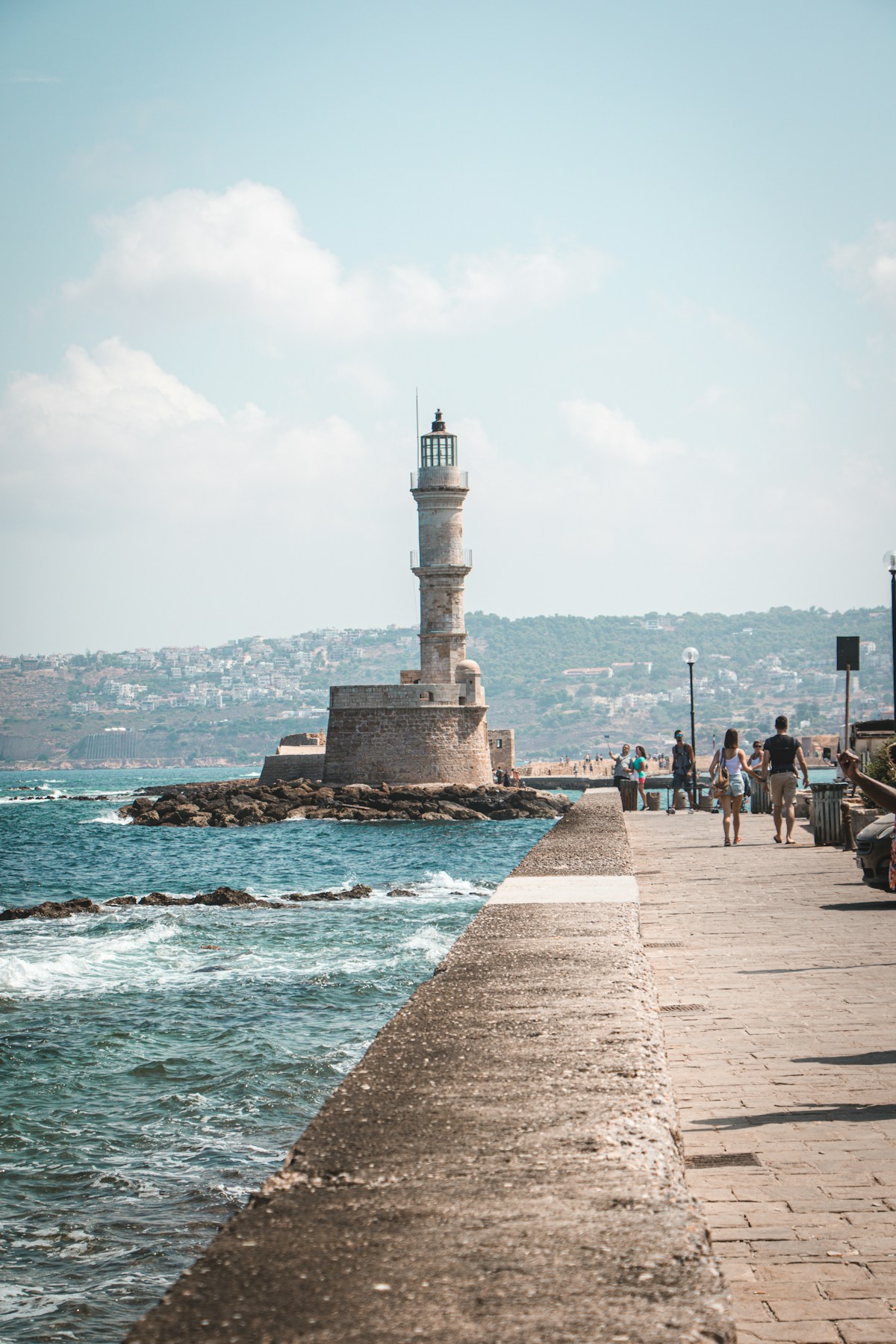
The Koules Fortress stands at the end of the old harbour mole - a 16th-century Venetian sea fortress that defended the harbour entrance. “Koules” is the Turkish name (derived from the word for tower); the Venetian name was Castello a Mare (Castle of the Sea). Three stone reliefs of the Lion of St Mark, Venice’s symbol, are visible on the seaward facade.
The fortress now houses a small museum and hosts periodic exhibitions and cultural events.
Practical: Entry approximately €4 as of 2026. Open Tuesday–Sunday 8am–8pm (summer), 8am–3pm (winter). Closed Mondays. The walk along the mole to the fortress takes about 15 minutes from the harbour promenade and is one of the best ways to see Heraklion from the water.
The Venetian Old Town
Heraklion’s Venetian city walls are among the most complete in the Mediterranean - 5km of curtain wall, 7 bastions, and 4 main gates survive largely intact, even though the city inside them was largely rebuilt after the massive 1856 earthquake and further German bombing in 1941.
Lions Square (Plateia Eleftherias and nearby Plateia Venizelou): The two central squares are linked by the main shopping street (25 Avgoustou for the tourist economy, pedestrianised Dedalou for locals). The Morosini Fountain (1628) in Lions Square features four Venetian lions supporting a large circular basin - the most recognisable landmark in the city centre.
El Greco Park (Plateia Agiou Titou): A small park named after the Cretan-born Renaissance painter (born Domenikos Theotokopoulos, 1541), with a bust of El Greco near the Church of Agios Titos.
Heraklion Market (1866 Street): A covered market street selling fresh produce, olives, herbs, cheese, and wine. More geared to local shopping than tourist markets but visited by both. Busiest in the morning.
Basilica of San Marco: The Venetian-era church on Lions Square, converted to a mosque under Ottoman rule and now an exhibition hall (free, variable hours). The arched facade is the most intact Venetian ecclesiastical architecture in Crete.
Where to Stay in Heraklion
Budget: Kronos Hotel (Sofoklis Venizelou 2, near the port) offers clean rooms from approximately €50/night in shoulder season. Mirabello Hotel (Theotokopoulou 20) has well-located budget rooms from approximately €45/night.
Mid-range: GDM Megaron Hotel (Beaufort 12, near the Archaeological Museum) occupies a neoclassical building with rooftop bar and pool, from approximately €130/night in June. Capsis Astoria Hotel (Plateia Eleftherias) is a centrally located 4-star hotel from approximately €110/night. Lato Boutique Hotel (Epimenidou 15, New Town) has a rooftop pool and contemporary rooms from approximately €120/night in July.
Upmarket: Hotel Marin Dream (Dokos Beaufort 12) overlooks the port with sea-view rooms from approximately €170/night in August. Galaxy Hotel (Dimokratias 75, south of centre) is the city’s traditional business-hotel flagship from approximately €150/night. 5 Stars Luxury Boutique Hotel (pedestrian centre) has suites from approximately €200/night.
For a more complete listing across all neighbourhoods, see our where to stay in Heraklion guide.
Where to Eat in Heraklion
Peskesi (Kapetan Haralampi 6–8): One of the best restaurants in Crete, serving traditional Cretan cooking using heritage varieties of vegetables, rare breed meats, and artisan cheeses from certified Cretan farms. Approximately €30–45 per person. The interiors are a restored Venetian mansion. Reservations advised.
Ippokampos (Sofokli Venizelou 3, Harbour Front): The city’s best-known fish and seafood restaurant at the old harbour - reliable quality and reliably expensive at approximately €25–40 per main, worth it for the setting.
Pagopoeion (Plateia Agiou Titou): A converted Ottoman ice factory turned café-bar, good for mezedes and coffee in the most charming outdoor square in the city. Approximately €12–20 for drinks and snacks.
Brilliant Food & Drink (GDM Megaron Hotel rooftop): Panoramic views over the harbour and city from the rooftop restaurant - contemporary Cretan cuisine at approximately €35–55 per person. Good for a sunset dinner.
Street food: The market street (1866 Street) has stalls selling loukoumades (fried doughnuts with honey and cinnamon, approximately €3), fresh juice, and kalitsounia (Cretan cheese or herb pastries). The best loukoumades in the city are at Loukoumades Heraklion near the market.
Getting Around Heraklion
The city centre is walkable - Lions Square, Koules, the Archaeological Museum, and the harbour are all within 15 minutes on foot. The city bus network (Astiko KTEL) covers the wider suburbs and the airport. For Knossos, bus 2 from Lions Square is the standard route.
Heraklion International Airport (Nikos Kazantzakis Airport, HER) is one of the busiest airports in Greece in summer, with direct flights from many European cities. The airport is 4km east of the centre - bus approximately €1.30, taxi approximately €12–18. For a pre-booked transfer with meet-and-greet at arrivals, Welcome Pickups covers Heraklion.
The KTEL bus station (for intercity buses to Chania, Rethymno, Agios Nikolaos, and other Cretan cities) is on the eastern coast road near the port - Chania journey approximately 2.5 hours, approximately €14 as of 2026.
For more detail, see our guides to best restaurants in Heraklion, day trips from Heraklion, and our full Knossos Palace guide. For island-wide context - how long to spend on Crete, how Heraklion fits into a broader itinerary, and getting around the island - see the Crete travel guide.
Book tours and experiences in Heraklion with GetYourGuide.
See Also
- Things to Do in Heraklion - Knossos, the Archaeological Museum, and the harbour fortress
- Best Restaurants in Heraklion - from the 1866 Street market to modern Cretan cuisine
- Day Trips from Heraklion - Knossos, Matala, Elounda, and eastern Crete
- Knossos Palace Guide - the Minoan palace in full detail
- Crete Travel Guide - the full island overview
- Chania Travel Guide - western Crete’s most beautiful city, 2.5 hours west
- Best Beaches in Crete - the best beaches across the island
- Best Tours in Crete - guided tours from Heraklion
- Crete vs Santorini - choosing between Greece’s two most popular destinations
Frequently Asked Questions
- Is Heraklion worth visiting or should I just go to Knossos?
- Heraklion is worth at least a full day beyond Knossos. The Heraklion Archaeological Museum is one of the finest museums in Europe - all the major Minoan artefacts from Knossos and other Cretan sites are here, including the Phaistos Disc, the Snake Goddess figurines, and the gold jewellery from the shaft graves. The Venetian Old Town, Koules Fortress, and the 25th Avgoustou waterfront are all worth a few hours. Treat Knossos and the museum as complementary, not alternatives.
- How long does a visit to Knossos take?
- Allow 2–3 hours for a thorough self-guided visit of Knossos. If visiting with a guide (recommended for context), allow 2.5–3.5 hours. The site is extensive and partially reconstructed - Evans's concrete reconstructions divide opinion but help visitors visualise the scale. The on-site café is useful for a break mid-visit. Arrive before 10am to beat the day-tripper crowds from the cruise ships.
- What is the best way to get from Heraklion airport to the city?
- Bus line 1 (Astiko KTEL) runs from the airport to the city centre approximately every 30 minutes, fare approximately €1.30 as of 2026. The journey takes approximately 20 minutes to Lions Square (Plateia Eleftherias). Taxis cost approximately €12–18 depending on traffic. The airport is only 4km from the centre.
- Is Heraklion safe?
- Yes - Heraklion is a safe city by any European standard. The usual precautions apply (keep an eye on bags in crowded markets, be alert near the port during cruise ship arrivals). The old town and harbour area are well-populated into late evening.
- What are the best day trips from Heraklion?
- Knossos (5km, 30 min by bus) is the essential day trip from Heraklion. Phaistos Palace (62km southwest, approximately 1.5 hours by car) is the second major Minoan palace site, less reconstructed than Knossos and in a spectacular hilltop setting. Matala (70km southwest) has famous cave dwellings and a good beach. The Lasithi Plateau (58km east) is a flat upland valley with windmills and traditional villages.
Book an experience
Top experiences in Heraklion
Explore the best tours and activities in Heraklion, with instant confirmation and free cancellation on most bookings.