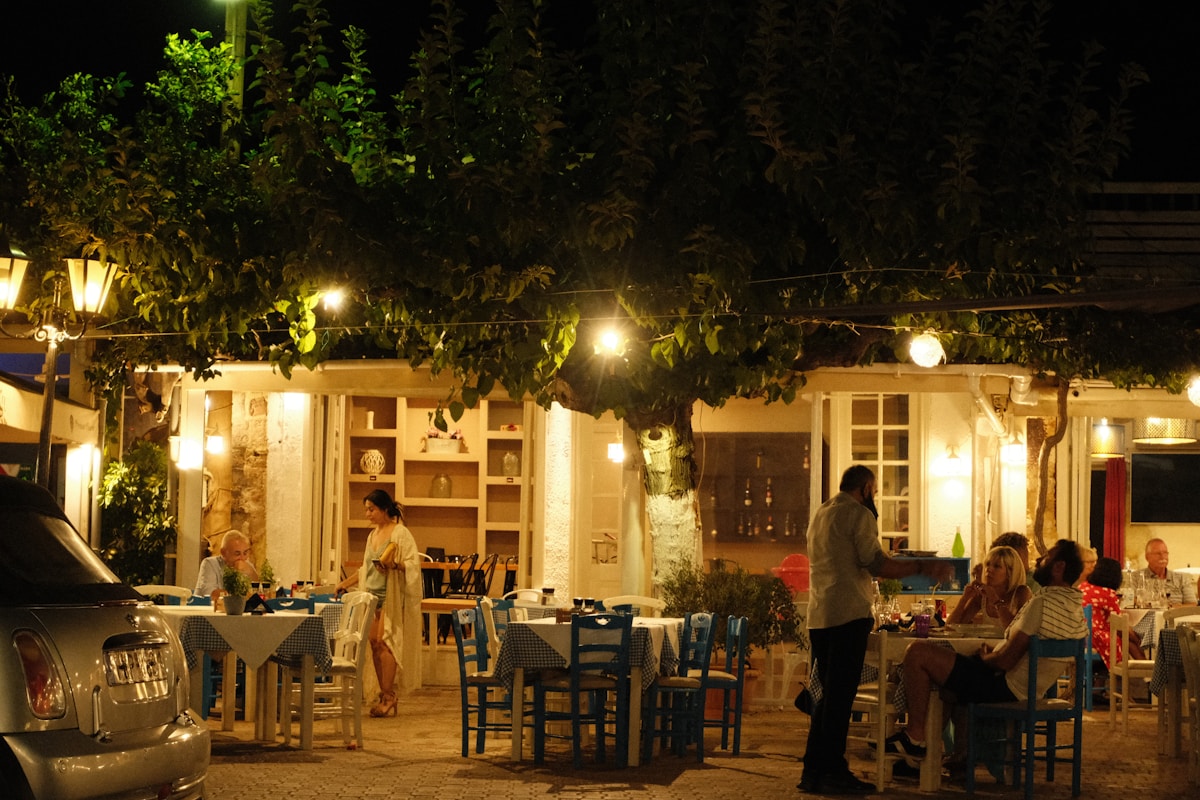
Heraklion is less immediately charming than Chania but its food is, if anything, more rooted in the Cretan tradition. The city is closer to the agricultural heartland of Crete - the Mesara plain to the south produces vegetables, olives, and dairy that supply much of the island - and the working-city character means the restaurants are feeding Cretans as much as tourists. Here is where to eat well, with specific names, what to order, and honest price guidance. All prices are approximate as of 2026.
What to Eat in Heraklion First
Before restaurants, understand the food categories that distinguish Cretan cooking from mainland Greek.
Dakos: The foundational Cretan starter. A hard barley rusk (paximadi) is soaked briefly in water to soften the edges, topped with hand-crushed ripe tomato, crumbled mizithra or anthotyros cheese, and finished with olive oil and dried oregano. The quality depends entirely on the rusk, the tomato, and the olive oil. In season, from good Cretan tomatoes, it is extraordinary.
Stamnagathi: Wild Cretan greens - a species of chicory found only in Crete’s mountain terrain - served raw in a salad with lemon and olive oil or lightly cooked. Distinctive, slightly bitter, and genuinely different from the standard horta (boiled greens) found across Greece.
Graviera: Aged Cretan hard cheese made from sheep’s milk, slightly sweet and nutty. Heraklion has several dedicated cheese shops near the Agora where you can taste before buying. The aged (παλαιωμένο) variety is particularly good.
Raki: Crete’s grape distillate. Not anise-flavoured like ouzo - clear, dry, and strong. It appears free at the end of meals at traditional tavernas without being ordered. A bottle costs approximately EUR 6–12 at the Agora (as of 2026).
Budget and Local Restaurants
To Perasma - 1866 Street Market
A simple taverna at the far end of the 1866 Street market, used primarily by market workers and nearby office workers for lunch. The menu is whatever was cooked that morning - a daily soup, a braised meat dish, a vegetable side, and fresh salad. Nothing fancy, nothing overpriced. Budget approximately EUR 10–14 per person including wine. Cash preferred, lunch only.
Peskesi - Behind the Loggia
One of the more serious Cretan traditional restaurants in Heraklion, on Kapetan Haralampi Street behind the Venetian Loggia. The kitchen sources exclusively from Cretan small producers - heritage varieties of vegetables, meat from mountain farms, and cheeses directly from dairies. The presentation is more considered than most Heraklion tavernas but the cooking stays faithful to traditional recipes. Budget approximately EUR 22–32 per person. Reservations advisable in summer.
Giakoumis - Central Market Area
A taverna near Plateia Kornarou that has been run by the same family for generations and maintains a resolutely local clientele. The daily specials board - written in Greek and occasionally translated by the owner - runs to braised lamb with artichokes, slow-cooked pork with quince, and stewed beans with pork belly. Budget approximately EUR 15–22 per person.
Ippokambos Ouzeri - Harbour Area
A traditional ouzo bar and mezedes restaurant near the harbour with consistently fresh fish and an honest menu of Cretan mezedes: fried smelt (marides), octopus with vinegar, grilled sardines, cheese plates, and the standard dips. The format is order multiple small plates rather than a single main. Budget approximately EUR 14–20 per person.
Mid-Range: Worth Planning Around
Brilliant - Plateia Eleftherias
On the corner of the main square, Brilliant is Heraklion’s most polished modern-Cretan restaurant. The kitchen uses high-quality Cretan ingredients in dishes that update traditional recipes: lamb with carob-infused sauce, sea bass cured in Cretan olive oil, a graviera soufflé that works. Good wine list covering Cretan varieties. Budget approximately EUR 30–45 per person. One of the better dinner options in the city centre.
Herb’s Garden - Near the Archaeological Museum
A small restaurant on Malikouti Street focused on vegetables and light Cretan cooking. The mezedes selection is particularly strong: fava with caramelised onion, stuffed vine leaves with fresh herbs, and zucchini croquettes made properly. A good option for lunch before or after the Archaeological Museum. Budget approximately EUR 18–24 per person.
Kastella - Harbour Front
Among the better of the harbour-front fish restaurants near Koules fortress. The seafood is bought daily from the Heraklion fish market; the grilled sea bream and the seafood saganaki (cheese and seafood baked in tomato sauce) are the reliable choices. Budget approximately EUR 28–38 per person.
Pastry and Coffee
Sfakiano Myzeithropita: A Cretan pastry speciality - a thin round pie filled with fresh mizithra cheese, drizzled with Cretan honey. Available from most bakeries in central Heraklion for approximately EUR 2.50–3.50. Different from the cheese pie (tiropita) found elsewhere in Greece: lighter, sweeter, and specifically Cretan.
Loukoumades: Greek doughnuts - small, deep-fried, drenched in Cretan thyme honey and dusted with cinnamon and crushed walnut. Several dedicated shops operate near Plateia Kornarou in the evenings. Approximately EUR 4–5 for a portion of 10 (as of 2026).
Coffee culture: Heraklion has a strong café culture centred on Plateia Eleftherias and the surrounding streets. Greek coffee (ellinikos) is the traditional order; Cretan mountain herbal tea (malotira, or Cretan dittany) is worth trying if you want something different. Café prices are typically EUR 2–3 for espresso or Greek coffee, EUR 3–4 for a frappé.
A Note on the 1866 Street Market
The covered market along 1866 Street is the best place in Heraklion to buy Cretan food products to take home: olive oil (buy the cold-pressed Cretan varieties, not the blended tourist-market bottles), thyme honey, aged graviera, mountain herbs, and raki. Several shops near the southern end of the market sell high-quality olive oil in properly labelled bottles with producer information. Budget EUR 8–20 for a 500ml bottle of single-estate Cretan olive oil - considerably better value than equivalent quality from supermarkets elsewhere.
Take a Guided Food Tour of Heraklion
Heraklion is the gateway to the Cretan table, and the 1866 Street covered market is its heart - but navigating it effectively takes local knowledge. Food guides distinguish the stalls selling single-estate Cretan olive oil from the tourist-market blends, know which tavernas source from nearby farms rather than wholesale suppliers, and understand where to eat dakos (the barley rusk with tomato and mizithra that has been on Cretan tables for centuries) the way it was meant to taste. A food walk through central Heraklion covers more culinary ground in three hours than most visitors discover in a week of independent eating.
Browse Heraklion food tours and culinary experiences → GetYourGuide
For the full Heraklion city overview including where to stay and getting around, see our Heraklion travel guide. For things to do including Knossos and the Archaeological Museum, see our Heraklion things to do guide.
Book Crete tours and excursions with GetYourGuide. Pick up a Greece eSIM before you fly - keeps you connected without roaming charges. Cover your trip with travel insurance for Greece.
See Also
- Heraklion Travel Guide - city overview with transport and accommodation
- Things to Do in Heraklion - Knossos, the harbour fortress, and the archaeological museum
- Day Trips from Heraklion - Phaistos, Matala, and eastern Crete
- Crete Travel Guide - island overview
- Restaurants in Crete - the best Cretan tavernas across the island
- Greek Food Guide - understanding Cretan cuisine and its Mediterranean roots
- Best Tours in Crete - food tours and cooking experiences
Need a base? Search hotels in Heraklion.