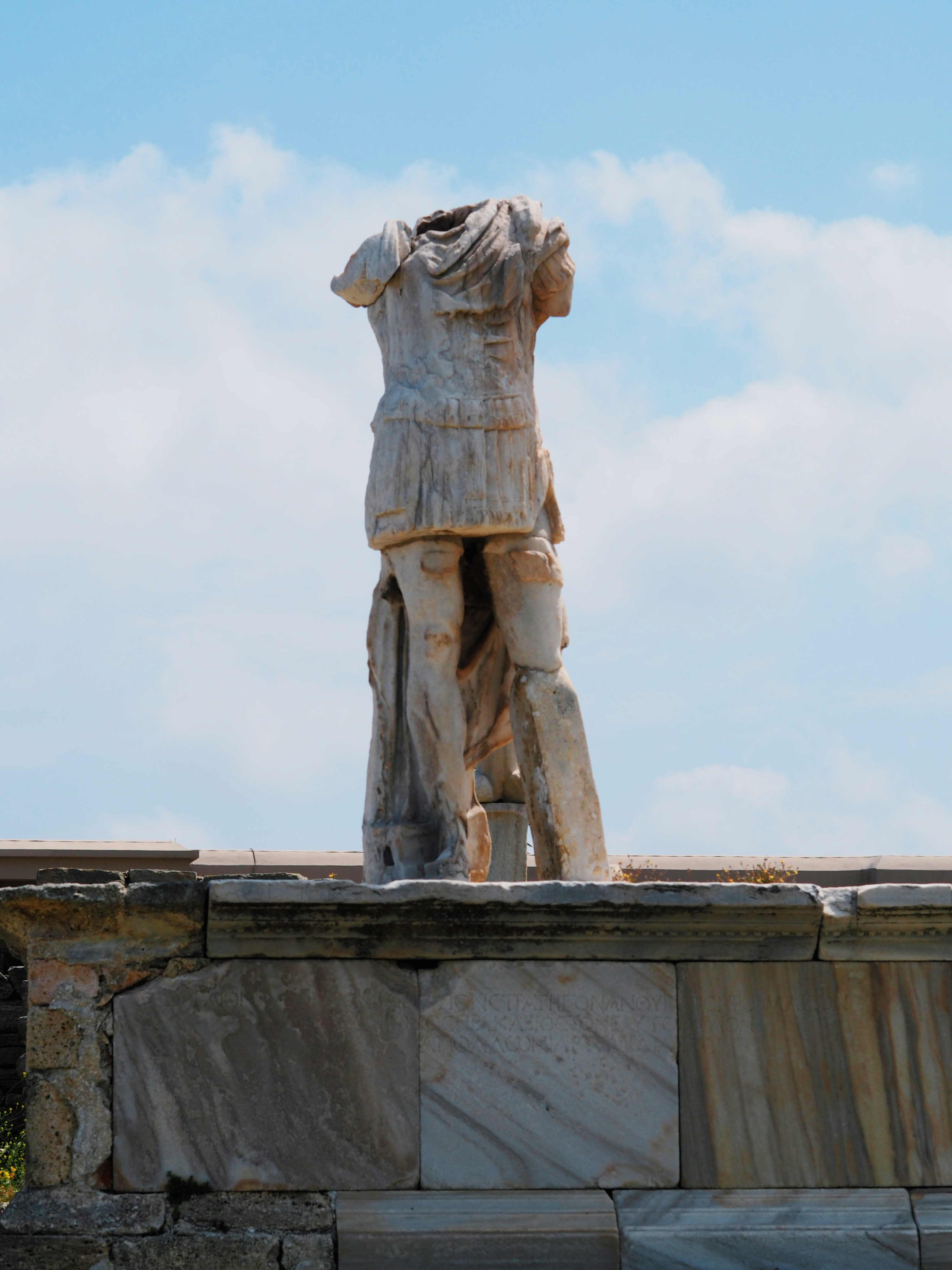
Knossos is the largest Bronze Age archaeological site in Crete and the primary monument of Minoan civilisation - the culture that dominated the Aegean from approximately 2700 to 1450 BC and produced the first major palace-based society in Europe. The palace you visit today is one of Europe’s most significant and most debated archaeological sites, substantially reconstructed by the British archaeologist Arthur Evans between 1900 and 1931.
Understanding the controversy around Evans’s reconstruction is essential before arriving: what you see at Knossos is a combination of genuine archaeology and early 20th-century interpretation, rendered in reinforced concrete and painted in Evans’s imagined colour scheme. It is simultaneously fascinating and contested.
History of the Site
Knossos was occupied from the Neolithic period (approximately 7000 BC) and the first palace complex was constructed around 2000 BC. An earthquake around 1700 BC destroyed the original palace; the second, larger palace was built on the same site and represents what is visible today. This second palace was itself damaged or destroyed around 1450 BC - the cause is disputed (invasion, another earthquake, volcanic effects from Thera).
The palace complex covered approximately 22,000 square metres and housed, at its peak, a population of perhaps 12,000–16,000 people. It functioned simultaneously as administrative centre, religious complex, storage facility, and royal residence. The labyrinthine layout of the palace - rooms, corridors, and storage areas extending over multiple levels - may be the origin of the Greek myth of the labyrinth and the Minotaur.
The Arthur Evans Reconstruction
Evans excavated Knossos from 1900 and spent three decades and a personal fortune reconstructing portions of the palace. His reconstructions, using reinforced concrete and painted frescoes based on his interpretations of the fragmentary originals, are now physically inseparable from the genuine Bronze Age remains.
Contemporary archaeology is largely critical of Evans’s methods and conclusions. The coloured columns (tapered at the top, widening downward - an authentic Minoan form), the Throne Room frescoes, the Grand Staircase, and the reconstructed upper storeys are all Evans’s interpretations rather than evidence-based restoration. The original frescoes are in the Heraklion Archaeological Museum - what you see in the palace are reproductions of Evans’s painted versions.
This does not make Knossos less worth visiting. The site is genuinely extraordinary even accounting for the reconstruction layer, and the visitor experience gives a sense of scale and spatial complexity impossible to get from a museum. But visit the museum first if possible - seeing the real objects before the reconstructed context helps calibrate what is original and what is Evans.
Key Areas of the Palace
The Throne Room: One of the most complete areas of the palace - a gypsum throne (among the oldest in Europe still in situ) flanked by painted griffin frescoes (reproductions of the originals in the museum). The room is accessible but viewing is from behind a low barrier; the arrangement gives a clear sense of the ceremonial space.
The Central Court: The large rectangular open space at the heart of the palace, approximately 60 by 29 metres. All significant parts of the palace radiate from this court. The bull-leaping fresco (original in the museum) depicted an acrobatic performance in this space.
The Grand Staircase: Evans’s most dramatic reconstruction - a multi-storey staircase with light wells allowing natural light to penetrate to lower floors. The structural concept is genuine (light wells are a documented Minoan architectural feature); the actual form is largely Evans’s interpretation.
The Queen’s Megaron: A suite of rooms on the lower level, including a bathroom with drainage - a detail that struck excavators as remarkably modern. The Dolphin Fresco (reproduction; original in the museum) decorated the queen’s hall.
The Storage Magazines: The long storage rooms on the west side of the palace contained enormous clay pithoi (storage jars) still in place - some stand taller than a person. The scale of the storage system reflects the palace’s role as an economic redistribution centre for the entire region.
The Heraklion Archaeological Museum
The Heraklion Archaeological Museum (on Xanthoudidou Street in the city centre, entry approximately €15, or included in the combined ticket) holds the best Minoan collection in existence - the original Knossos frescoes, including the bull-leaping scene, the Prince of the Lilies, the Procession Fresco, and the Cupbearer; the Phaistos Disc (an undeciphered Minoan clay disc with impressed symbols); and thousands of artefacts spanning the entire Minoan period.
We recommend visiting the museum either before or after Knossos - the combination gives the most complete picture of Minoan civilisation.
Practical Information
Getting there: Bus 2 from Heraklion city centre, approximately 20 minutes, approximately €1.70 as of 2026. Buses run regularly from 8am. Taxis approximately €10–15.
Opening hours: Open daily 8am–8pm in summer (April–October). Hours reduce to 8am–3pm November–March. Last entry 30 minutes before closing.
Heat: Knossos has almost no shade. In July and August, temperatures at the site can reach 38–40°C. Start as early as possible - the 8am opening is genuinely useful. Bring water; there is a cafe at the entrance.
Tickets: Available online at odysseus.culture.gr (advance booking recommended in summer to avoid queues) or at the entrance gate.
Combined ticket: The €20 combination with the Heraklion Archaeological Museum is better value than individual entry to both sites and valid for 3 days.
Book Knossos and Crete tours with GetYourGuide. Pick up a Greece eSIM before you fly - keeps you connected without roaming charges.
Search hotels in Heraklion on Booking.com
See Also
- Heraklion Travel Guide - Crete’s capital and the gateway to Knossos, 5km away
- Things to Do in Heraklion - Knossos, the Archaeological Museum, and the Venetian harbour
- Crete Travel Guide - the full island overview with Chania, beaches, and travel tips
- Things to Do in Crete - Knossos, Samaria Gorge, Spinalonga, and wine tasting
- Best Tours in Crete - guided Knossos tours with expert commentary
- Ancient Olympia Guide - another ancient site of comparable historical importance
- Crete vs Santorini - choosing between Crete and Greece’s most famous island