Chania Travel Guide: Venetian Harbour, Balos & Elafonisi
Chania guide: western Crete's most beautiful city. The Venetian harbour and lighthouse, the layered Old Town, and day trips to Balos and Elafonisi.
Guides for Chania
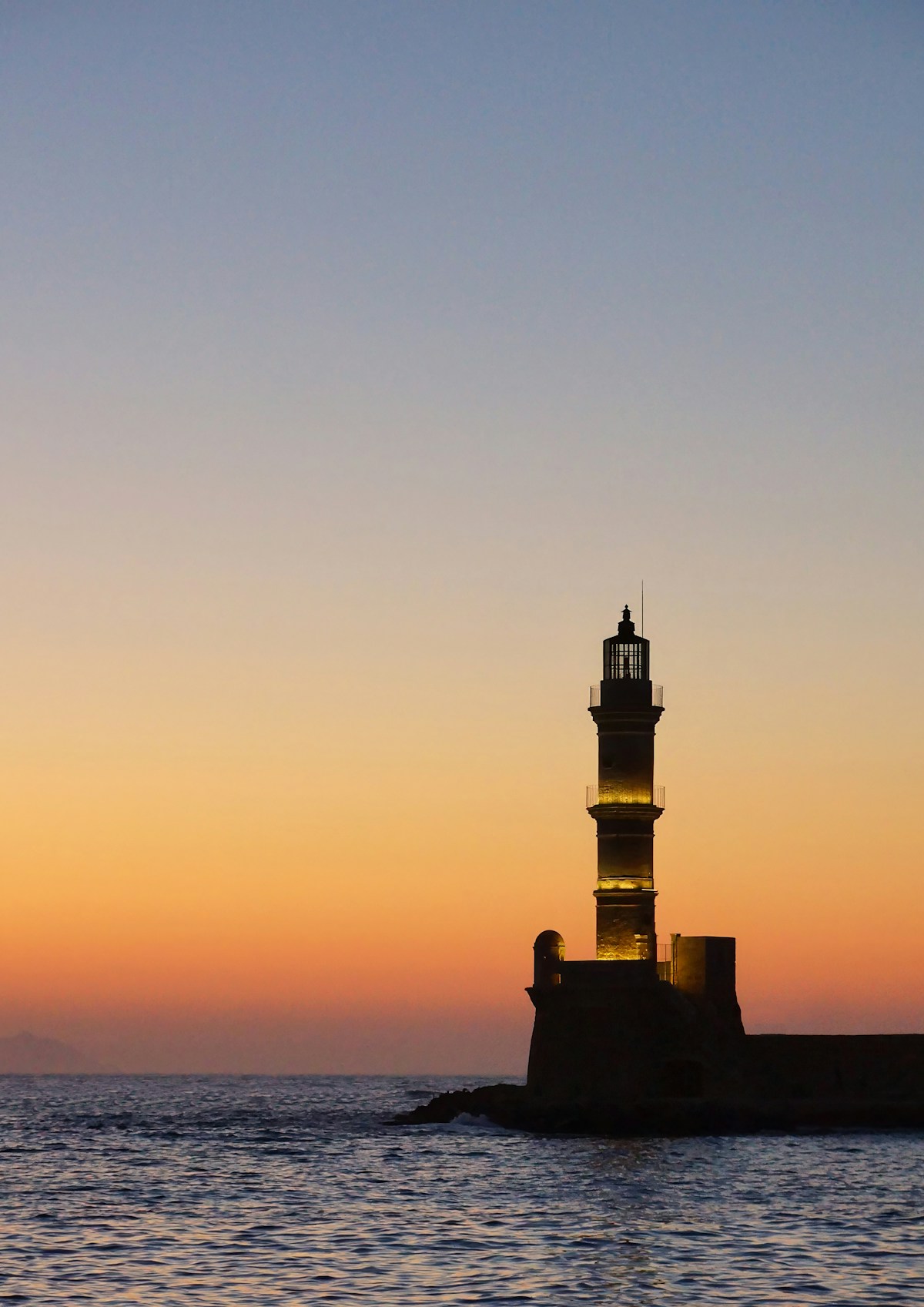
Chania is frequently described as the most beautiful city in Crete - a judgment that is hard to argue with when you are standing by the Venetian harbour at dusk, watching the lighthouse catch the last light across water the colour of glass. The city’s Old Town preserves the most intact layers of successive occupation anywhere in Greece: Minoan, Roman, Byzantine, Venetian, and Ottoman all left architectural traces, with the Venetian period most visibly present in the lighthouse, the arsenals, and the mosque at the harbour’s edge.
It is also a working city of 60,000 people, with a market, a university, daily ferry traffic, and the Chania Regional Unit serving the western half of Crete.
The Old Venetian Harbour
The harbour is the heart of Chania. The lighthouse - built by the Venetians in the 16th century and substantially rebuilt under Egyptian administration in the 19th century - stands at the end of a breakwater walkable from the western quay. The 20-minute walk to the lighthouse tip and back is one of the best things to do in Chania, particularly at sunrise or early evening before the day-trippers arrive.
The Venetian arsenals (boat repair sheds) line the eastern side of the harbour - 14th-century stone vaulted buildings still standing, some converted to exhibition and event spaces. The Hassan Pasha Mosque at the harbour corner is from the Ottoman period (1645) and now operates as an art gallery (free admission, variable hours).
The harbour waterfront restaurants are tourist-facing and expensive by Greek standards. Expect to pay approximately €30–50 per person for mediocre food with a good view. Locals and those in the know eat two streets back.
The Old Town: Splantzia and the Venetian Quarter
The district immediately behind and around the harbour is one of the finest historic neighbourhoods in Greece. The Venetian loggia (a Renaissance arcaded public building), the old Jewish quarter, the minaret of the mosque above the rooftops, and doorways with Ottoman carved stonework alternate with bougainvillea-hung alleys.
Splantzia is the most intact residential quarter - a neighbourhood of old houses, a central plateia (Plateia 1821) with a plane tree and a café, and the Church of Agios Nikolaos (a building that was successively a Dominican church, an Ottoman mosque, and is now Orthodox). This area is significantly less touristy than the harbour front.
The Municipal Market (Agora), built in the shape of a Byzantine cross in 1913, is a working covered market with butchers, cheese sellers, herb merchants, and a few tavernas inside. Entry is free; open mornings until approximately 14:00 and some afternoons.
Kournas Lake
Kournas Lake is the only freshwater lake in Crete, approximately 40km east of Chania on the edge of the Apokoronas region. The drive takes about 45 minutes. The lake is surrounded by low hills and backed by the Lefka Ori (White Mountains) - a distinctive landscape for an island more associated with sea views. Pedalo and canoe rental is available from the tavernas on the shore (approximately €5–8/hour). The village of Kournas above the lake has a handful of traditional tavernas. Entry to the lake area is free; parking at the shore approximately €2.
Samaria Gorge
Samaria Gorge is one of the longest gorges in Europe - 16km from the top entrance (Xyloskalo at 1,227m) to the Libyan Sea coast at Agia Roumeli. The hike is physically demanding (the descent gains most of the elevation in the first 6km) but well-managed: the gorge is a national park with a marked trail, wooden bridges across the stream, and toilet facilities. The famous Iron Gates - where the gorge narrows to 3 metres between walls 300 metres high - are at the 12km mark.
Logistics: Entry fee approximately €5 as of 2026, open 7am–3pm daily (May–October, sometimes extended). The park closes when the stream is in spate (typically November–April). Allow 5–7 hours for the full gorge; most visitors take the bus from Chania to Xyloskalo (KTEL, approximately €8, departures from 07:30), walk the gorge, and take the ferry from Agia Roumeli to either Sfakia or Paleochora, then bus back to Chania. The round trip including return bus is a full 10–12 hour day.
Book Samaria Gorge tours with GetYourGuide if you prefer a guided day trip with transport included.
Balos Lagoon and Elafonisi
Balos (60km northwest): The most iconic beach in western Crete. The Gramvousa peninsula ends in a shallow turquoise lagoon separated from open sea by a sandbar. Pink sand, translucent water, and the ruined Venetian fortress on the islet of Gramvousa make this one of the most photographed places in Greece. The road to Balos is rough - a 9km unpaved track requiring a high-clearance vehicle or a visit by boat tour from Kissamos port (approximately €25–30 return, including a stop at the Gramvousa fortress, as of 2026). Walk-in entry to the beach is free; parking at the road end approximately €3.
Elafonisi (75km southwest): A sandy beach at the end of a peninsula with a small island accessible by wading across a shallow channel. The sand has a pinkish tinge from crushed shells and coral. The drive from Chania takes approximately 1.5 hours via the mountain road through Paleochora, or a similar time via the coastal route. Entry free, parking approximately €3. Arrives crowded by 11am in peak season - go early.
Where to Stay in Chania
Budget: Pension Stella (Angelou 10, Old Town) occupies a characterful old house near the harbour, with basic rooms from approximately €45/night. Casa Delfino Suites & Spa is at the upper end of the Old Town accommodation spectrum, from approximately €260/night in August, but various affordable guesthouses exist throughout Splantzia.
Mid-range: Amfora Hotel (Old Town, Parodos Theotokopoulou) occupies a 14th-century Venetian building with renovated rooms from approximately €110/night in June. Doma Hotel (Venizelos 124, New Town) is a historically significant 19th-century mansion with character and good service, from approximately €100/night. Nostos Hotel (Old Town, Zambeliou) has sea-view rooms in a restored Venetian house from approximately €130/night in July.
Upmarket: Casa Leone is a beautifully restored 16th-century Venetian palazzo on the harbour with antique-furnished rooms from approximately €200/night in peak season. Lato Boutique Hotel (in the New Town near the public garden) has contemporary rooms with rooftop pool from approximately €180/night. Porto del Colombo (Old Town, Theofanous) is a small luxury property in a restored Venetian mansion from approximately €220/night in August.
For a complete listing with Old Town vs New Town comparisons, see our where to stay in Chania guide.
Where to Eat in Chania
Το Κοντινό (To Kontino): Two streets back from the harbour (Kondylaki 3), a quiet local favourite serving traditional Cretan cooking - dakos (barley rusk salad), snails with rosemary, lamb stewed with greens - at reasonable prices (approximately €15–25 per person). Locals eat here; it can be hard to find.
Well of the Turk (Kanevarou 1–3): In a restored Ottoman building in the old Jewish quarter, serving Cretan and Middle Eastern-inflected dishes. One of the most atmospheric restaurants in Chania. Approximately €25–35 per person.
Tamam (Zambeliou 49): A long-running restaurant in a converted Turkish bath (hammam), with a menu that draws on Cretan, Greek, and Turkish influences. Reliable quality and good value at approximately €20–30 per person.
Thalassino Ageri: On the coast road east of the harbour near Nea Chora, this is the best fish restaurant near Chania - fresh catch daily, no tourist price premium, approximately €20–35 per main. Book ahead in season.
Breakfast and coffee: Two reasons to visit the Municipal Market in the morning: Bougatsa Iordanis (Apokoronou 24, near the market) has been serving warm cheese-filled bougatsa since 1924. Approximately €3 for a portion. Central Café at the market square is the classic morning espresso location.
Getting Around Chania
Chania Old Town is compact and best explored on foot. The main beaches west of the city (Nea Chora, Kalamaki, Agia Marina) are reachable by urban bus (line 21, approximately €1.80 as of 2026). For day trips to Balos, Elafonisi, Samaria, and the Apokoronas region, a rental car is by far the most practical option - available from agencies near the old harbour and Chania airport (CHQ), from approximately €30–50/day.
Chania Airport (Ioannis Daskalogiannis Airport, CHQ) is 14km east of the city. No bus service runs directly to the Old Town - taxis cost approximately €25–30, or book a fixed-price transfer in advance with Welcome Pickups. Most domestic visitors land at Heraklion and travel west by bus.
For more detail, see our guides to best restaurants in Chania and day trips from Chania. For island-wide planning - how to combine Chania with Heraklion and eastern Crete, where to stay across the island, and getting around - see the Crete travel guide.
Book tours and experiences in Chania with GetYourGuide.
See Also
- Things to Do in Chania - Samaria Gorge, Venetian harbour, and the best excursions
- Best Restaurants in Chania - where to eat in the old town and along the waterfront
- Day Trips from Chania - Balos, Elafonisi, Samaria, and western Crete day trips
- Crete Travel Guide - the full island overview covering east and west Crete
- Things to Do in Crete - island-wide activities and attractions
- Best Beaches in Crete - from Balos to Vai
- Heraklion Travel Guide - Crete’s capital and the gateway for Knossos
- Knossos Palace Guide - the Minoan palace, accessible from both Chania and Heraklion
- Best Tours in Crete - guided tours covering both east and west Crete
Frequently Asked Questions
- How many days do you need in Chania?
- Two full days covers Chania's Old Town and harbour thoroughly. Three days allows for a day trip to either Balos & Gramvousa or Elafonisi. Add a day if you want to hike Samaria Gorge (a full day in itself). A 4–5 day base in Chania is ideal for combining the city with the western Crete coastline and gorge walks.
- Is Chania worth visiting over Heraklion?
- Chania and Heraklion serve different purposes. Heraklion is the base for Knossos, the Archaeological Museum, and east Crete. Chania has more architectural character in its Old Town, better beaches nearby, and arguably a stronger restaurant scene. Most visitors to Crete do both: a day or two in each. If you can only choose one as a base, Chania wins on atmosphere.
- Is Chania safe to swim?
- Yes - beaches immediately west and east of Chania (Nea Chora, Kalamaki, and Agia Marina) have good water quality and generally calm conditions. The more dramatic beaches at Balos and Elafonisi require travel but are among the most beautiful in Greece. Samaria Gorge ends at Agia Roumeli beach on the Libyan Sea - swimming after the gorge hike is traditional and the water is exceptional.
- What is the best day trip from Chania?
- Balos and Gramvousa peninsula (60km northwest) is the most spectacular - shallow turquoise lagoon, flamingos in spring, and the Venetian castle of Gramvousa. The road to Balos is rough (high-clearance vehicle or boat tour recommended). Elafonisi (75km southwest, approximately 1.5 hours) is an easier drive to a unique pink-tinged sand beach and island accessible by wading. Both are full-day trips.
- How do I get from Heraklion to Chania?
- KTEL buses run frequently from Heraklion Bus Station (KTEL A) to Chania Bus Station on Kydonias Street - approximately 2 hours 30 minutes, fare approximately €14 as of 2026. The highway runs close to the coast for much of the route. A rental car takes approximately 2 hours. No train service exists in Crete.
Book an experience
Top experiences in Chania
Explore the best tours and activities in Chania, with instant confirmation and free cancellation on most bookings.