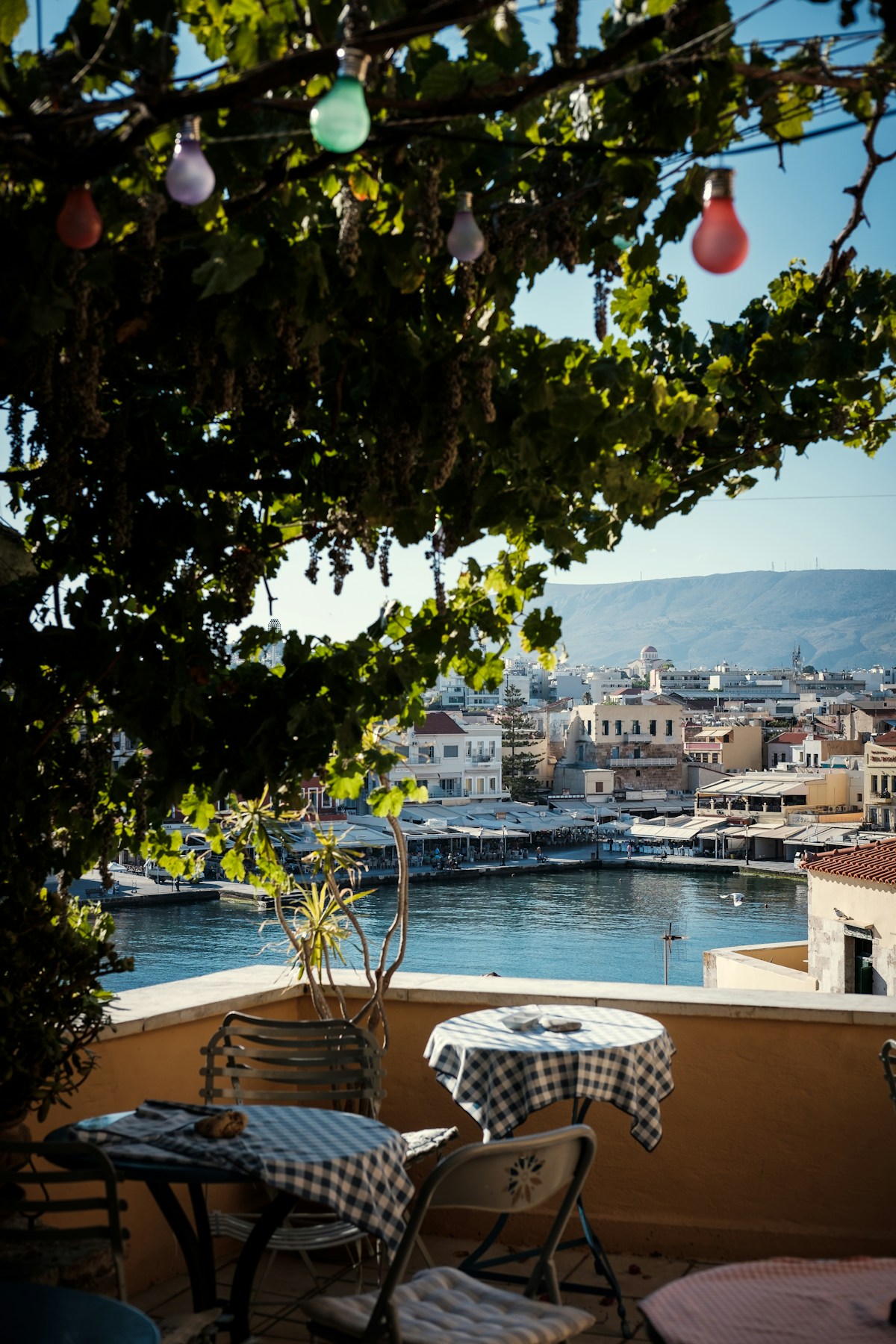
Chania’s food scene reflects three thousand years of occupation and influence - Minoan, Greek, Arab, Venetian, and Ottoman all left something behind. What that produces in practice is a Cretan kitchen that is distinctive within Greece: more olive oil, more wild greens, more use of carob and barley, and an emphasis on slow-cooked meats and aged cheeses that you don’t find with the same consistency elsewhere. Here is where to eat well across every budget, with specific names, what to order, and honest price expectations. All prices are approximate as of 2026.
Cretan Street Food and Market Eating
Before restaurants, a primer on the food you should be buying from market stalls and bakeries.
Dakos: The Cretan rusks - dried twice until completely hard - are soaked briefly in water, then topped with crushed fresh tomato, crumbled feta or mizithra cheese, and good olive oil. It sounds simple. Done well with Cretan olive oil and ripe August tomatoes, it’s one of the better things you can eat in Greece. The Agora market stalls and most bakeries sell them for EUR 3–4.
Spinakopita and tiropita: Cretan spinach and cheese pies are noticeably richer than Athenian versions, made with more olive oil and often with wild greens mixed into the spinach. Any fourno (bakery) in the old town will have them fresh in the morning, approximately EUR 1.50–2 per slice.
Raki and mezedes: Free raki - Crete’s grape distillate - is brought to the table at the end of most traditional meals without being ordered. Don’t confuse this hospitality with an upselling opportunity; it’s genuine. In the evenings, small plates of mezedes often come with it.
Graviera cheese: Buy it at the Agora market, not from tourist souvenir shops. The aged variety (sold by weight) is particularly good. Approximately EUR 12–18 per kilo (as of 2026).
Budget and Local Spots
Apostolis I and II - Harbour Arsenals
Two side-by-side tavernas in the restored Venetian arsenals at the inner harbour. Not cheap for the location, but significantly better quality than most of the harbour competition. The seafood is genuinely fresh - grilled red mullet, octopus, and calamari are the things to order. Budget approximately EUR 25–35 per person with a carafe of house wine. Apostolis II (the newer of the two) tends to have shorter waits.
To Maridaki - Splantzia
A small fish taverna on Daskalogiannis Square in the Splantzia quarter that operates as a simple ouzo bar and fish restaurant. The kind of place where whatever arrived that morning at the fish market is what you are eating. Grilled fish by weight, fried small fish for sharing, wine from a ceramic jug. Budget approximately EUR 15–20 per person. Arrive early (before 8pm) or expect to wait - there are not many tables.
Tamam - Old Town
A Chania institution in a former Ottoman hammam on Zambéliou Street. The interior keeps the vaulted domed ceiling and it is genuinely atmospheric. The menu is traditional Cretan and Eastern Mediterranean: stuffed aubergine, lamb kleftiko, mixed vegetable dishes with good olive oil. Popular with both Chanians and visitors and consistently reliable. Budget approximately EUR 20–28 per person.
Thalassino Ageri (The Fishing Lodge) - Koum Kapi
Just east of the Old Town on the Koum Kapi waterfront, this fish restaurant sits directly on the rocks at the sea’s edge. The setting is excellent (the water is immediately below) and the kitchen is one of the better seafood operations in Chania. The bouillabaisse-style fish soup and grilled sea bream are the menu anchors. Budget approximately EUR 30–45 per person. Reservations advisable in summer - it fills quickly.
Mid-Range: Tavernas Worth a Detour
Ela - Kondylaki Street
A relaxed mezedopoleion (mezedes restaurant) on one of the Old Town’s lanes that does the Cretan sharing-plates format well. Order five or six small plates per two people - the graviera saganaki (fried aged cheese), the kritharoto (Cretan orzo with seafood), and the daily specials board are the most reliable choices. Budget approximately EUR 22–30 per person.
Portes - Portou Street
A family-run taverna in the Old Town that is noticeably more local in character than most harbour-area restaurants. The focus is on traditional Cretan recipes executed honestly: stuffed zucchini blossoms, goat cooked in tomato and herbs, the daily soup. Modest setting, very good food. Budget approximately EUR 18–25 per person.
Remezzo - Harbour Front
Among the stronger of the harbour-front restaurants. The seafood and fish are treated with more care than most of the competition, and the kitchen does the Cretan mezedes correctly. Better value at lunch than dinner when tourist traffic peaks. Budget approximately EUR 28–38 per person.
Sweets and Pastries
Bougatsa: Chania’s contribution to Greek pastry culture - a warm pie of semolina cream or fresh white cheese (mizithra) wrapped in flaky pastry, dusted with cinnamon and icing sugar. It is made fresh in the morning and served throughout the day from dedicated bougatsa shops. The most respected names in Chania are Iordanis and Kiria Maria near the Agora. Approximately EUR 2.50–3.50 per portion (as of 2026).
Xerotigana: Cretan deep-fried spirals of pastry soaked in honey and crushed walnuts, traditional at celebrations and increasingly available at market stalls in summer. Approximately EUR 3–5 per portion.
A Word on the Harbour Front
The restaurants lining the inner harbour promenade are scenic and some are genuinely decent. They are also expensive - expect to pay 20–30% above what comparable food costs two streets back. If the view matters to you, pay for it. If you want the best food-to-price ratio in Chania, eat in Splantzia, at the Agora, or on the side streets behind the main tourist thoroughfares.
Take a Guided Food Tour of Chania
Chania’s covered market (the Agora), the backstreets of Splantzia, and the harbour bakeries reward a guided walk that steers you past the tourist-trap waterfront restaurants toward the places Cretans actually eat. Local food guides know which market stalls sell single-estate olive oil versus blended product, where the family-run tavernas are hidden one street back from the promenade, and how to read the difference between a genuine Cretan kitchen and one playing to tourist expectations. A food tour also unlocks the backstory: why the Cretan diet carries UNESCO Cultural Heritage status, and how centuries of distinct agricultural tradition shaped the dishes you’re eating.
Browse Chania food tours and culinary experiences → GetYourGuide
For the full overview of Chania including where to stay and how to get around, see our Chania travel guide. For things to do between meals, see our Chania things to do guide.
Book Crete tours and excursions with GetYourGuide. Pick up a Greece eSIM before you fly - keeps you connected without roaming charges. Cover your trip with travel insurance for Greece.
See Also
- Chania Travel Guide - city overview with where to stay and getting around
- Things to Do in Chania - the Venetian harbour, Samaria Gorge, and local experiences
- Day Trips from Chania - Balos, Elafonisi, and the south coast
- Crete Travel Guide - the island context for understanding Cretan cuisine
- Restaurants in Crete - the best Cretan tavernas across the island
- Greek Food Guide - the traditions behind Cretan and Greek cooking
- Best Tours in Crete - food tours and cooking classes in western Crete
Need a base? Search hotels in Chania.