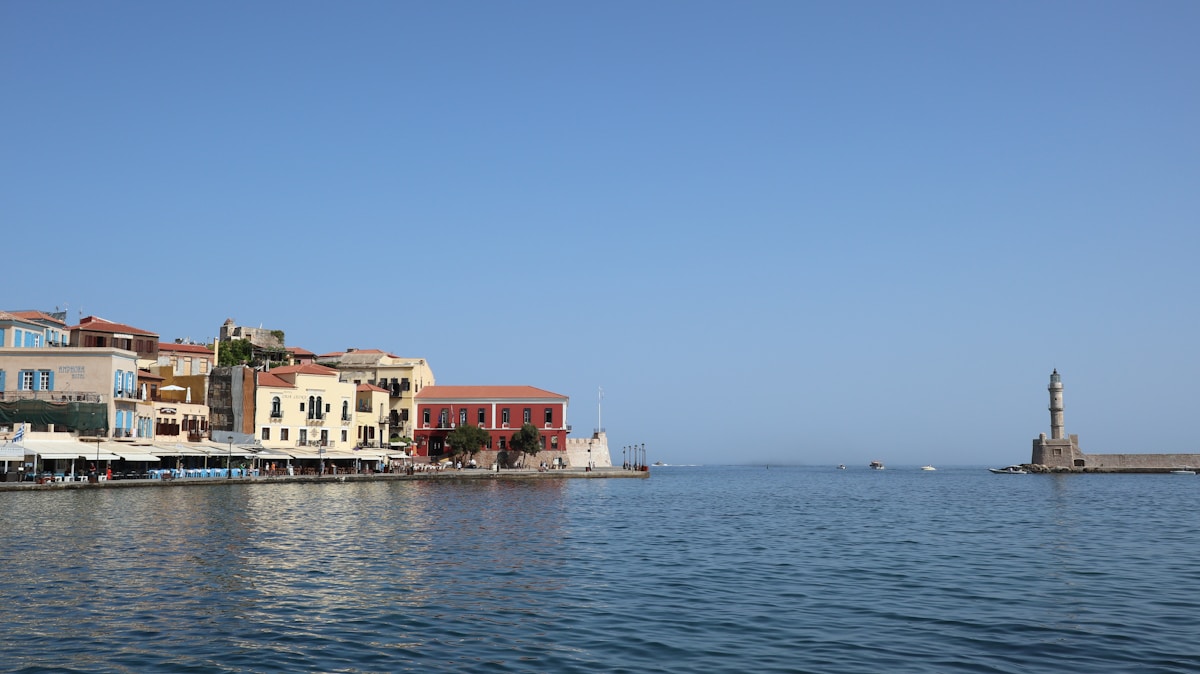
Chania is the most elegantly preserved city on Crete. The Venetian old town - a layered archive of Minoan, Roman, Arab, Venetian, and Ottoman occupation - wraps around a harbour that gets genuinely stunning in the late afternoon light. Beyond the city, western Crete delivers some of the island’s most dramatic landscapes: the deepest gorge in Europe, a remote beach with pink sand, and a lagoon that looks more Caribbean than Mediterranean. Here are the ten experiences that make Chania worth your time, with practical details for each.
Top Guided Experiences in Chania
| Tour | Duration | Price (from) | Group Size | Highlights |
|---|---|---|---|---|
| Samaria Gorge Guided Day Trip | Full day | from EUR 25/person | Coach | 16km gorge descent, national park, Agia Roumeli beach |
| Balos Lagoon Boat Trip | Full day | from EUR 22/person | Boat | Turquoise lagoon, Gramvousa island fortress, ferry from Kissamos |
| Elafonisi Beach Day Trip | Full day | from EUR 25/person | Coach | Pink-sand tidal island, shallow lagoon, crystalline water |
| Chania Old Town Walking Tour | 2.5 hrs | from EUR 20/person | Small group | Venetian harbour, Splantzia, Archaeological Museum (EUR 4 entry) |
Browse all Chania tours → GetYourGuide
Chania Venetian Harbour
The harbour is the visual centrepiece of Chania - the Venetian lighthouse at the end of the breakwater, the arc of 14th-century stone arsenals along the inner quay, and the Ottoman mosque (Yiali Tzami) at the harbour mouth together form one of the most photographed scenes in Crete.
Walk the full length of the outer breakwater to the lighthouse (free, 15 minutes) for the best view back across the city. Early morning or late evening avoids the tourist congestion that peaks between 10am and 6pm in summer.
Cost: Free to walk. The breakwater and harbour promenade are open at all hours.
Insider tip: The Egyptian lighthouse was originally built by the Venetians in the 16th century and rebuilt under Egyptian rule in the 19th century. The mix of architectural periods is characteristic of Chania throughout - nothing is purely from one era.
Chania Old Town and Splantzia Quarter
The Old Town extends well beyond the harbour front. The Splantzia quarter (northeast of the harbour, behind the Agios Nikolaos mosque) is the least touristy part of the old city - narrow Ottoman-era lanes, Venetian doorways, mulberry trees growing through courtyard walls, and the occasional Byzantine church still in use.
The Venetian loggia on Chalidon Street, the Trimartiri Cathedral, and the former mosque of Splantzia (now a church) are all within a few minutes of each other. Unlike the harbour promenade, these streets see predominantly local traffic during the day.
Cost: Free to walk. Most churches are open in the mornings.
Chania Archaeological Museum
Housed in the 16th-century Venetian church of San Francesco (the finest Venetian building in Chania), the Archaeological Museum holds artefacts from western Crete spanning the Neolithic to Roman periods. The Minoan collection is the highlight - Linear A tablets, sealstones, clay figures, and pottery that contextualises what the Minoan sites around Crete actually represent.
The building itself is worth the entry fee: the nave is intact, and the Ottoman fountain in the garden outside is one of the few remaining examples in the city.
Entry: Approximately EUR 4 standard as of 2026.
Opening hours: Tuesday–Sunday 8am–3pm. Closed Mondays.
Agora (Covered Municipal Market)
Built in 1913 in the shape of a cross, the Agora is Chania’s covered market and one of the more atmospheric food markets in Greece. The interior arcade holds butchers, fishmongers, cheese sellers, olive oil merchants, and herb stalls packed close together in the original iron-framed structure.
This is the place to buy Cretan products - thyme honey, aged graviera cheese, raki, mountain oregano - at real prices rather than tourist-shop markups. Come before noon when it is busiest and most of the stalls are fully stocked.
Hours: Monday–Saturday from around 6am. Some stalls close early afternoon; the market quietens significantly after 2pm.
Cost: Free to enter. A coffee at the taverna inside the market is approximately EUR 2–3.
Samaria Gorge
The Samaria Gorge is the longest gorge in Europe - 16km from the plateau of Omalos (1,200m above sea level) to the beach at Agia Roumeli on the Libyan Sea. The walk descends through a national park, past abandoned villages, through the famous Iron Gates (where the gorge narrows to 3–4 metres wide), and ends on a pebble beach where the only exit is by boat.
The full descent takes approximately 4–6 hours depending on fitness and crowd levels. The gorge is open from May to October; it closes after heavy rain due to flash flood risk.
How to get there: KTEL buses depart Chania bus station from 6am in summer (approximately EUR 7.50 each way to Omalos). The return ferry from Agia Roumeli to Hora Sfakion costs approximately EUR 14; add the KTEL bus back to Chania from Hora Sfakion for approximately EUR 7. Guided day trips from Chania run approximately EUR 25–40 per person all-inclusive.
Entry: Approximately EUR 5 per person (as of 2026), paid at the gorge entrance at Xyloskalo.
Balos Lagoon
Balos is the most celebrated beach in western Crete - a shallow turquoise lagoon separated from the open sea by a narrow sand and pebble bar, backed by the island of Gramvousa and its Venetian fortress. The pink-tinted sand comes from crushed shells and coral.
Access requires either the rough 8km unpaved track from the Kissamos road (a regular car can manage this carefully), or the daily ferry from Kissamos port (approximately EUR 20 return, 1 hour each way, running June–October as of 2026). The lagoon gets extremely crowded in July and August - arrive by 8am or come mid-September when numbers drop significantly.
Cost: Approximately EUR 1 beach access fee at the car park on the headland above the lagoon (as of 2026). The walk down from the car park to the lagoon takes 20 minutes.
Falassarna Beach
Falassarna, 55km west of Chania, is consistently ranked among the top ten beaches in Greece. A long arc of fine sand with minimal development, clean water, and a reliable sunset view (it faces almost due west). The ancient city of Falassarna, now largely underwater, is visible from the northern end of the beach.
How to get there: A car is the practical option - the drive from Chania takes approximately 55 minutes. No reliable bus service in summer covers the timing for a beach day.
Facilities: Several beach bars along the main strand, approximately EUR 8–12 for a sunbed pair (as of 2026). Parking is free at the main access points.
Elafonisi Beach
Elafonisi is Crete’s pink-sand beach - a tidal island joined to the mainland by a shallow crossing, with a lagoon on one side and open sea on the other. The water stays shallow and warm all day, making it particularly good for children.
At 75km southwest of Chania, it requires a longer drive (approximately 1.5 hours) or a day-trip bus. In July and August it is overwhelmed with visitors - 2,000+ people on peak days. Go in June or September for a more manageable experience.
How to get there: Organised day trips from Chania run approximately EUR 25–35 per person including transport. By car, 1.5 hours on the south-coast road via Paleochora.
Cost: Small parking fee at the access road. No beach entry charge.
Chania Leather Lane (Skridlof Street)
Chania’s leather market - a street almost entirely given over to leather goods - is one of the more intact traditional craft concentrations left on Crete. Sandals, bags, belts, and jackets are made and sold in small workshops along the street. The quality varies; the better workshops will custom-make sandals to fit while you wait (approximately EUR 25–50, as of 2026).
This is a genuine working craft street rather than a tourist reproduction, and prices are generally fair by comparison with equivalent quality elsewhere.
Location: Skridlof Street, one street back from the harbour.
Aptera Archaeological Site
Aptera is a Bronze Age to early Byzantine site on the plateau above Chania’s Bay of Souda, 14km east of the city. The ruins are extensive: a Classical temple, a Roman cistern that is one of the largest surviving in Crete, two Roman theatres, Byzantine chapels, and a 19th-century Ottoman fortress perched on the edge of the plateau with views across the bay.
Aptera is consistently overlooked by visitors focused on Knossos and Heraklion - which means you often have the site almost to yourself, even in high season.
Entry: Approximately EUR 4 standard as of 2026.
Opening hours: Tuesday–Sunday 8am–4pm.
Getting there: A 15-minute drive east of Chania on the old national road. Limited bus access - a car or taxi is most practical.
For guided excursions from Chania including Samaria Gorge and Balos, see our Crete tours guide. For the full city overview including accommodation and getting around, read our Chania travel guide.
Book Crete tours and excursions with GetYourGuide. Pick up a Greece eSIM before you fly - keeps you connected without roaming charges.
Search hotels in Chania on Booking.com
See Also
- Chania Travel Guide - full city guide with accommodation and transport
- Best Restaurants in Chania - where to eat in the old town and harbour
- Day Trips from Chania - Balos, Elafonisi, Samaria Gorge, and the south coast
- Crete Travel Guide - the full island overview
- Best Beaches in Crete - Balos, Elafonisi, and the best spots across the island
- Best Tours in Crete - guided tours from Chania covering all western Crete
- Knossos Palace Guide - the Minoan palace, accessible on a long day trip from Chania
- Heraklion Travel Guide - the capital, 2.5 hours east