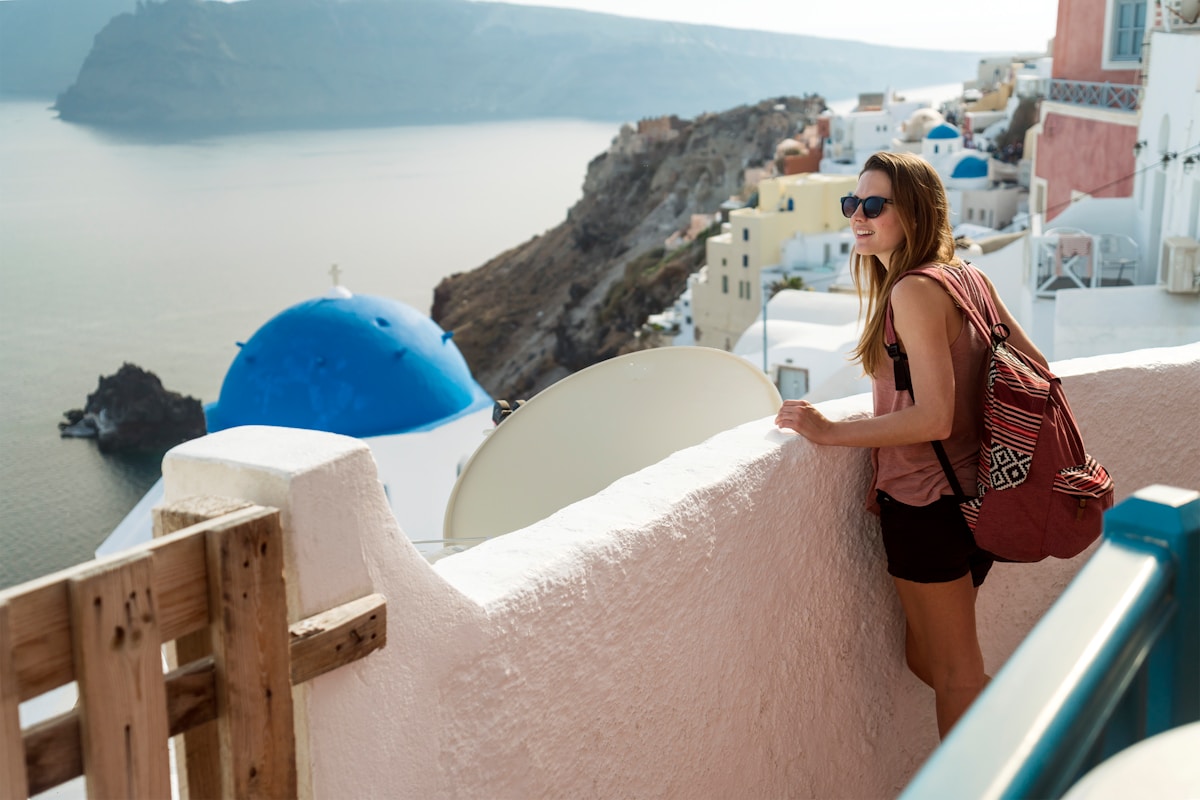
Greece consistently ranks among the easier European countries for solo female travel. The infrastructure is well-developed, English is widely spoken at tourist destinations, crime rates are low, and Greek hospitality - while sometimes forward - is rarely hostile. That said, no destination is without its considerations, and a solo trip to Greece goes more smoothly when you know what to expect. See also our is Greece safe guide for a broader safety overview.
The Overall Safety Picture
Greece’s crime rate against tourists is low. Violent crime is uncommon, petty theft (bag snatching, pickpocketing) occurs in crowded urban areas - particularly around Athens’ Monastiraki and Omonia squares, and on busy island waterfronts in peak season - but is not pervasive. The main issue solo female travellers report is verbal attention: comments, uninvited conversation, occasional persistence from men in bars and on beaches. This is more common in nightlife-heavy spots and largely avoidable with confident body language and a firm but calm refusal to engage.
Greece is a deeply family-oriented culture. Travelling solo, especially if you are clearly a visitor, tends to generate more curiosity and offers of help than hostility. Taverna owners, ferry staff, and locals in smaller villages often go out of their way to assist.
Best Islands for Solo Female Travellers
Paros
One of the best-rounded solo destinations in the Cyclades. Naoussa and Parikia both have excellent transport links, a wide range of accommodation (from hostels with social areas to affordable guesthouses), and established traveller communities. It is possible to meet people easily without entering the bar scene. Day trips to nearby Naxos and Antiparos run regularly by ferry. Busy without being overwhelming; compact enough to feel safe navigating on a rented scooter.
Search hotels in Greece on Booking.com
Naxos
The largest Cyclades island and one of the most self-sufficient - good local food, beautiful beaches (Plaka, Agios Prokopios) reachable by local bus, and a Chora (old town) labyrinth that is genuinely pleasant to explore alone. Less party-focused than Ios or Mykonos. The island has good connections north to Paros and east to Amorgos and Donoussa for those continuing further into the small Cyclades.
Crete (Chania Area)
Chania is one of the most comfortable Greek cities for solo travel - a Venetian harbour, excellent restaurants ranging from cheap mezze to sit-down dinners that do not make solo diners feel awkward, good public transport west to Falassarna beach and east towards Rethymno. The island has all major services (hospitals, international ATMs, direct flights to most European cities). For those wanting hikes, the Samaria Gorge and the E4 trail sections are popular with solo walkers and well-signed.
Rhodes Old Town
A UNESCO World Heritage walled city that is safe, compact, and full of enough people that you never feel isolated. Good for a few days as a base - day trips to Lindos (45 minutes by bus), beaches at Tsambika, and the Byzantine ruins above Monolithos are all manageable alone. The ferry port gives easy access to Kos, Symi, and the Dodecanese chain.
Symi
A steep, colourful Dodecanese island reachable by day trip from Rhodes (approximately 1 hour 15 minutes by hydrofoil). Many solo female travellers rate it highly: small enough that you learn the streets quickly, quiet enough for genuine rest, and with a handful of good tavernas that do not feel intimidating to enter alone. Stay at least two nights to get beyond the day-tripper rhythm.
Hydra
No cars, no scooters, no noise beyond donkey hooves on cobblestones. Hydra is one of the most peaceful islands in Greece and genuinely easy for solo travel - the island’s small size means nothing is far away, the waterfront is always active but never aggressive, and the artists-and-writers culture attracts a relatively thoughtful visitor mix. Ferry from Piraeus takes approximately 1 hour 40 minutes (Flying Dolphin).
Athens for Solo Female Travellers
Athens is a large city and requires the same awareness you would bring to any European capital. The tourist districts - Plaka, Monastiraki, Kolonaki, Koukaki - are safe and lively until late. Areas around Omonia Square and Victoria Station are rougher and better avoided at night, particularly alone. The metro is generally safe; be aware on Line 1 (the oldest, running to Piraeus) in the late evening.
The National Archaeological Museum, the Acropolis and its museum, and the ancient Agora are all excellent solo experiences. Entry to the Acropolis costs approximately €20 as of 2026 (check current pricing at odysseus.culture.gr). The Acropolis Museum is one of the finest museums in Europe and easily half a day alone.
For eating solo in Athens, counter seating is common in mezedopoleio-style tavernas. Seated restaurants in the tourist zones are entirely comfortable for solo diners. The Monastiraki flea market area on Sunday mornings is an excellent solo morning.
Transport Tips
Ferry travel: Greek ferries are generally safe and well-managed. Book cabins on overnight ferries for security and sleep quality - a four-berth shared cabin is cheaper than a private cabin but you share with whoever is allocated. For day ferries, stay in common areas, keep your bag visible. The KTEL bus terminal in Athens (KTEL Kifissou, accessible by Bus 051 from Omonia) is basic; book your ticket in advance if possible.
Getting around islands: Renting a scooter is the easiest way to reach beaches and villages independently, but requires care: Greek roads are often narrow, poorly surfaced, and shared with buses and donkeys. If you are not experienced on two wheels, hire a car or use local buses (ASTICs) which run between main villages on larger islands. Taxis are broadly reliable; agree on the price before getting in if the driver suggests not using the meter.
Solo night travel: Keep return ferries booked in advance; late-night ferries from party islands (Ios, Mykonos) can be chaotic. If arriving somewhere new after dark, book accommodation in the centre or arrange pickup in advance.
Accommodation Tips
Hostels: Greece has a reasonably good hostel network in Athens (Athens Backpackers in Monastiraki is frequently recommended) and on busier islands. Social areas are good for meeting people if that is a goal; female-only dorms are available at most larger hostels.
Small guesthouses: Often the most comfortable solo accommodation. Family-run places in smaller villages mean someone is usually around if you have a problem. Prices range from approximately €35–€60 per night for a private room in shoulder season, rising to €60–€120 in peak July–August.
AirBnB: Works well on bigger islands and in Athens; be cautious booking very remote locations without reading reviews carefully from other solo female travellers.
Nightlife and Social Scene
Greece’s nightlife can be excellent and can also be relentless. Ios is the party island - Ios Chora has a main strip of bars that operates from around midnight until dawn in peak season. Mykonos has a similar dynamic, amplified by the LGBTQ+ and influencer scenes. Both are entirely navigable solo, but drink spiking has been reported at both, particularly in clubs. Standard precautions: never leave a drink unattended, use a buddy system if possible, and know where you are going before you go out.
More manageable nightlife for solo travellers who want social but not extreme: Chania’s old town, Paros (Naoussa), Rhodes Old Town, and Thessaloniki’s Ladadika district.
Practical Kit
- Portable charger: Ferries and buses do not always have power points. A flat phone in an unfamiliar port is stressful.
- Offline maps: Download your islands on Google Maps or Maps.me before you arrive. Coverage on small islands can be patchy.
- Travel insurance: Cover medical costs - Greek private hospitals are good but expensive. The European Health Insurance Card (EHIC or its UK equivalent GHIC) covers state hospitals for EU and UK citizens respectively.
- Emergency numbers: 100 (Police), 112 (EU emergency), 1571 (Tourist Police - English-speaking officers available in major tourist areas).
Greece is a rewarding solo destination. The combination of ancient history, island landscapes, good food, and a culture that generally treats visitors well makes it one of the more straightforward Mediterranean countries for a first solo trip. Go with reasonable precautions, stay aware, and trust your instincts.
Sort out travel insurance for Greece before you leave. Pick up a Greece eSIM before you fly - keeps you connected without roaming charges. Book tours and activities across Greece with GetYourGuide.
Related Guides
- Is Greece Safe? - full safety guide covering crime, health, and scams
- Greece Travel Tips - practical advice for all visitors
- Best Time to Visit Greece - shoulder season means quieter destinations
- Athens Travel Guide - solo traveller-friendly base with great museums and dining
- Greece Honeymoon Guide - Santorini, Mykonos, and beyond
Plan Your Trip
✈️ Book your flights to Greece 🛡️ Get travel insurance 📱 Stay connected with an eSIM 🚗 Rent a car