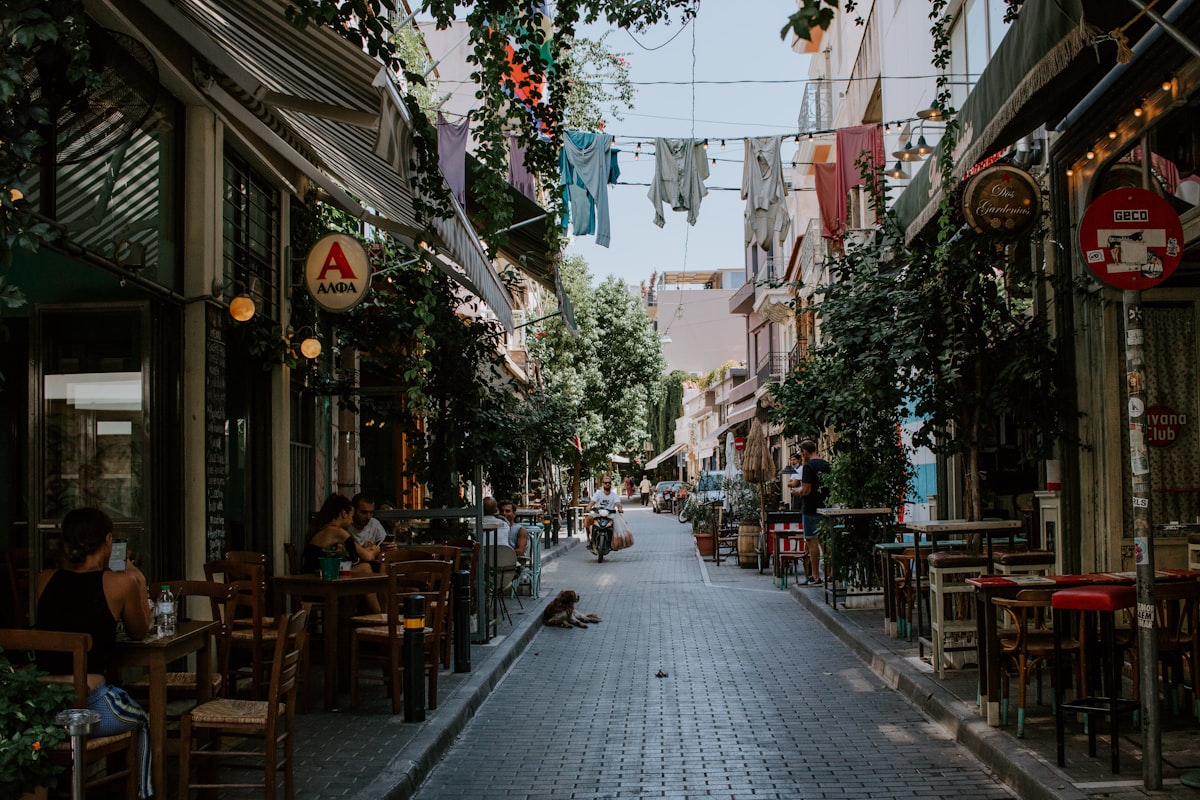
Greece has one of Europe’s most attractive digital nomad propositions: a formal visa, a compelling tax break, and a lifestyle that most of the continent charges a premium for. Rents are still lower than Madrid or Lisbon. The food costs a fraction of what you’d pay in northern Europe. And the Aegean in summer is the Aegean in summer - there’s no equivalent.
The nomad scene here is maturing quickly. Athens now has a genuine coworking ecosystem, international communities, and the kind of infrastructure that serious remote workers need. Thessaloniki and Crete offer quieter alternatives for those who want to escape capital-city pace without sacrificing connectivity.
The Greece Digital Nomad Visa
Greece introduced its digital nomad visa under Law 4825/2021, making it one of the first EU countries to formalise long-term remote work residency. This is the version worth paying attention to if you’re planning to stay longer than 90 days.
Who it’s for: Non-EU nationals working remotely for clients or employers outside Greece.
Key requirements:
- Proof of remote income of at least €3,500 per month (after tax), evidenced by employment contracts, client agreements, or bank statements
- Valid private health insurance covering Greece
- Clean criminal record certificate from your home country
- Valid passport (at least 12 months remaining)
The application process: Apply at a Greek consulate or embassy in your country of residence. Processing typically takes 4–8 weeks. You’ll receive a national D-visa allowing entry, then register for a residence permit (άδεια διαμονής) once in Greece. The initial permit covers 12 months and is renewable.
The 50% tax exemption: This is the headline incentive. Non-EU nationals who take up Greek tax residency and have not been Greek tax residents for at least 5 of the preceding 6 years can claim a 50% exemption on Greek-sourced income for their first 7 years as residents. For remote workers earning above average rates, this is a substantial financial benefit - and substantially better than most competing programmes in Europe.
Important caveat: Tax situations are personal and the rules can change. Get advice from a Greek tax accountant (λογιστής) before making decisions based on the exemption. The exemption applies to income taxed in Greece - verify whether your specific income type and employment structure qualifies.
Application route: Greek consulates in the US, UK, Australia, and Canada all handle DN visa applications. The Greek government’s Enterprise Greece agency publishes current guidance; search “Greece digital nomad visa” on their official site for the latest requirements.
EU Citizens Working Remotely from Greece
If you hold EU/EEA citizenship, you have the right to live and work freely in Greece - no visa required. Register at the local municipal office (ΚΕΠ) if you intend to stay beyond 3 months. You can open a Greek bank account, get a tax number (ΑΦΜ), and access the state healthcare system (ΕΟΠΥ) once registered.
Non-EU nationalities (UK, US, Canada, Australia, and most others) receive 90 days within any 180-day period under Schengen rules without a visa. This is enough for a trial stay - if you want to stay longer, you need the digital nomad visa or another permit.
ETIAS: Greece is implementing the EU’s Electronic Travel Information and Authorisation System (ETIAS) for visa-exempt non-EU travellers. This is a pre-travel authorisation, not a visa, but it will be required before entry. Check the latest ETIAS rollout timeline before booking.
Best Cities for Digital Nomads in Greece
Athens - The Main Base
Athens is the obvious starting point for most nomads. The infrastructure is the best in Greece, the coworking options are genuinely good, and the airport (Eleftherios Venizelos, ATH) connects directly to most of Europe, the UK, and beyond.
Best neighbourhoods for nomads:
- Syntagma / Kolonaki: Central, polished, closest to most coworking spaces. Rents run higher - expect €900–1,400/month for a one-bedroom.
- Koukaki: Just south of the Acropolis, popular with younger expats and creatives. Slightly lower rents (€700–1,100/month), excellent cafe scene, walkable to central coworking.
- Pangrati / Mets: Quieter residential areas east of the city centre. More local feel, lower rents (€650–1,000/month), still easy metro access.
- Exarcheia: The alternative quarter - bohemian energy, cheap tavernas, and a growing number of work-friendly cafes. Not for everyone, but a strong community vibe.
Coworking spaces in Athens:
- Colab Athens (Panepistimiou, Syntagma area) - one of the most established spaces; hot desks from approximately €18/day, monthly from €180. Reliable gigabit fibre.
- Stone Soup (Koukaki) - popular with freelancers and creatives; day pass approximately €15, monthly approximately €150. Good community events.
- The Cube Athens (Pangrati) - slightly larger space with private offices; monthly desk from approximately €200–280.
- Regus / IWG (multiple locations) - corporate option; useful if you need a registered business address or meeting rooms.
Cafe wifi culture: Athens cafes are generally work-friendly. The Athenian coffee culture is slow-paced - you can nurse a single Greek coffee (ελληνικός καφές) or freddo espresso for hours without pressure. Monastiraki, Thissio, and Koukaki neighbourhoods have the densest concentration of good work cafes.
Internet speeds: Fibre is widely available in Athens apartments. Most buildings offer connections from 100 Mbps to 500 Mbps. Mobile data (Cosmote 4G/5G) runs reliably at 40–120 Mbps across the city.
Thessaloniki - The Underrated Second City
Thessaloniki is Greece’s second city and, for a growing number of nomads, a better fit than Athens. Rents are around 20% lower, the food scene is arguably better, the Byzantine architecture is world-class, and the city has a young energy driven by its large university population.
The Ladadika district - the old warehouse district near the port - is the creative and social hub. Bars, restaurants, and a growing cluster of independent cafes that work well for remote workers. Expect wifi speeds of 30–80 Mbps in most cafes.
Coworking options in Thessaloniki:
- Impact Hub Thessaloniki - the established name; hot desks from approximately €15/day, monthly from €160. Community-focused with regular events.
- CoWork Thessaloniki - smaller, independent space near the centre; monthly memberships from approximately €120.
Thessaloniki is a particularly strong option for nomads who want a quieter winter base with good connectivity. The tourist season is milder than Athens, the city stays livelier year-round, and rents are negotiable outside summer.
Crete - Slower Pace, Still Connected
Crete is Greece’s largest island and functions more like a small country than a typical Greek island. Heraklion (the capital) and Chania (the most visited city) both have genuine urban infrastructure - supermarkets, hospitals, decent coworking alternatives, and consistent fibre in most apartment buildings.
Heraklion is functional rather than pretty - it’s a working city. Rents for furnished one-bedrooms run approximately €500–800/month. Internet speeds in apartments typically reach 100–300 Mbps. Coworking options are limited but growing; the cafe scene fills the gap reasonably well.
Chania is more atmospheric - the old Venetian harbour, narrow lanes, and strong tourism mean the cafe scene is well developed and broadly wifi-equipped. Rents run slightly higher than Heraklion (€600–900/month) given the tourist premium. Ideal for nomads who want slow-travel aesthetics without island-size connectivity constraints.
Key limitation on both: From October to April, Crete is quiet. Many restaurants and cafes close or reduce hours. For nomads who need social energy and reliable coworking options, this off-season lull can be challenging. Most Crete-based nomads combine a winter Athens base with summer Crete stays.
Cost of Living Breakdown
These figures reflect 2026 conditions. Prices vary by neighbourhood and season - summer rents in tourist-heavy areas can be 30–50% higher than off-season rates.
| Category | Athens | Thessaloniki | Crete (Heraklion/Chania) |
|---|---|---|---|
| 1-bed apartment (monthly) | €700–1,200 | €550–950 | €500–900 |
| Coworking desk (monthly) | €150–300 | €120–200 | €100–180 |
| Groceries (monthly) | €200–350 | €180–300 | €180–280 |
| Eating out (per meal, taverna) | €12–20 | €10–16 | €10–15 |
| Coffee | €2–4 | €2–3.50 | €2–3 |
| Monthly transport (metro/bus) | €30 | €25 | €20–40 (car useful) |
| Comfortable monthly total | €1,400–2,400 | €1,100–2,000 | €1,000–1,800 |
Prices approximate as of 2026. Verify current rates before planning.
Internet Reliability
Athens and Thessaloniki: Fibre connectivity is robust in both cities. Most apartments built after 2010 have building-level fibre access (100–500 Mbps). Mobile coverage is comprehensive - Cosmote runs the strongest 4G/5G network nationally.
Crete cities: Similar to Athens and Thessaloniki in Heraklion and Chania proper. Outside the main towns, speeds drop.
The islands: This is where it gets variable. The major islands (Corfu, Rhodes, Mykonos, Santorini) have improved dramatically in recent years and can support video calls reliably in peak season. Smaller islands in the Cyclades and Dodecanese are patchier - expect 10–30 Mbps at best, with occasional outages when subsea cables are disrupted. Island-hopping in summer is wonderful; doing a client call from a Cycladic village is a gamble.
Best mobile providers:
- Cosmote - best rural and island coverage nationally
- Vodafone Greece - strong in cities, decent island presence
- Wind Hellas - budget option; fine for urban use
Tourist SIMs with 30–50GB data cost approximately €10–25 for 30 days. Buy at the airport arrivals hall or any telco shop with your passport. eSIM options via Airalo or similar providers are available for Greece from around €7–15 depending on data allowance - useful if you’re arriving without a physical SIM.
Community and Social Scene
Athens nomad community: There are active Facebook groups for expats and digital nomads in Athens - search “Digital Nomads Athens” and “Expats in Athens”. Meetup.com lists regular English-speaking social and professional events. The Colab Athens and Stone Soup spaces both run community events. The expat scene skews towards younger European freelancers and US/Australian travellers on longer stays.
Seasonal patterns: The community in Athens is strongest from September to May. June–August, many Athens-based nomads relocate to islands for the summer. Thessaloniki tends to maintain more year-round community energy. Crete sees an influx of short-term nomads from June to September, but the year-round community is thin outside Heraklion.
Networking: Tech events and startup gatherings happen regularly in Athens - check Eventbrite Athens and the Hellenic Startups ecosystem. Thessaloniki has a growing startup and tech scene anchored around Aristotle University. Co-working spaces are the best on-the-ground starting point for making connections quickly.
Practical Tips
Banking: Open an account with a Greek bank (Piraeus Bank, Alpha Bank, National Bank of Greece) once you have your AFM (Greek tax number). This simplifies rent payments and local transactions. Revolut and Wise work well for day-to-day spending before your local account is set up.
Health insurance: The digital nomad visa requires private health insurance covering Greece. International providers including Cigna, Allianz Care, and AXA Global Healthcare offer annual plans. Once you establish Greek tax residency and register with AMKA (the social security number), you can access the state healthcare system (EOPYY) - though quality varies and private care is often preferred.
Tax residency: Establishing Greek tax residency means filing a Greek tax return annually. Get a Greek accountant (λογιστής) who speaks English - fees are modest (typically €200–400/year for a straightforward freelance return). The 50% tax exemption must be formally applied for with your tax office - it is not automatic.
Best time to arrive: September is arguably the best month to start a Greece stay. The summer heat breaks, tourist crowds thin out, rents normalise, and the local social scene restarts after the August slowdown. October through April is when Athens is at its most liveable for long-term residents.
Island strategy: Most seasoned Greece-based nomads treat the islands as a supplement to a city base, not a replacement. Island-hop in shoulder season (May–June, September–October) when connectivity is better, prices are lower, and the crowds haven’t peaked. Paros, Naxos, and Syros have stronger year-round infrastructure than more touristic Mykonos or Santorini. See our Greece eSIM guide for staying connected on the move.
Pick up a Greece eSIM before you fly - keeps you connected without roaming charges. Sort out travel insurance for Greece before you leave. Pre-book an airport transfer in Greece to skip taxi queues on arrival.
Related Guides
- Digital Nomad Guide to Thessaloniki - coworking spaces, cost breakdown, and visa process in the second city
- Where to Stay in Athens - choosing a neighbourhood for a longer stay
- Greece Budget Travel Guide - realistic cost of living breakdown
- Greece Visa Guide - entry requirements and the digital nomad visa
- Best Time to Visit Greece - September is the best month to start a Greek stay
- Athens Food Guide - where to eat working from a café