Crete and Santorini are Greece’s two most visited islands and they are frequently compared by travellers trying to decide between them. They are not easy to compare because they are fundamentally different kinds of place - one is essentially a large country with everything in it, the other is a small island with one defining feature that happens to be extraordinary. The choice is rarely complicated once you know what each delivers.
Quick Verdict
| Category | Crete | Santorini |
|---|---|---|
| Beach quality and variety | ★★★★★ | ★★★ |
| Iconic scenery / caldera | ★★★ | ★★★★★ |
| Ancient history | ★★★★★ | ★★★★ |
| Food culture | ★★★★★ | ★★★★ |
| Wine | ★★★ | ★★★★★ |
| Budget value | ★★★★★ | ★★ |
| Activity variety | ★★★★★ | ★★★ |
| Romance factor | ★★★★ | ★★★★★ |
| Getting around without car | ★★★ | ★★★★ |
Go to Crete if you want the most complete Greek island experience - beaches, archaeology, mountains, gorges, food, and authenticity - at significantly lower cost. Go to Santorini if the caldera view is non-negotiable and you want a focused, high-end short break. Both, ideally, if you have 10+ days.
Size and Geography
Santorini covers approximately 73km² and is shaped entirely by its volcanic origin. The tourist area follows the caldera rim - the cliff villages of Fira and Oia perched at 200–300m above the sea. You can drive across the island in 20 minutes. Once you’ve seen the caldera, the volcanic beaches, and the Akrotiri archaeological site, the island’s highlights are exhausted. This isn’t a criticism - those highlights are genuinely world-class - but it explains why 3–4 nights is typically enough.
Crete is 260km long and covers approximately 8,300km² - by far the largest Greek island and the fifth largest in the Mediterranean. It has three mountain ranges, the Samaria Gorge (Europe’s longest at 16km), a distinct south coast that faces Africa, and four major towns (Heraklion, Chania, Rethymno, Agios Nikolaos) each worth several days. A week on Crete barely scratches it.
Scenery
Santorini
Santorini’s caldera landscape is one of the most distinctive in the world. The flooded volcanic crater - the inner sea surrounded by cliff villages, the volcanic islets rising from it, the blue dome churches of Oia catching the evening light - creates a visual you’ve likely already seen a hundred times in photos. The reality lives up to it. The sunset from Oia is genuinely one of the best experiences Greece offers, and no amount of crowd management removes that. Arrive 45 minutes early for a cliff-edge position.
The Fira to Oia cliff walk (8km, 2–3 hours) is excellent and free. The boat trip to the volcano islet and hot springs is a popular half-day.
Crete
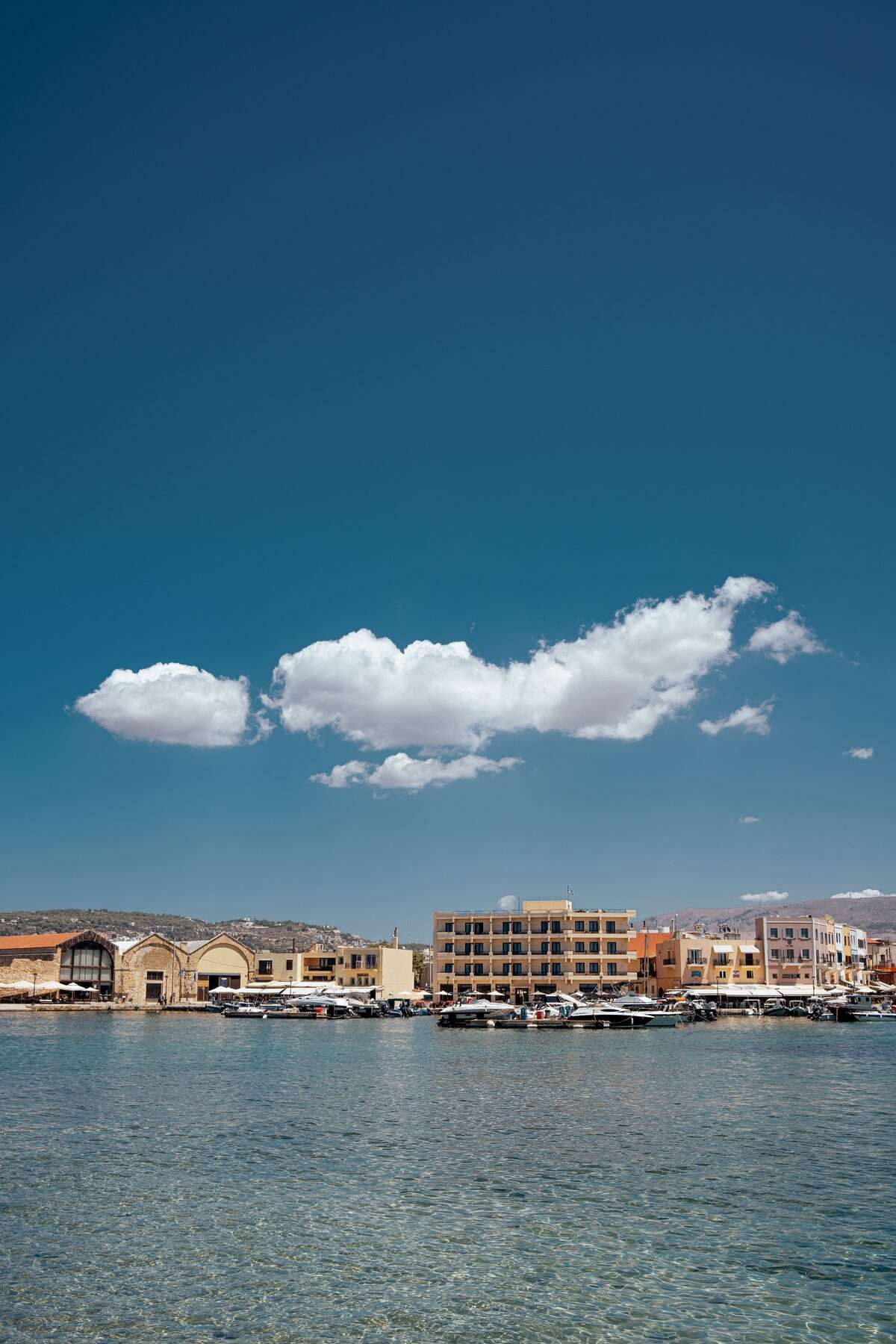
Crete’s scenery is varied rather than singular. The White Mountains (Lefka Ori) are snow-capped into May. Elafonisi’s pink-tinged lagoon in the southwest is one of Greece’s finest landscapes - shallow turquoise water, a sandbar connecting the beach to a small islet. Balos, accessible by boat or rough track, has the clearest water on the island. Chania’s Venetian harbour is one of the most photogenic in Greece. The Akrotiri peninsula, the palm forest at Vai, the gorges of the Lasithi plateau - Crete has multiple landscape registers where Santorini has one.
Verdict: Santorini for a single extraordinary view. Crete for breadth.
Beaches
Crete wins this category outright.
The major Crete beaches:
- Elafonisi - pink-tinged sand lagoon, west coast; arrive early in July/August, gets crowded
- Balos - sandbar and turquoise lagoon, accessible by boat from Kissamos or rough track (4x4 recommended)
- Falasarna - long crescent of pale sand on an exposed west-coast headland, good waves and excellent sunsets
- Preveli - freshwater river meets the Libyan Sea behind a palm forest, unique in Greece
- Matala - Roman-era cave dwellings above the beach; good swimming, west of Heraklion
Santorini’s beaches are volcanic:
- Perissa and Kamari - long black sand beaches on the east coast; well-organised with sunbeds and tavernas, water is noticeably darker than Cycladic norm
- Red Beach - dramatic red cliff above rust-coloured sand; partially fenced due to rockfall risk, small and crowded
- Vlychada - eroded white pumice formations behind a beach, unusual and relatively quiet
Santorini’s beaches are not why you go. Crete’s beaches are among the main reasons to go.
History and Archaeology
Both islands have serious archaeological credentials.
Santorini: The ancient Akrotiri settlement - a Minoan town buried by the 1627 BC volcanic eruption - is one of the best-preserved Bronze Age sites in the Aegean. The entire settlement was buried under volcanic ash in a manner similar to Pompeii, preserving two-storey buildings with frescoes and pottery intact. Entry approximately €12 as of 2026. The Museum of Prehistoric Thera in Fira houses the Akrotiri finds and is excellent.
Crete: Crete’s Minoan history runs deeper and broader. The Palace of Knossos - the largest Minoan palace, active approximately 1700–1380 BC - is 20 minutes from Heraklion by bus and is genuinely unmissable. Entry approximately €15; the site is large and benefits from a guided visit. The Heraklion Archaeological Museum holds the greatest collection of Minoan artefacts in the world. Additional Minoan palaces at Phaistos, Malia, and Zakros are less restored but less crowded.
The Venetian old towns at Chania and Rethymno - harbours, fortresses, minarets, and Gothic arches - represent a distinct post-classical layer that Santorini doesn’t have at the same scale.
Verdict: Crete for archaeological depth. Santorini for a single extraordinary Bronze Age site.
Food and Wine
Crete
Crete has the most developed regional food culture in Greece. The Cretan diet was the original reference point for the Mediterranean diet research - heavy on olive oil, legumes, wild greens, lamb, and fresh fish, very light on processed food. Notable elements:
- Dakos - barley rusk topped with crushed tomato, feta or mizithra, and olive oil; the essential Cretan starter
- Olive oil - some of the world’s best; Cretan producers (particularly around Heraklion and Sitia) export globally
- Graviera - nutty hard cheese made from sheep’s milk, PDO protected; excellent with honey and walnuts
- Lamb and goat - slow-cooked with mountain herbs in every village taverna
- Local wines - Vidiano (white), Kotsifali and Mandilari (red) from the Peza and Archanes PDO regions
Village tavernas inland - Zaros, Vamos, Argyroupolis, the Amari valley - serve food from their own land. This is the best everyday food available anywhere in Greece.
Santorini
Santorini’s food scene is more sophisticated and more expensive than Crete’s. The island’s volcanic soil creates genuinely distinctive local products that no other Greek island can replicate.
Local specialities: Santorini fava (yellow split pea purée with olive oil and capers - PDO protected, the real thing tastes different from mainland versions), tomatokeftedes (fried tomato fritters made with the island’s sun-dried cherry tomatoes), and white aubergines (sweeter and less bitter than standard varieties, grown only on Santorini). Any serious taverna offers all three - order them as starters.
Wine: The island produces some of Greece’s most internationally recognised wines. Assyrtiko (white, high acidity, volcanic minerality) has won the island serious international respect; it pairs exceptionally with seafood. Nykteri (white, oak-aged) and Vinsanto (sweet, sun-dried grapes) round out the range. Estate visits - Santo Wines on the caldera rim, Estate Argyros near Episkopi, Domaine Sigalas north of Oia - are a legitimate half-day activity, typically €15–25 per person for a three-wine tasting.
Restaurants: Metaxy Mas (Exo Gonia village, Cretan-influenced, less touristy) and Selene (Pyrgos, fine dining showcasing island produce at approximately €60–90/person) are the standouts for serious eating. Caldera-view dining in Oia and Fira costs €40–70 per person with wine and is primarily an experience purchase - the quality rarely justifies the premium, but the setting is unmatched.
Verdict: Crete for the best everyday food in Greece. Santorini for wine tourism and special-occasion dining.
Cost Comparison (July)
| Category | Crete | Santorini |
|---|---|---|
| Midrange hotel per night | €70–180 | €150–400 |
| Caldera view / premium hotel | - | €400–1,000+ |
| Dinner per person with wine | €20–40 | €35–70 |
| Beach sunbed + umbrella | €8–15 | €15–30 |
| Car hire per day | €30–50 | €40–70 |
| Main site entry | €15 (Knossos) | €12 (Akrotiri) |
Crete is consistently cheaper across every category. The difference is most stark for accommodation - the same budget that covers a comfortable Crete hotel barely covers a basic room in Santorini’s caldera villages in July or August.
Accommodation
Santorini:
- Canaves Oia Epitome - luxury caldera suites, €600+/night
- Mystique, a Luxury Collection Hotel - clifftop boutique, €500+/night
- Aressana Spa Hotel and Suites Fira - midrange, Fira, €150–300/night
- Santorini Palace Hotel - budget caldera, from €80/night
Search all Santorini hotels on Booking.com
Crete:
- Domes Noruz Chania - 5-star design hotel, €400+/night
- Kapsaliana Village Hotel - design hotel in an olive oil estate, €180–350/night
- Porto Veneziano Chania - midrange harbour hotel, €80–160/night
- Minos International Hotel Heraklion - budget, from €50/night
Search all Crete hotels on Booking.com
Getting Around
Santorini is small enough to manage by bus (the KTEL network covers Fira, Oia, Perissa, and Kamari), ATV, or hire car. A car or ATV gives flexibility for the south coast (Red Beach, Akrotiri, Vlychada) and the inland villages.
Crete requires a car to see more than one area. The KTEL bus network connects major towns but the south coast beaches, mountain villages, and gorges are inaccessible without your own transport. See our car rental guide for Greece.
Our Verdict
Santorini is the right choice for a couple’s break, honeymoon, or any trip where the caldera view is the specific goal. Plan 3–4 nights. It’s expensive, genuinely beautiful, and one of the things you should do at least once in Europe.
Crete is the right choice for almost everything else - families, first-time Greece visitors, anyone who wants more than one week, hikers, food and history enthusiasts, and anyone on a budget. Plan a minimum of 5 nights; ideally 7–10 with a car.
Both: A 10–12 day trip combining 7 nights Crete with 4 nights Santorini, linked by the direct Heraklion–Santorini ferry, is one of the best possible Greece itineraries.
For full planning guides, read our Santorini island guide, Crete island guide, and where to stay in Santorini.
Search flights to Greece across multiple airlines in one place. Pick up a Greece eSIM before you fly - keeps you connected without roaming charges. Sort out travel insurance for Greece before you leave.
See Also
- Crete Island Guide - Heraklion, Chania, Rethymno, and the south coast
- Santorini Island Guide - Oia, Fira, and the caldera villages
- Where to Stay in Crete - Heraklion vs Chania vs the east coast
- Where to Stay in Santorini - Oia vs Fira vs Imerovigli
- Rhodes vs Crete - another large Greek island comparison
- Milos vs Santorini - the less-crowded Cycladic alternative
Plan Your Trip
✈️ Book your flights to Greece 🛡️ Get travel insurance 📱 Stay connected with an eSIM 🚗 Rent a car