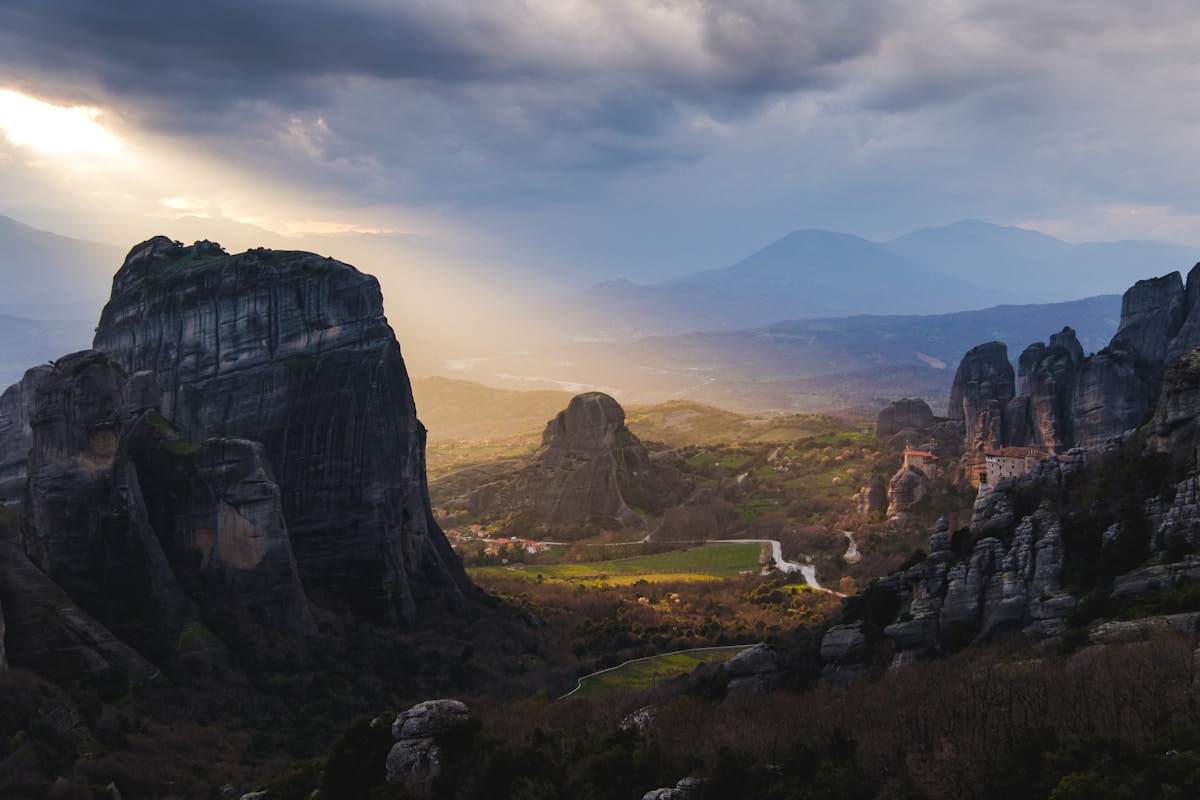
Meteora is one of the most extraordinary landscapes in Europe - a cluster of towering sandstone pillars rising abruptly from the Thessaly plain, with Byzantine monasteries perched on their summits. The rocks were formed by erosion over millions of years; the monasteries were established by hermit monks from the 14th century onwards, initially accessible only by nets and rope ladders. Six of the original 24 monasteries are still inhabited and open to visitors. The combination of the geological spectacle and the human history of the monastic community makes Meteora one of Greece’s most compelling destinations - well worth a dedicated overnight stay rather than a day trip.
The two base towns - Kalambaka and Kastraki - are the only practical choices for accommodation. Trikala (30km west) is an alternative for those driving but adds unnecessary travel time to the monastery visits.
Prices below are approximate as of 2026.
Kalambaka
Kalambaka (population approximately 12,000) is the town at the foot of the Meteora rocks, 3km from the monastery circuit. It has the most concentrated services - restaurants, supermarkets, pharmacies, the train station, and the majority of the region’s hotels. The town was largely rebuilt after being burned during World War II and has limited historic character, but it functions well as a base. The Byzantine Church of the Dormition of the Virgin (Kimisis Theotokou) in the upper town is worth visiting for its early Christian and Byzantine frescoes. Views of the rock pillars from the upper streets are good.
Budget (€40–75/night): Kalambaka has the widest range of budget accommodation. Alsos House (Kanari 4) is a well-reviewed small guesthouse with a garden and good breakfasts from approximately €50/night in May. Hotel Koka Roka (Trikala road) offers clean, simple rooms from approximately €45/night. Several small family-run guesthouses in the upper part of town have views towards the rocks from approximately €50/night. Hostel beds are available at a couple of properties from approximately €18–25/dorm.
Mid-range (€80–160/night): Hotel Meteora (Ploutarchou 14) is a reliable four-star with a pool and good views from the upper floors, from approximately €95/night in June. Aeolikos Aeras Hotel (Aristotelous 26) has well-kept rooms and a helpful owner from approximately €85/night. Meteora Inn has clean mid-range rooms with monastery views from approximately €90/night in July.
Luxury (€140–280/night): Tsikeli Meteora Boutique Hotel (Patriarchou Dimitriou 58) is Kalambaka’s best luxury option - a small boutique hotel with individually designed rooms, a roof terrace with direct views of the rock formations, and a strong breakfast, from approximately €160/night in June. Dolihi Hotel (Kanari 1) has contemporary rooms and a terrace with sunset views over the rocks from approximately €140/night.
Best for: Those arriving by train (the station is in Kalambaka), families needing full services, visitors on their first night who want multiple dining options, and those who prefer convenience over atmosphere.
Kastraki
Kastraki is a village of approximately 1,000 people that sits directly beneath the Meteora rock columns - so close that the pillars appear to overhang the rooftops. Walking north from the village onto the monastery road takes less than 20 minutes on foot. The atmosphere is considerably more striking than Kalambaka - the rocks are the immediate backdrop rather than a distant view, and the village retains a traditional Thessalian character with stone houses and a central square. Most hotels here have views of the pillars from their terraces or rooms.
Budget (€45–80/night): Several small guesthouses and studios in Kastraki. Rooms at Camping Vrachos start from approximately €12–18/person for a tent pitch; the site has basic facilities and sits directly beneath the rocks. Small guesthouses in the village lanes from approximately €50/night. Studios Kastraki has clean self-catering units from approximately €55/night.
Mid-range (€90–180/night): Doupiani House (Kastraki, near the village centre) is the most recommended hotel in the Meteora area for travellers who want character and views - a small family-run guesthouse with a terrace directly overlooking the Meteora rocks, from approximately €100/night in June. The owners are knowledgeable about the monasteries and hiking routes. Pyrgos Adrachti Hotel (outside Kastraki on the monastery road) has extraordinary rock formation views from every room, from approximately €120/night. Kastraki Hotel has a good pool and rock views from approximately €100/night.
Luxury (€150–300/night): Kastraki Hotel & Spa is the closest to a full-service luxury option in the village, with spa facilities and pool from approximately €150/night in peak season. For genuine luxury with the best views, Pyrgos Adrachti Hotel’s suites from approximately €180/night combine a premium position with excellent service.
Best for: Atmosphere-seekers, those making their second or third visit and wanting maximum immersion in the landscape, photographers (the light on the rocks from guesthouse terraces is exceptional at dawn and dusk), and hikers planning early monastery visits on foot.
The monastery circuit
All six open monasteries are on or near the main road that loops the rock formations above Kastraki and Kalambaka. The Great Meteoron is the largest and most visited. Varlaam has exceptional 16th-century frescoes. Roussanou Monastery is the most dramatically positioned - seemingly floating above a sheer drop. Holy Trinity (Agia Trias) requires a long staircase descent and climb and featured in the James Bond film For Your Eyes Only. Allow 45–60 minutes per monastery. Arrive before 10:00 to beat the tour buses from Athens.
Dress code: shoulders and knees covered. Women must wear skirts (available at monastery entrances). Photography permitted in grounds but usually restricted inside chapels.
Get travel insurance for Greece before you travel - the monastery steps and uneven rock paths make it worth having. A Greece eSIM is useful for navigating the monastery circuit without using mobile data. Book Meteora tours if you want a guided walk with context about the monastic history and geology.
Related Meteora guides
- Meteora Guide - complete overview of the monasteries and landscape
- Things to Do at Meteora - monastery visits, hiking trails, and viewpoints
- Best Restaurants near Meteora - Kalambaka and Kastraki dining
- Day Trips from Meteora - Trikala, Thessaloniki, and Delphi