Rhodes is the easternmost major Greek island and the most practically set up for a longer stay. Unlike many island destinations where infrastructure goes dormant between October and April, Rhodes Town maintains a genuine year-round economy: the island has a population of around 115,000, a functioning hospital, multiple supermarkets, and daily flights to Athens and several European cities even in January. That year-round functionality is what makes it realistic as a base for a month or longer, rather than just a peak-season holiday destination.
Rental rates in 2026 sit roughly 10–15% above Corfu and Heraklion for comparable properties in town areas, but below what you would pay in Athens. A furnished one-bedroom near Rhodes Town runs approximately €750–1,200/month outside peak summer.
Rhodes Town New Town: The Practical Base
The New Town (Nea Rhodes) surrounds the walled medieval Old Town and stretches west towards Ixia. This is where most of the year-round amenities are: the main supermarkets (AB Vassilopoulos, Sklavenitis), pharmacies, banks, the ferry terminal, and the widest selection of furnished apartments at realistic prices. Streets west of Mandraki harbour - particularly around Kos Street and Griva Street - have a mix of residential apartment buildings where monthly rentals are available through local agencies.
Monthly rate ranges for the New Town in 2026:
- Studio (residential streets, 10–15 min walk from harbour): approximately €550–800/month
- One-bedroom apartment with kitchen and wifi: approximately €750–1,100/month
- New-build with fibre and parking: €1,000–1,400/month
The Old Town: Atmospheric But Expensive
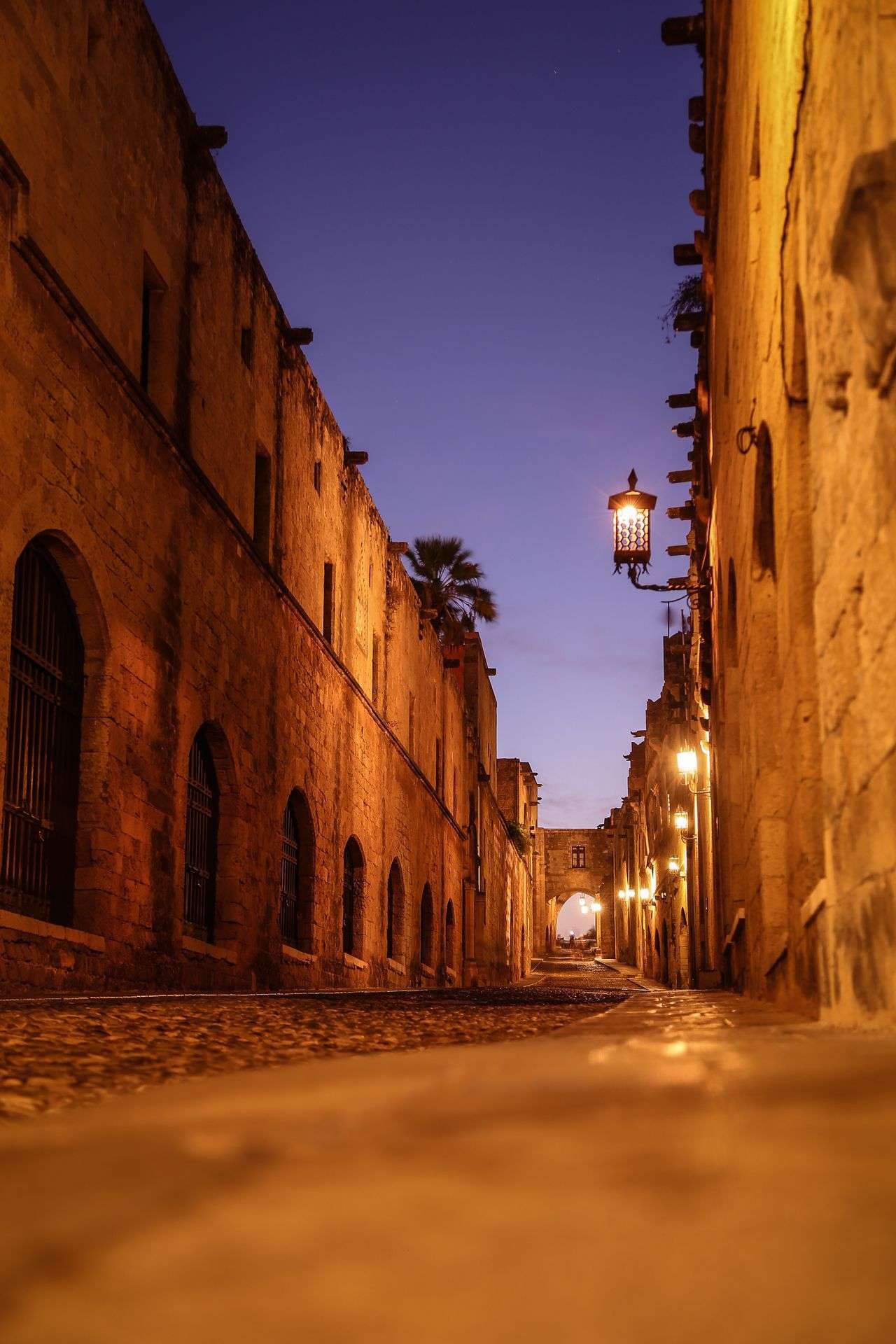
The medieval walled city is arguably the finest in the Mediterranean. It is also the most expensive part of Rhodes for monthly rentals and the most tourist-oriented. Short-let apartments inside the walls command a premium - €900–1,500/month for a one-bedroom is typical - and the combination of noise, cobblestone navigation, and limited parking makes day-to-day life less practical than the New Town.
For a week-long stay, the Old Town is worth the premium. For a month or more, the New Town or Ixia gives better value and more practical infrastructure.
Ixia and Ialyssos: Beach Suburbs West of Town
Three to five kilometres west along the coast, Ixia and Ialyssos are a strip of hotels and apartment complexes that function as a year-round suburb. Prices are slightly lower than central Rhodes Town - one-bedrooms from approximately €650–950/month - and the beach access is better. The tradeoff is that you need a bus or scooter for most errands. The KTEL bus runs regularly to Rhodes Town from here.
This area makes sense for a longer stay if you prioritise sea views and quiet over walking distance to urban amenities.
Lindos: Beautiful but Not a Long-Stay Base
Lindos, 50km south on the east coast, is one of Greece’s most photographed villages. From June to September it is spectacular; from October to April it is very quiet, with most restaurants and accommodation closed. For a summer stay of four to eight weeks, Lindos can work - rents in shoulder season (May, September) run approximately €800–1,200/month for a one-bedroom. For a winter or spring stay, it is not a practical choice.
Faliraki: Summer-Only Resort
Faliraki is Rhodes’ main package-holiday resort, 14km south of the town. Outside July and August, most of it closes. There is no practical reason to base a long stay in Faliraki.
Airbnb vs Furnished Apartment vs Direct Rental
Airbnb has the widest furnished selection in Rhodes Town and offers monthly discount pricing. The platform is the lowest-effort option for stays under three months. Peak summer rates (July–August) are substantially higher than off-season - if your stay crosses the summer peak, expect a significant price increase.
Booking.com has a useful selection of apart-hotels and serviced apartment units in the New Town, with reception desk support included - worth considering for a first longer stay on the island when local knowledge is limited.
Direct rental through local agencies (Rhodes Real Estate, Kyriakidis Properties) is the best value for three-month-plus stays. Local landlords in the New Town often rent furnished apartments to medium-term tenants at rates below the platforms. Greek language helps, but the agencies have English-speaking staff. Unfurnished one-bedroom rentals start from approximately €500/month on direct lease.
Remote Work Infrastructure
Rhodes Town has reliable fibre internet in most modern apartment buildings - 50–100Mbps is standard in anything built or renovated after 2015. Older Old Town properties can be slower. The café scene on Mandraki harbour and the New Town’s main shopping street (Sokratous, just outside the old walls) works adequately for lighter remote work. For bandwidth-intensive tasks, confirm download speed before committing to an apartment.
There is no established coworking space in Rhodes as of 2026. The island has a nomad community of sorts - mostly people who arrived for the summer and stayed - but it is informal rather than organised.
Compare prices and availability across all Rhodes hotels - Search hotels in Rhodes.
Getting Around
Rhodes has a surprisingly useful KTEL bus network connecting the main east coast resorts and the west coast to Rhodes Town. The central bus station (two terminals, one for east coast, one for west) is close to Mandraki harbour. For the southern half of the island and off-route day trips, a hire car is the only practical option - weekly rates from approximately €130–180 in shoulder season, higher in summer.
Scooters (approximately €20–35/day, cheaper monthly) are widely available and the most practical option for daily life within Rhodes Town and the nearby coast.
The ferry terminal connects to Athens (Piraeus, overnight), Crete, the Cyclades, and Turkey (Marmaris, approximately 50 minutes), which makes Rhodes a surprisingly flexible base for regional travel during a longer stay.