Amorgos Travel Guide: Hozoviotissa, Hiking and Big Blue Coves
Amorgos travel guide: the cliff-hung Hozoviotissa monastery, Chora, Katapola and Aegiali ports, hiking trails, beaches and ferries from Piraeus.
Guides for Amorgos
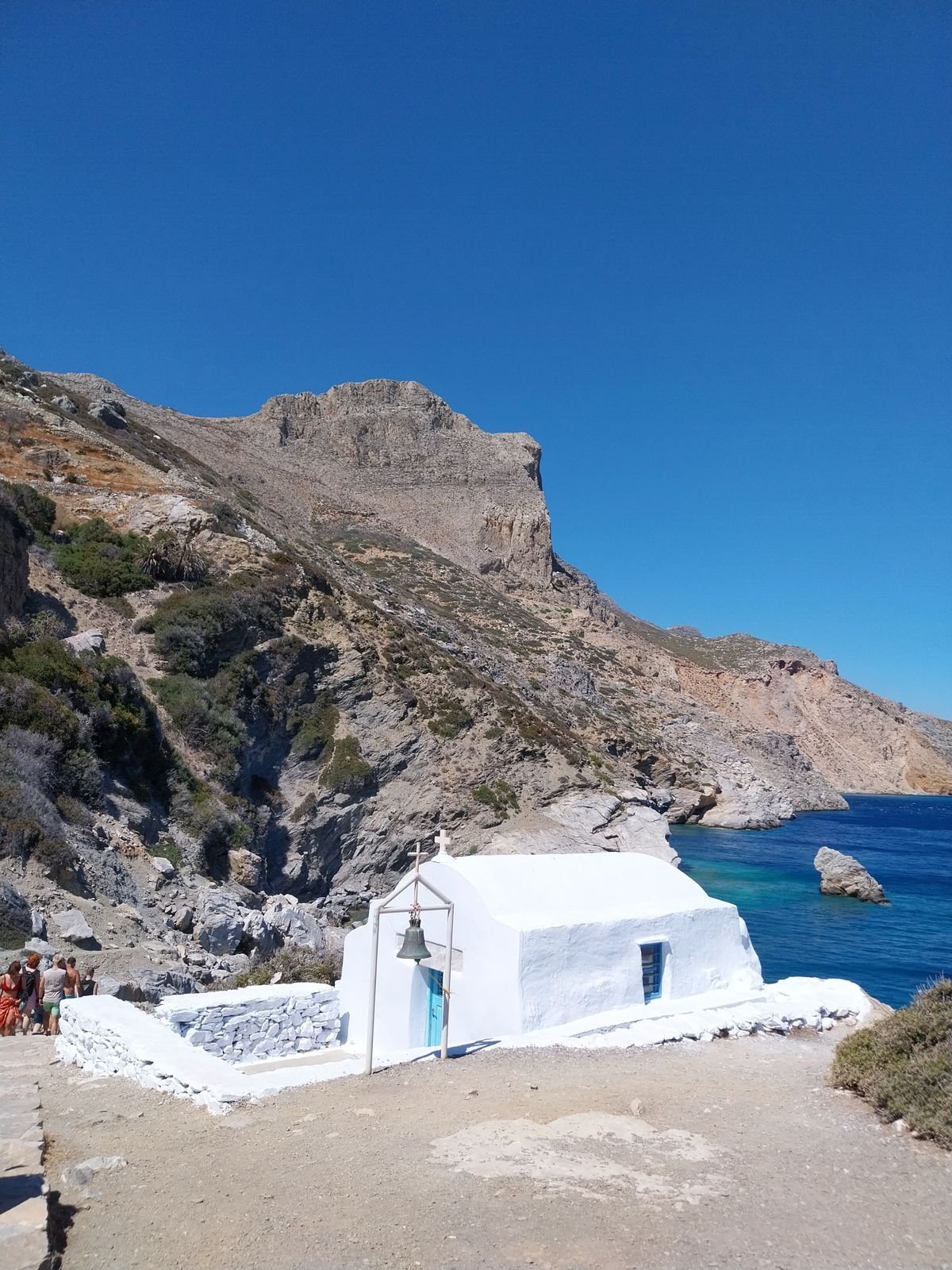
Amorgos is the easternmost of the larger Cyclades, a long, mountainous island with a spine of ridges and a dramatic cliff coast on the south side. It was the main filming location for Luc Besson’s 1988 film The Big Blue, and the deep-blue water below the cliffs still looks the part. Unlike Santorini or Mykonos, the island lives on walking, simple tavernas and a slow pace, and the ferry journey from Piraeus is long enough to keep the crowds modest.
The island has two ports, Katapola in the southwest and Aegiali in the north, joined by a mountain road that takes roughly 40 minutes to drive. The inland capital, Chora, sits between them above Katapola. Choosing where to base yourself is the main decision, and we cover it below. If you want the full list of sights and costs, see our things to do in Amorgos guide.
Hozoviotissa Monastery
The Panagia Hozoviotissa is the reason many people come. Tradition dates the monastery to 1088, founded with the support of Byzantine emperor Alexios I Komnenos, and the whitewashed building clings to a sheer cliff roughly 300 metres above the sea. It is only a few metres deep and several storeys tall, wedged into the rock face, and reached by a steep stairway of around 300 steps from the road.
Visitors are welcomed by a monk with a small offering of loukoumi and a thimble of raki. Dress is conservative: long trousers or skirts and covered shoulders are required, and wraps are usually available at the entrance. Opening hours are short and change by season, so check locally before you go. Entry is free, with a donation customary. The monastery is a bus or scooter ride above Chora, and the walk down to Agia Anna beach below takes about 30 minutes.
Chora
Amorgos town sits on a ridge a few kilometres inland from Katapola. It is a classic whitewashed Cycladic village of lanes, small squares and chapels, with a ruined Venetian kastro above it and a line of old windmills on the ridge. It has a handful of tavernas, bakeries and cafes and feels more lived-in than most Cycladic capitals. Many visitors base themselves here for atmosphere, but plan on a taxi or scooter for the beaches.
Beaches and Coves
Amorgos is not a sandy-beach island. Agia Anna is a small pebble cove below the monastery and the most photographed; it fills up by late morning in summer. Aegiali has the longest sandy beach, with shallow water and a few beach bars. Agios Pavlos, a short walk from Aegiali, is quieter and good for families. On the south coast, Mouros and Kalotaritissa are bare, wind-exposed and best on calm days. Wind (the meltemi) is the main variable in July and August, so keep a second beach in mind.
Hiking
Walking is the island’s real draw. A network of old stone paths links villages and chapels, and several are waymarked. The popular routes are Katapola to Chora, Chora to the monastery, and the path from Aegiali up through Tholaria and Langada, one of the island’s prettiest. Boat taxis and local operators also run to nearby Nikouria islet. Carry water and start early in summer; shade is scarce. Spring (late April to early June) and September are the best months to walk.
Katapola or Aegiali?
Katapola has the largest choice of rooms, restaurants and car or scooter rentals, plus year-round ferry links. It is the practical base for first-time visitors. Aegiali is greener and more spread out, with a good beach and a strong walking scene, but ferries are less frequent. Chora suits a few quiet nights or a day trip. In all three, accommodation is mostly small family-run studios and guesthouses rather than large hotels; rates vary widely by season, from approximately EUR 60 to 130 per night for a double in summer as of 2026. Browse Amorgos hotels and book early for July and August, as stock is limited.
Getting to Amorgos
There is no airport, so all visitors arrive by sea. Ferries leave Piraeus for Katapola and Aegiali, typically calling at Naxos and the Small Cyclades (Koufonisia, Donousa) on the way, and the journey takes roughly 5 to 9 hours depending on whether you are on a conventional ferry or a faster vessel. Fares start from about EUR 35 for a deck seat as of 2026. Frequency drops in winter, and in strong winds sailings can be cancelled. Most travellers combine Amorgos with Naxos, which has the best onward connections, or with Paros. Our Greek island ferry guide explains operators and booking, and you can compare and book ferries online. The Greek National Tourism Organisation has general planning information.
Getting Around
Buses run between Katapola, Chora, Aegiali and Agios Pavlos with a limited timetable. Taxis are few and should be booked ahead. For flexibility, rent a car or scooter, but note that the monastery road is narrow and winding.
When to Go
Late April to June and September to mid-October are best: warm sea, good walking weather and open tavernas. July and August are hot and windy, with the highest prices. From November to March most businesses close and ferries are thin.
Tours and Activities
Local operators run guided hikes, snorkelling and boat trips around the island. You can browse tours in Amorgos to compare current options, including walks to the monastery and day cruises.
Amorgos fits naturally into a wider Cyclades route; see our Cyclades overview and the Greek island hopping guide for sample circuits. Prices here are approximate as of 2026.
See Also
- Things to Do in Amorgos - monastery, hikes and beaches in detail
- Naxos Travel Guide - the main gateway island to Amorgos
- Syros Travel Guide - the Cyclades capital, a very different island
- Milos Travel Guide - another volcanic Cyclades island
Frequently Asked Questions
- Is Amorgos worth visiting?
- Yes, if you want walking, quiet coves and a working island rather than a party scene. Amorgos is the easternmost of the main Cyclades, so it takes longer to reach, which keeps numbers lower than on Santorini or Mykonos. The Hozoviotissa monastery and the coastal trails are the main reasons to come.
- Should I stay in Katapola, Aegiali or Chora?
- Katapola is the main port, with the most ferries, restaurants and shops, and is the easiest base for the monastery and Agia Anna. Aegiali in the north is greener, has a sandy beach and better hiking from Langada and Tholaria. Chora is the inland capital, quieter and atmospheric but you will need transport for beaches.
- How do I get to Amorgos from Athens?
- There is no airport. Ferries run from Piraeus to Katapola and Aegiali, usually via Naxos and the Small Cyclades. Journeys take roughly 5 to 9 hours depending on the vessel, with fares from about EUR 35 to 60 as of 2026. Check current timetables, as winter sailings are thin.
- Do I need a car on Amorgos?
- It helps but is not essential. Public buses link Katapola, Chora, Aegiali and Agios Pavlos, though schedules are limited. Many visitors rent a scooter or small car for a few days to reach the monastery road and the south coast.
Book an experience
Top experiences in Amorgos
Explore the best tours and activities in Amorgos, with instant confirmation and free cancellation on most bookings.
Planning to visit?Browse hotels in Amorgos, free cancellation on most bookings.