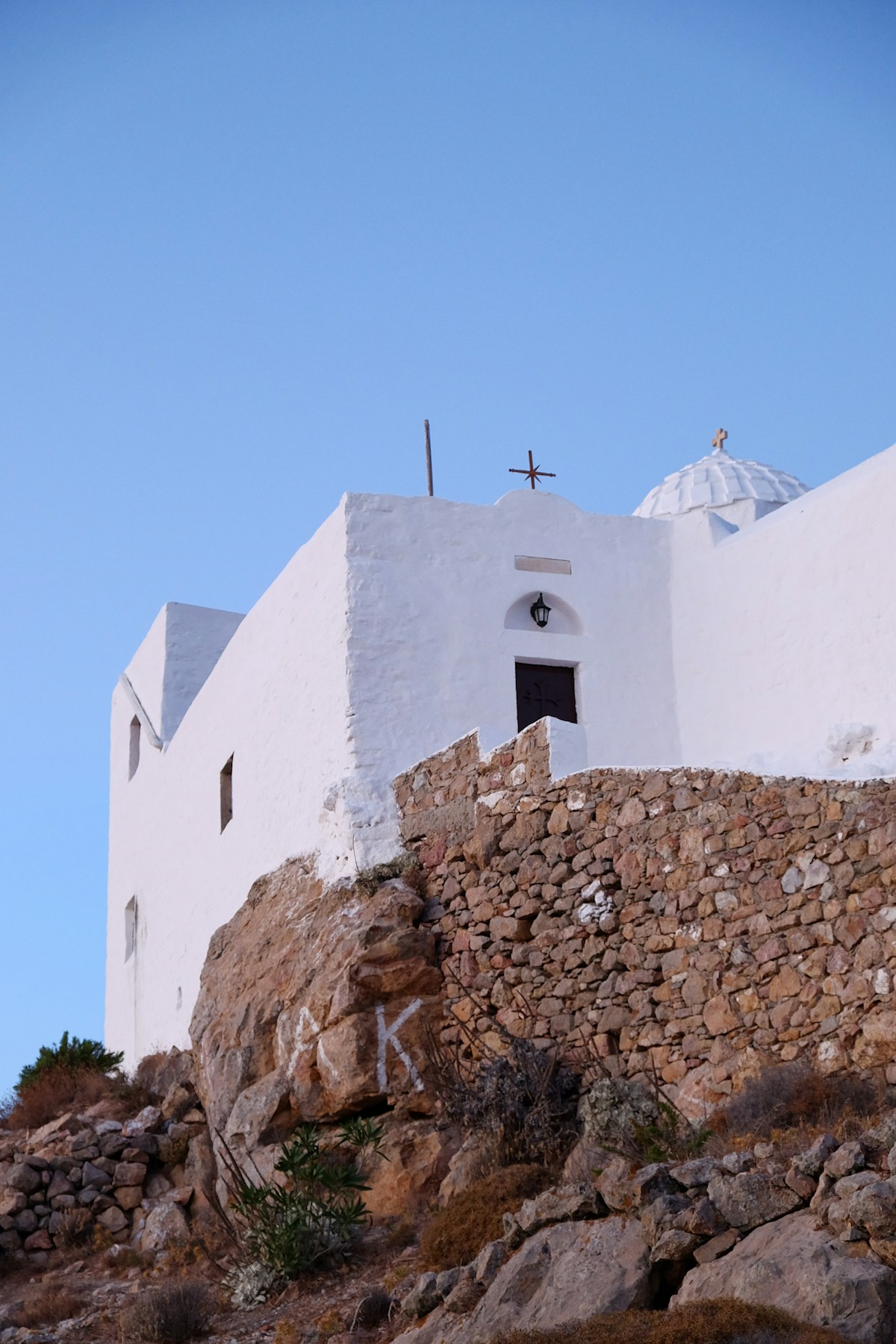
Patmos earns its UNESCO World Heritage listing twice over: once for the Monastery of Saint John the Theologian on the hilltop, and once for the historic Chora that grew under its shadow. The island is where St John the Apostle wrote the Book of Revelation in around 95 AD, and the weight of that history is present in everything from the fortified monastery walls to the atmosphere in the cave itself.
What makes Patmos distinctive is that the sacred history sits alongside a genuinely beautiful island. Clear water, elegant architecture, exceptional food, and a calm that most Greek island destinations have long since traded away. It is not cheap by Greek standards, but it delivers what it promises.
Top Tours in Patmos
| Tour | Duration | Price (from) | Group Size | Highlights |
|---|---|---|---|---|
| Patmos Sacred Sites Guided Tour | 4 hrs | from €30/person | Small group | Cave of the Apocalypse, Monastery of Saint John, Chora lanes |
| Patmos Monastery & Village Walking Tour | 3 hrs | from €22/person | Small group | Skala waterfront, Chora architecture, monastery terrace views |
| Dodecanese Island Cruise from Rhodes | Full day | from €60/person | Up to 50 | Patmos and Lipsi, swimming stops, monastery overview |
Browse all Patmos tours → GetYourGuide
The Cave of the Apocalypse
The most important site on the island and one of the most significant in the Christian world. The cave sits on the hillside midway between Skala (the port) and Chora, incorporated into the Monastery of the Apocalypse. According to tradition, St John received the visions described in the Book of Revelation here and dictated them to his scribe Prochoros.
Inside the natural grotto, three features are marked for visitors: a silver halo fixed to the rock where John is said to have rested his head; a rock shelf that supported the scribe as he wrote; and a triple crack in the ceiling said to symbolise the Holy Trinity, through which God’s voice came. The cave is small - groups enter in limited numbers with a monk or lay guide - and incense and candlelight create an atmosphere that most visitors find affecting regardless of religious belief.
Practical: Entry free. Open daily except Monday mornings and certain feast days. Hours approximately 8am–1:30pm and 4pm–6pm (seasonal variation - check locally). Dress code strictly enforced: shoulders covered, no shorts. Photography not permitted inside.
Getting there: On foot from Skala approximately 30–40 minutes uphill. The bus from Skala toward Chora stops near the cave entrance - journey approximately 10 minutes, approximately €1.50. A taxi from Skala costs approximately €8–10.
The Monastery of Saint John the Theologian
The fortified monastery at the top of the hill has stood here since 1088, when the monk Christodoulos received the island as a gift from Byzantine Emperor Alexios I Komnenos. From a distance it looks like a medieval castle - and it was built to function as one, with high walls and towers designed for defence against pirates.
Inside the outer walls, a complex of courtyards, chapels, and buildings has accumulated over nine centuries. The main church (catholicon) has 12th-century frescoes that are well-preserved and significant. The refectory is decorated with murals. The inner courtyard has a marble fountain from 1607.
The treasury museum is the main draw for art and history visitors. It holds over 300 illuminated manuscripts including the complete 6th-century codex of the Gospel of St Mark - one of the oldest complete Gospel manuscripts in existence. The collection also includes thousands of Byzantine coins, ecclesiastical vestments, and religious objects spanning ten centuries. Allow 45–60 minutes for the museum alone.
Practical: Entry to the courtyard and church: free. Museum/treasury: approximately €5. Open Monday–Saturday approximately 8am–1:30pm; some days have additional afternoon opening (check the posted schedule). Photography not permitted in the church or museum. Dress code: no shorts, no bare shoulders.
The views from the outer terrace across the Dodecanese - to Leros, Ikaria, and on clear days as far as Samos - are extraordinary and freely accessible.
Chora
The UNESCO-listed historic centre of Patmos. Chora developed under the monastery’s protection and was deliberately designed to confuse pirates: the lanes are labyrinthine, often covered by the overhanging second floors of adjacent houses, with dead ends and deliberate dead-ends.
Most of the significant mansions date from the 17th and 18th centuries when Patmos was a prosperous centre for maritime trade and education - the island had one of the few significant schools in the Aegean during the Ottoman period. Several of these mansions survive intact, some converted to boutique accommodation.
Walking through Chora is the main activity - no specific sites to tick off, just lanes, gates, cats on walls, and glimpses of the sea between the houses. The main plateia has a couple of tavernas and cafés. In the evenings, the monastery is lit from below and the village takes on a medieval character that is genuinely unlike anywhere else in the Aegean.
Skala
The island’s port and main commercial centre. Skala has the majority of Patmos’s restaurants, cafés, shops, and mid-range hotels. The waterfront is good in the early morning and evening; midday in August can feel crowded when cruise ships tender their passengers ashore for a few hours.
The small Archaeological Museum (open Tuesday–Sunday approximately 8am–2pm, free entry) has finds from the island’s ancient pre-Christian period - ceramics, coins, and sculptural fragments from Kasteli hill, the site of the original ancient city.
Walking Between the Sites
The sequence most visitors follow: ferry arrives at Skala → walk or take a bus to the Cave → continue up to the Monastery → walk down through Chora → bus back to Skala. Total walking time approximately 2.5–3 hours for the full circuit at a comfortable pace. Carry water and start early to avoid the midday heat.
The walk up from Skala to Chora via the cave is approximately 40–45 minutes on a good road and path. Most of the gradient is between Skala and the cave; the final climb to the monastery is steeper but shorter.
Day Trips from Patmos
Patmos is well-positioned in the Dodecanese for island-hopping.
Lipsi: Small island 30 minutes north of Patmos by local ferry - beautiful beaches, simple tavernas, very few visitors. A popular day trip from Patmos in summer. Ferry approximately €10–15 return.
Leros: About 1 hour south. A larger island with a dramatic medieval fortress and a more local atmosphere than most Dodecanese islands. Ferries several times per week.
Arki and Marathi: Tiny islands between Patmos and Lipsi, accessible by irregular local ferry and caique. Barely 50 permanent residents between them. Exceptional swimming. Ask at the Skala waterfront for current arrangements.
Restaurants Worth Booking
Benetos (Sapsila Bay): The best restaurant in the Dodecanese by common agreement. Greek-American chef using produce from the kitchen garden. Mediterranean-Greek fusion of exceptional quality. Book weeks ahead in July and August. Approximately €45–65 per person including wine.
Tzivaeri (Chora): Village taverna in Chora’s main plateia. Traditional cooking - grilled lamb, fresh mezedes, good house wine. Open evenings. Approximately €22–35 per person.
Hilomodo (Skala): Reliable waterfront seafood. Good for lunch after the monastery visit. Approximately €25–40 per person.
Café Arion (Skala): The best breakfast option in the port - Greek coffee, fresh pies, yoghurt with local honey. Opens early for the ferry crowd. Approximately €5–10.
Practical Tips
No nightlife: By local agreement, Patmos has no clubs and very limited late-night bars. The island closes quietly. If you want nightlife, fly to Kos or Mykonos.
Ferry connections: Blue Star Ferries and Dodekanisos Seaways are the main operators. Check current schedules at the port office in Skala - timetables change seasonally and weather can disrupt small-boat services.
Photography: The cave and monastery treasury prohibit photography. The Chora lanes, the monastery exterior, and the views from the terrace are all freely photographable.
Browse monastery tours, boat trips, and Dodecanese island excursions with GetYourGuide.
See also: Best Beaches in Patmos, Where to Stay in Patmos, Patmos Travel Guide, Kos Travel Guide and Rhodes Travel Guide for the larger Dodecanese islands.