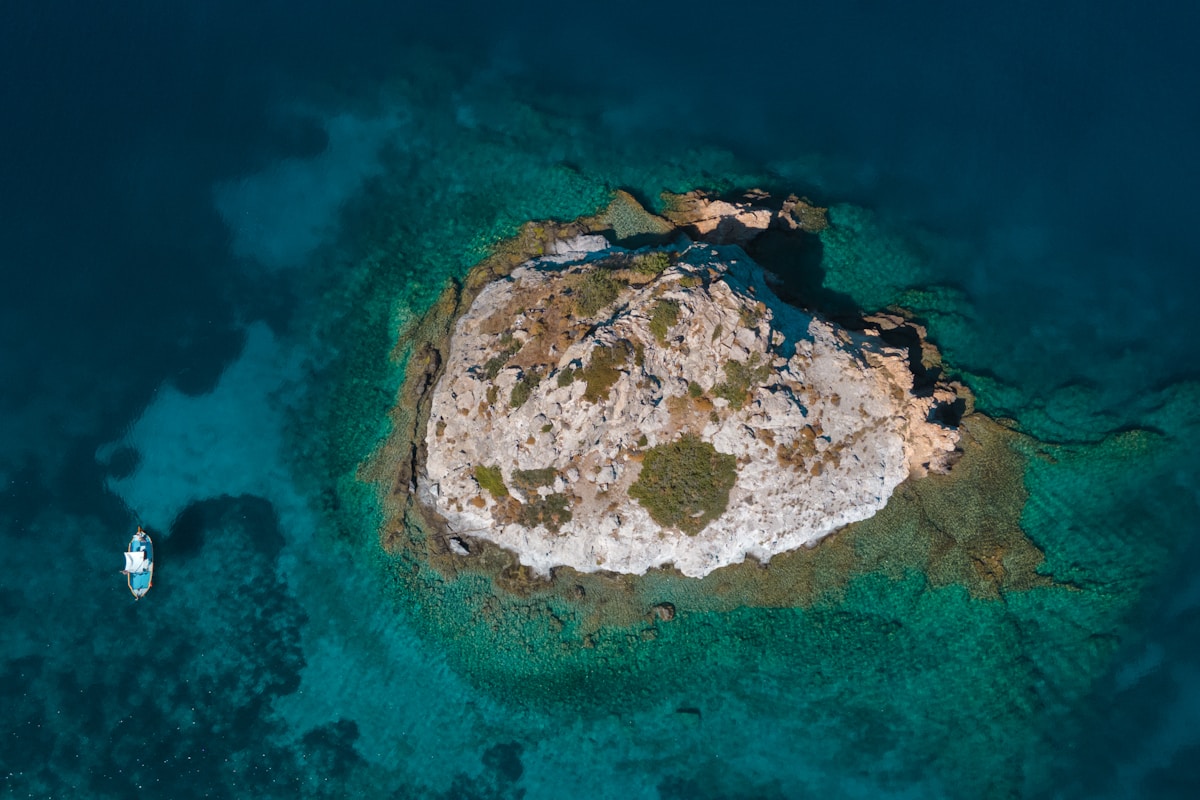
Patmos is not primarily a beach destination - the monastery and cave are the island’s defining draw - but it has some genuinely good swimming and a handful of beaches that would be the headline attraction on a less distinguished island. The water throughout is clean and clear, the terrain is rocky and dramatic, and most beaches maintain a calm character because the island’s visitor profile leans toward pilgrims, yacht owners, and independent travellers rather than mass beach tourism.
The island’s topography means beaches are scattered around its irregular coastline rather than concentrated. Most are accessible by bus, car, or local taxi from Skala; Psili Ammos requires a boat. The water quality is excellent throughout - Dodecanese waters tend to be clearer than the busier Cycladic routes.
Psili Ammos
The finest beach on Patmos and the one most visitors want to reach. Psili Ammos (“fine sand”) lives up to its name: a long arc of very fine golden sand on the south coast, enclosed by low scrubby hills. The water is a brilliant turquoise-green, exceptionally clear, and sheltered enough that it stays swimmable even when the northerly winds pick up elsewhere.
The access by boat only is both the mild inconvenience and the reason the beach stays as good as it is. No cars, no road, no beach clubs - just the sand, the water, a wooden boat tied up at the shore, and a seasonal taverna that serves fresh fish, grilled octopus, and cold Mythos from approximately June to September.
Getting there: Excursion boat from Skala - boats depart the main quay daily in summer approximately 10am, return approximately 3:30pm–4pm. Journey time approximately 25–30 minutes. Tickets approximately €12–15 return per person. Buy at the port or ask at your hotel. In July and August, boats fill up - arrive at the quay by 9:30am.
Facilities: Seasonal wooden taverna (approximately June–September). No sunbeds or umbrellas - bring your own. No freshwater shower. No road access, no phone signal.
Note: Taking pebbles or sand from Psili Ammos is illegal under Greek environmental law. The beach is protected.
Kambos
The largest and most organised beach on the island, on the northeast coast approximately 4km from Skala. Kambos is a wide, gently shelving bay of mixed fine sand and fine pebble. The water is shallow and calm for the first 20 metres - ideal for children and less confident swimmers. A beach bar and sun lounger operation runs from approximately June to October.
Getting there: Bus from Skala approximately every 45–60 minutes in summer (approximately €1.80). Taxi approximately €8. Hire car or scooter. Parking available near the beach.
Facilities: Sun lounger hire (approximately €8–10 per set), beach bar (drinks, snacks), a couple of simple tavernas a short walk from the beach. Accessible for visitors with limited mobility via the paved approach road.
The small cove of Vagia is 10 minutes walk north of Kambos - less organised, no facilities, usually quieter.
Grikos
A sheltered bay on the east coast approximately 4km south of Skala, with a curve of mixed sand and pebble and a cluster of tavernas and accommodation. Grikos is the island’s main “beach village” outside Skala - it has a small number of hotels, water sports equipment hire, pedalo boats, and summer season animation that makes it feel busier than Kambos.
The bay is well-protected from north winds. The water is shallow and warm. A rocky islet in the middle of the bay (Kalikatsou) can be reached by a short swim or pedalo - it has a cave with early Christian rock carvings that can be explored at low tide.
Getting there: Bus from Skala (approximately €1.80) or taxi (approximately €7). Parking available.
Facilities: Sun lounger hire, water sports equipment, several tavernas and a beach bar. More developed than other Patmos beaches.
Lambi
The most unusual beach on the island - pebble rather than sand, but the pebbles are the attraction: smooth, polished stones in a wide range of colours from white and grey to green, pink, and terracotta. The effect is striking, particularly in the low morning light when the stones are wet. Lambi sits on the north coast, the most remote part of the island.
The name translates roughly as “the shining place” - the coloured stones are visible from a distance on clear days.
Getting there: By car approximately 30 minutes from Skala (rough road for the final section); taxi approximately €18. No regular bus service.
Facilities: Simple seasonal taverna. No sunbeds or umbrellas. The pebbles are protected - taking them from the beach is illegal.
Note: The water at Lambi can be rougher than the sheltered bays. The pebble entry is rough underfoot - water shoes are useful.
Meloi
A small beach immediately north of Skala, the closest swimming to the port. Fine sand and pebble, shallow water, and a beach taverna. Convenient for a morning swim before a ferry or for families staying in Skala. Gets busy during the day when cruise ship passengers are on the island; quieter in the mornings and evenings.
Getting there: Walk from Skala approximately 15–20 minutes along the coastal path.
Diakofti and Sapsila
Two small coves on the east coast between Skala and Grikos - quiet, rocky, mostly used by local residents and visitors who have scooters or hire cars. No facilities. Good snorkelling at Diakofti where the rocky bottom drops quickly to clear deep water.
The famous restaurant Benetos is at Sapsila - if you’re making the trip for dinner, a pre-dinner swim from the small pebble cove here is a pleasant way to arrive.
Beach Practicalities
Water: Drinking water is available at Kambos and Grikos beach bars. Carry water for Psili Ammos, Lambi, and the smaller coves.
Wind: The north-facing coast (including Lambi) is exposed to the meltemi summer wind and can be choppy July–August. The south-facing Psili Ammos and east-facing Grikos are more sheltered.
Sea taxis: In summer, informal sea taxis run between Skala and several beaches. Ask at the port or at your hotel - these are loosely organised and vary year to year.
Nude bathing: No officially designated nudist beach; the smaller isolated coves are used informally for topless and nude sunbathing.
Best Time for Beaches
May, June, and September are ideal - warm water (18–22°C in June, 24–26°C in September), less wind than August, and significantly fewer visitors competing for the Psili Ammos boat. July and August have the warmest water (up to 28°C) but also the most visitors and the strongest meltemi periods. Psili Ammos boats can be cancelled on very windy days - check at the port each morning.
See also: Things to Do in Patmos, Where to Stay in Patmos, Patmos Travel Guide.