Naxos feeds itself - the island produces wheat, potatoes, citrus, olive oil, cheese, and livestock, which makes it unusual among the Cyclades. Eating here is better value and often better quality than on islands that import most of what they serve. Prices listed here are approximate as of 2026.
Naxos Town (Chora) - Old Market Area
The Old Market (Agora) beneath the Kastro is where most of the best eating in town is concentrated. The lanes are covered in places and lit by small lanterns at night - worth exploring slowly before choosing where to sit.
Meze Meze is a well-regarded spot in the market area serving creative Greek dishes with a focus on local ingredients - Naxian graviera in various forms, fresh seafood, and grilled meats. Mains approximately €14–22. Popular enough that booking ahead in peak season makes sense.
Alexandros is one of the longer-established tavernas in Chora - straightforward grilled meat and fish, local cheeses, and the kind of house wine that comes in a carafe rather than a bottle. Mains approximately €12–18. A useful benchmark for what Naxian cooking tastes like without any culinary flourishes.
Taverna Nikos near the market square does excellent traditional dishes at some of the most honest prices in the centre - moussaka, stuffed vegetables, and grilled octopus at approximately €10–16 per main.
Waterfront - Harbour Dining
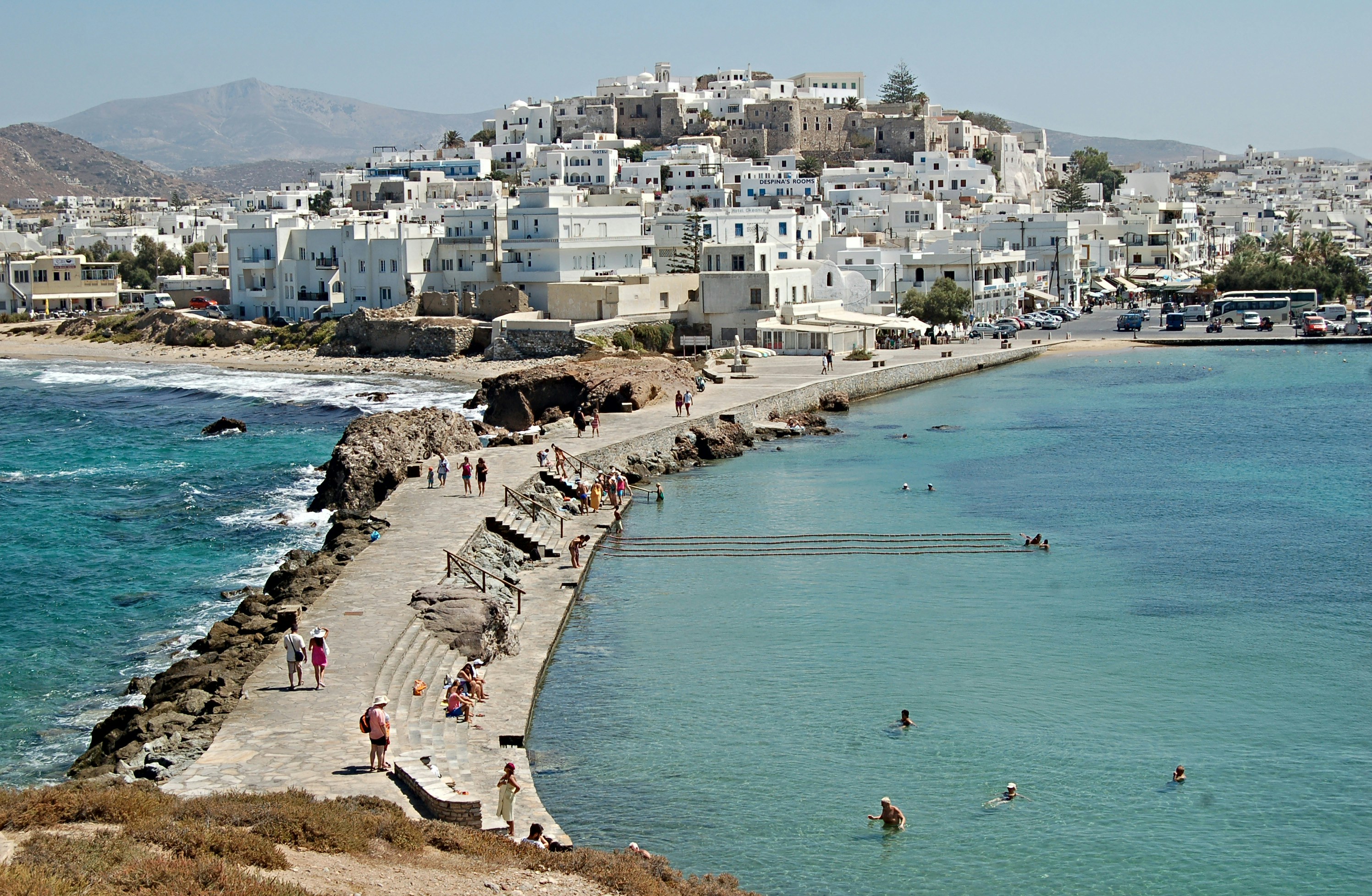
The harbour esplanade has a string of restaurants facing the causeway and the Portara. The view is pleasant and the trade-off is slightly higher prices for the same dishes you get a street back.
Il Gabbiano is a seafood and pasta restaurant on the waterfront, particularly reliable for fresh fish and seafood pasta. Expect to pay approximately €16–28 for mains. Better at dinner when the Portara is lit.
Several cafes along the harbour esplanade are good for breakfast - Naxian yogurt with local honey and a Naxian cheese pie (tyropita with graviera) is a better start to the day than most alternatives.
Agios Prokopios - Beach Dining
The beach strip at Agios Prokopios has a range of tavernas and beach bars operating in summer. Most serve standard tourist Greek food reliably well.
Kavos Taverna at the north end of Agios Prokopios beach has a good reputation for fresh grilled fish and seafood - ordered by the kilo, approximately €18–30 per fish depending on size and species. The terrace overlooks the beach and is busy at lunch and dinner. Worth booking for dinner in August.
Village Eating - Halki and Apeiranthos
The interior villages are where you find cooking that has changed little in decades - dishes made from local ingredients, minimal decoration, local clientele supplemented by visitors who made the effort to drive up.
Yiannoulis in Halki is a small taverna in the village centre with limited seating, a short menu that changes with what’s available, and notably good local lamb and village salads. Mains approximately €10–15. No booking system; arrive early or accept waiting.
Restaurant Lefteris in Apeiranthos is the most-recommended taverna in the marble village - a lunch-focused spot with a covered terrace looking over the village square. Local sausage, slow-cooked goat, and graviera feature heavily. Mains approximately €11–16. Best for a long lunch after visiting the village’s small museums.
What to Order on Naxos
Graviera cheese: The island’s most famous product - ask for it grilled (saganaki style) or simply as an accompaniment. It has protected designation of origin (PDO) status and tastes distinctly different from mainland graviera.
Naxian potatoes: The unusually flavoursome small potatoes appear as a side dish at most tavernas - often oven-roasted with lemon and herbs. Order them when you see them.
Kitron: The local citrus liqueur, produced only on Naxos from the leaves of the citron tree. Available at Vallindras distillery in Halki (free tasting) and at most bars and restaurants. Comes in three versions - green (strongest), yellow (medium), and clear (lightest). Served cold as a digestif.
Fresh fish: Priced by the kilo at most restaurants, approximately €18–35 per kg depending on the species as of 2026. Red mullet, sea bream, and sea bass are common. The fish counter at the front of the restaurant shows what is fresh.
Take a Guided Food Tour of Naxos
Naxos is the most agriculturally self-sufficient of the Cycladic islands, and its food reflects this: the Graviera Naxou (a protected semi-hard cheese), the Naxian potatoes (PDO-protected and notably flavourful), the local citrus, and the kitron liqueur made from citron leaves are all specific to the island and not found in this form elsewhere. A guided food tour of Naxos Town and the mountain villages connects the market in the old town with the cheesemakers in the interior and the family distilleries producing kitron - a circuit that shows how a Cycladic island can have a food culture that goes well beyond fish and taverna staples.
Browse Naxos food tours and culinary experiences → GetYourGuide
Practical Notes
Most restaurants open for dinner from 7pm and run until midnight or later. Lunchtime service (1–3pm) is common at village tavernas but beach restaurants often close between lunch and dinner. Reservations are worth making for popular spots in July and August - WhatsApp or phone calls to the restaurant directly are the most reliable method.
For the complete island overview including where to stay and transport, see our Naxos travel guide. For the best beaches, see best beaches in Naxos. For things to do beyond eating - the Portara, village trails, and the kouroi - see things to do in Naxos. Comparing Naxos and its neighbour? See Paros vs Naxos. Planning your island circuit? See the Greek island hopping itinerary.
Book Naxos tours and excursions with GetYourGuide. Pick up a Greece eSIM before you fly - keeps you connected without roaming charges.
See Also
- Naxos Travel Guide - island overview with where to stay and practical travel tips
- Things to Do in Naxos - Portara, kouroi, mountain villages, and boat excursions
- Best Beaches in Naxos - Agios Prokopios, Plaka, Mikri Vigla, and kitesurfing spots
- Greek Food Guide - understanding Naxian graviera cheese, potatoes, and local produce
- Paros vs Naxos - comparing food scenes and restaurant quality on both islands
- Where to Stay in Naxos - where to base yourself for both beaches and Naxos Town eating
- Naxos Tours - guided food tours, village excursions, and boat trips
Need a base? Search hotels in Naxos.