Thessaloniki sits at the geographical heart of northern Greece - within 3 hours by road you can visit the royal tombs of Alexander the Great’s father, monasteries that appear to grow from vertical rock pillars, some of the Aegean’s finest beaches, and the highest mountain in Greece. Here are the best day trips, with honest journey times, transport options, and costs. All prices are approximate as of 2026.
Top Day Trips at a Glance
| Destination | Distance | Price (from) | Transport | Highlights |
|---|---|---|---|---|
| Vergina Royal Tombs | 72km | from EUR 45/person | Coach | Philip II tomb, gold larnax, Aigai Museum (EUR 12 entry) |
| Meteora Monasteries | 230km | from EUR 55/person | Coach | UNESCO monasteries on rock pillars, Grand Meteoro, Varlaam |
| Halkidiki Beaches | 70–120km | from EUR 30/person | Coach | Sithonia coast, Porto Koufo, Karidi Beach |
| Pella and Vergina Combo | 40–72km | from EUR 45/person | Coach | Alexander’s birthplace mosaics (EUR 8), royal tombs |
| Mount Olympus Hike | 100km | from EUR 35/person | Coach + guide | Enipeas Gorge, Litochoro, lower Olympus trails |
Browse all Thessaloniki day trips → GetYourGuide
Vergina (Ancient Aigai) - Royal Macedonian Tombs
Distance: 72km west of Thessaloniki | Time needed: Full day including Veria
Vergina is the single most compelling day trip from Thessaloniki for anyone interested in Greek history. This is ancient Aigai, the first capital of the Macedonian kingdom - and specifically the site of the royal necropolis where Philip II of Macedon was buried in 336 BC. The royal tombs, excavated by archaeologist Manolis Andronikos in 1977, produced the most significant archaeological finds in Greek history since Schliemann: intact burial chambers with weapons, gold burial caskets (larnakes), jewellery, and frescoes that transformed scholarly understanding of Macedonian civilisation.
The Aigai Museum is built directly over the tombs. Visitors descend into the burial mound to see the tomb facades, the frescoes on the tomb of Philip II (the “Great Tomb”), and the astonishing gold objects in their original context. The gold larnax bearing the Macedonian star - almost certainly containing Philip II’s remains - is displayed in the burial chamber where Andronikos found it.
Entry: Approximately EUR 12 standard as of 2026 (combined site and museum). No photography inside the burial chambers.
Opening hours: Tuesday to Sunday 8am–8pm in summer, 9am–4pm in winter. Closed Mondays.
By car: 72km via the E90 motorway, approximately 1 hour. Parking at the site.
By public transport: KTEL buses run from Thessaloniki’s KTEL Makedonia terminal (Monastiriou Street) to Veria approximately every 30–60 minutes. Journey approximately 1.5 hours, cost approximately EUR 7 each way as of 2026. From Veria, local buses to Vergina run a few times daily; a taxi (approximately EUR 15 each way) is more practical and gives you schedule flexibility.
By tour: Guided tours from Thessaloniki combine Vergina with Pella and run approximately EUR 45–65 per person. Well worth it for the historical context - Vergina is difficult to fully appreciate without background on the Macedonian kingdom.
Worth combining: The town of Veria has its own Byzantine heritage trail (a remarkable concentration of Byzantine wall paintings in small churches) and is worth an hour before or after Vergina.
Meteora - Monasteries on the Rocks
Distance: 230km southwest of Thessaloniki | Time needed: Full day minimum, ideally overnight
The sandstone pillars of Meteora rise from the Thessaly plain near Kalambaka with such dramatic abruptness that the monasteries built on their summits from the 14th century onwards look genuinely impossible until you understand the engineering tradition behind them. Six monasteries are open to visitors today: Grand Meteoro (the largest, dating from 1356), Varlaam (with its remarkable 16th-century katholikon), Rousanou (the most photographically dramatic from the road), Agios Nikolaos Anapafsas, Agios Stefanos, and Agias Triadas (the monastery used in the James Bond film For Your Eyes Only).
As a day trip from Thessaloniki, the distance makes this demanding but workable - departure by 7am, arrival at Kalambaka around 9:30am, a full day at the monasteries, and a return to Thessaloniki by 9–10pm. One night in Kalambaka is significantly better and gives you the sunset and sunrise light on the rocks, which most day-trippers miss.
Entry: Each monastery charges approximately EUR 3 as of 2026. Dress code strictly enforced - covered shoulders and knees required; sarongs are usually available at monastery entrances.
Opening hours: Monasteries open at varying times between 9am and 1pm, then again from 3pm to 6pm. Each has different closing days - confirm the schedule before planning your route.
By car: 230km via the E75 motorway (Thessaloniki–Athens highway), turning off at Larissa. Approximately 2.5 hours. Local taxis or a rental car from Kalambaka are needed to visit multiple monasteries in a day.
By train: Direct trains from Thessaloniki to Kalambaka (InterCity service via Larissa), approximately 3.5 hours, from approximately EUR 18 each way as of 2026. Check current TRAINOSE schedules - frequency varies by season.
By guided tour: Full-day tours from Thessaloniki run approximately EUR 55–80 per person including coach, guide, and monastery entry. The most practical option if you don’t want to manage car hire or train schedules.
Halkidiki - Beaches of Sithonia
Distance: 70–120km southeast of Thessaloniki | Time needed: Full day
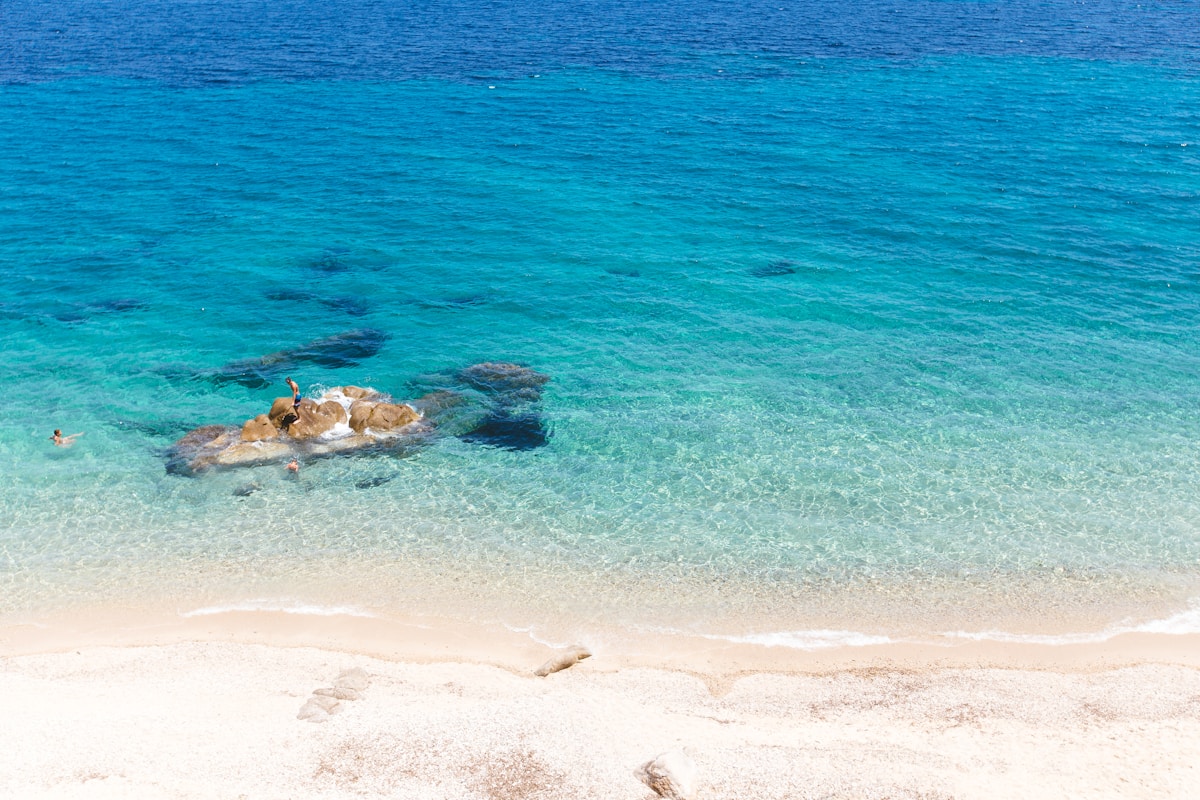
Halkidiki is the trident-shaped peninsula that extends into the Aegean southeast of Thessaloniki. Of its three prongs (Kassandra, Sithonia, and Athos), Sithonia offers the best day-trip beaches - clear turquoise water, pine trees running to the shore, and a significantly less crowded experience than Kassandra in high summer.
Best beaches on Sithonia:
Porto Koufo (approximately 115km from Thessaloniki) is a protected, almost entirely enclosed bay - the name means “deaf harbour” because the surrounding hills block all wind and wave noise. The turquoise water and the dramatic surrounding hills make it one of the most visually striking spots in northern Greece. Small tavernas around the bay serve fresh fish.
Kalogria Beach (approximately 100km) is a long sandy beach on the west coast of Sithonia backed by pine forest - shallow water, good for families, and relatively quiet outside August.
Karidi Beach (approximately 120km, near the village of Vourvourou) is consistently rated among the finest beaches in Greece - white sand, crystal water, and the small islets of Diaporos visible offshore. The water clarity is exceptional.
By car: The most practical option. The coastal road around Sithonia makes for a scenic circular drive from Thessaloniki of approximately 280km if you circle the full peninsula, or 200km return to Karidi.
By public transport: KTEL buses run to Kassandra (Polychrono, Kallithea, Haniotis) and to Sithonia (Neos Marmaras, Sarti). Journey times vary from 1.5–2.5 hours depending on destination. Frequency increases in summer but buses don’t serve all beach areas directly - a hire car or motorbike gives much more flexibility.
Staying on the peninsula instead? Halkidiki’s big resorts are covered in our Sani Resort and Ikos Resorts guides.
Best season: Late May to June and September are the best months - water is warm enough (21–24°C), but the beaches are less crowded than July and August when Thessalonikians fill them every weekend.
Pella - Capital of Ancient Macedonia
Distance: 40km west of Thessaloniki | Time needed: Half day
Pella was the capital of ancient Macedon from approximately 400 BC and the birthplace of Alexander the Great. The archaeological site is less dramatic than Vergina but historically significant: the excavated city plan is one of the best examples of Hellenistic urban design in existence, with pebble mosaic floors of extraordinary artistry preserved in situ.
The Pella Museum beside the site displays the finest pebble mosaics from the excavations - including the Lion Hunt mosaic, showing Alexander and Craterus, and the Dionysus mosaic. These 4th-century BC floor mosaics are precursors to the Roman mosaic tradition and technically remarkable for their period.
Entry: Approximately EUR 8 (combined site and museum) as of 2026.
Opening hours: Tuesday to Sunday 8am–8pm in summer.
By car: 40km west on the E90 motorway, approximately 40 minutes.
By bus: KTEL buses to Edessa and Veria pass through Pella. Approximately 50 minutes from Thessaloniki KTEL terminal, approximately EUR 5 each way as of 2026.
Worth combining: Pella is on the same road as Veria and Vergina - an ambitious but achievable combined itinerary visits all three in a single long day by car.
Mount Olympus - Base of the Gods
Distance: 100km southwest of Thessaloniki | Time needed: Full day (lower Gorge); 2 days (summit)
Mount Olympus is the highest mountain in Greece at 2,917 metres and sits on the border between Macedonia and Thessaly. The base town, Litochoro, is 100km from Thessaloniki - a comfortable day-trip distance - and serves as the start point for all routes into the national park.
For a day trip, the Enipeas Gorge trail from Litochoro into the lower slopes of Olympus is the most accessible route: a well-marked 8km trail (one way) through a dramatic gorge with waterfalls, old monasteries, and high forest, rising to the Prionia trailhead at 1,100 metres. Allow 4–5 hours return from Litochoro. No special equipment required beyond good footwear and sufficient water.
The summit (Mytikas, 2,917m) requires an early start, a 7–8 hour ascent, and an overnight stay at the mountain refuges (Spilios Agapitos or Giosos Apostolidis). The upper mountain is classified as difficult terrain and requires experience with alpine conditions, particularly in early season when snow remains on the summit ridges.
By car: Approximately 1 hour 20 minutes from Thessaloniki to Litochoro. Parking at the Litochoro trailhead or at Prionia (12km up the mountain road).
By train: Thessaloniki to Litochoro station, approximately 1.5 hours, from approximately EUR 6 each way as of 2026. The station is 5km from the town centre - taxis available.
National park entry: Free. Mountain refuge overnight fees approximately EUR 18–25 per person as of 2026 (including breakfast). Refuge bookings essential in July and August.
For getting between these destinations efficiently, see our Greece car rental guide and our getting around Greece guide. For the full overview of Thessaloniki itself - sights, food, and where to stay - read our Thessaloniki city guide.
Book Thessaloniki tours and excursions with GetYourGuide. Compare car hire options in Greece - essential for exploring beyond the main towns. Pick up a Greece eSIM before you fly - keeps you connected without roaming charges.
Search hotels in Thessaloniki on Booking.com
See Also
- Thessaloniki Travel Guide - city overview with where to stay and top sights
- Things to Do in Thessaloniki - White Tower, Byzantine churches, Ano Poli, and the waterfront
- Best Restaurants in Thessaloniki - where to eat before or after your day trip
- Halkidiki Travel Guide - the beach peninsula 75km south of Thessaloniki
- Meteora Travel Guide - the monasteries, 230km southwest
- Greece Car Rental Guide - essential for Vergina, Olympus, and Halkidiki
- Best Tours in Thessaloniki - guided day trip options from the city