Halkidiki Travel Guide: Kassandra, Sithonia & Athos
Halkidiki travel guide: beaches, monasteries, and the three peninsulas of Kassandra, Sithonia, and Athos. The mainland alternative to the Greek islands.
Guides for Halkidiki
Halkidiki is a three-pronged peninsula 70–150 km southeast of Thessaloniki - the most popular coastal destination for northern Greece, and largely unknown to international visitors who head straight for the islands. The three peninsulas - Kassandra (Pallene), Sithonia, and Athos (Agion Oros) - have completely different characters. Between them, they offer some of the finest beach water in Greece, forested mountain terrain, Byzantine monasteries, and the most extraordinary monastic community in the Orthodox world. Here is what to know before you go.
Kassandra: The First Peninsula
Kassandra is the westernmost and most developed of the three peninsulas - closer to Thessaloniki, more densely built, and the most resort-heavy. It’s where the majority of package tourism lands and where the beach club infrastructure is concentrated.
Beaches: Kassandra has good beaches but they are significantly busier than Sithonia. The west coast (Possidi, Sani, Kallithea) has long sandy stretches with full facilities. The east coast (Haniotis, Pefkohori) is calmer.
Possidi Beach - a sand spit extending into the Kassandra Bay, shallow water and gentle waves, good for families. Resort facilities, sunbeds approximately EUR 10–15 for two. The tip of the spit (Cape Possidi) has a small lighthouse and is a 30-minute walk from the main beach.
Sani Beach - attached to the Sani Resort, one of the most upmarket hotel complexes in Halkidiki. The beach itself is open to non-guests; the resort’s bars and restaurants require purchase. Sani also hosts the annual Sani Festival (classical music and jazz, July–August) - international performers, tickets from EUR 35. Check sanifestival.com for the annual programme.
Kallithea/Kriopigi area - the central tourist strip of Kassandra with a range of mid-range accommodation, restaurants, and bars. Less architecturally interesting than Sithonia but more lively.
Where to stay on Kassandra: The peninsula has everything from large resort hotels (Sani Resort, from EUR 250 per night, all-inclusive options; see our Sani Resort guide and Ikos Resorts guide for the Halkidiki all-inclusive properties) to mid-range self-catering apartments (from EUR 60–90 per night in Kallithea or Haniotis) and smaller family-run guesthouses along the coast road.
Sithonia: The Middle Peninsula
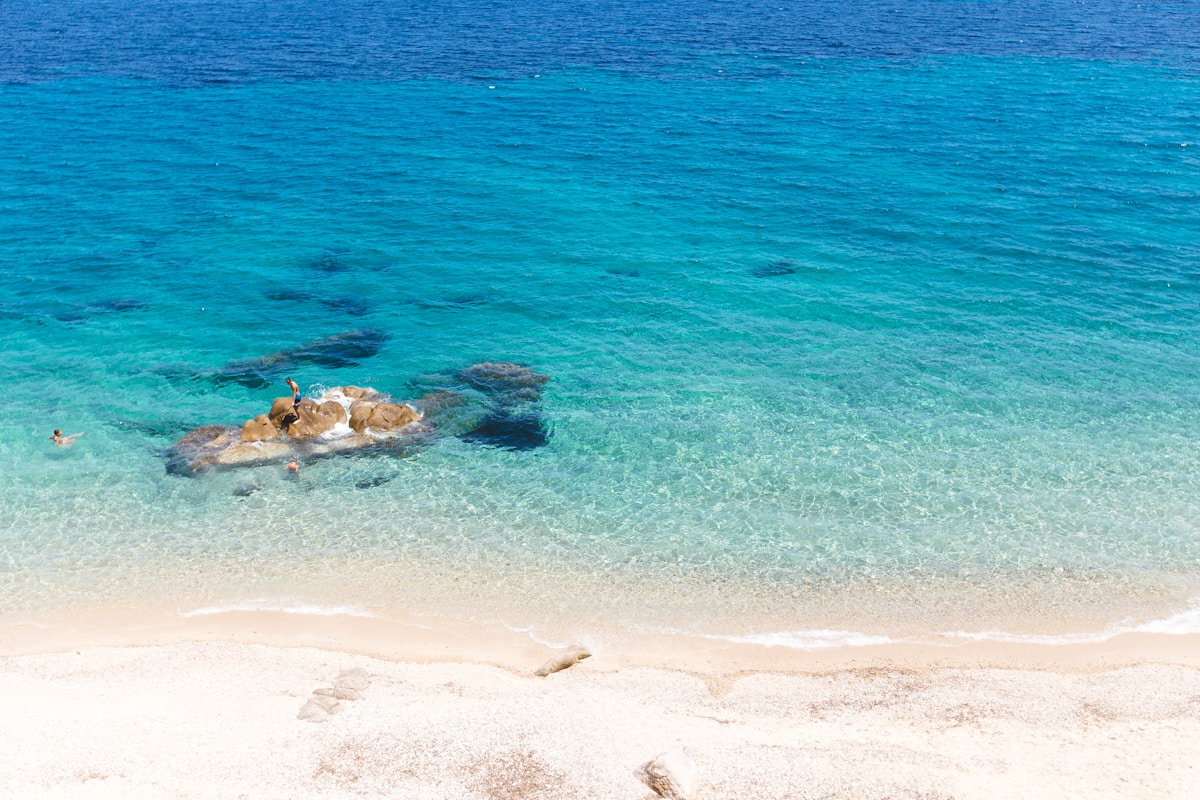
Sithonia is the reason to come to Halkidiki. The peninsula is 75 km long with forested hillsides, coves accessible only by boat, and a winding coast road that delivers beach after beach of clear blue-green water with a backdrop of Aleppo and umbrella pines.
Vourvourou: A sheltered bay in the northeast of Sithonia, dotted with small islands (the Diaporos archipelago) that form a natural lagoon. The calm, shallow water between the islands is the most photographed scene in Halkidiki - it resembles Thailand’s Andaman coast more than conventional Greece. Boat trips from Vourvourou to the islands (15–30 minutes, from EUR 10–15 per person) or kayak hire (EUR 15–20 per hour) let you explore the lagoon.
Kalogria Beach - a long, quiet beach on the west coast of Sithonia, accessed by a dirt track off the coast road. No facilities, few visitors. The water is exceptionally clear. Perfect for those who want to escape the sunbed infrastructure.
Karidi Beach (Vourvourou area) - one of the most beautiful beaches in Halkidiki, with white pebbles and turquoise water framed by pines. A small café operates in season; limited sunbeds. Arrive by 9:00am in July–August for parking.
Toroni - an ancient Macedonian settlement on the west coast with a ruined Byzantine fortress above the beach. The beach itself is long (2 km), sandy, and has a calmer atmosphere than the resort beaches of Kassandra. Taverna Toroni serves reliable fish and Greek dishes at EUR 12–20 per person.
Neos Marmaras: The main town on Sithonia and the largest resort on the peninsula, with a proper town centre, supermarkets, pharmacies, and a reasonable restaurant scene. The KTEL bus from Thessaloniki stops here. Accommodation from EUR 50–80 (mid-range studios) to EUR 120+ (waterfront hotels).
Sarti: A small resort on the east coast of Sithonia with a long sandy beach and clear views of Mount Athos across the Singitic Gulf. The mountain profile of Athos (2,033 metres, with snow visible until May) rising from the sea is one of the more dramatic coastal views in northern Greece. Several boat trips from Sarti run along the Athos coast.
Where to stay on Sithonia: Villa and apartment accommodation (from EUR 50–90 per night for a self-catering studio) is concentrated around Neos Marmaras, Vourvourou, and Sarti. Mid-range hotels along the coast road from EUR 70–130.
Mount Athos: The Monastic Peninsula
The third peninsula - Athos - is the most extraordinary, and almost entirely inaccessible. It is home to 20 Orthodox monasteries and approximately 2,000 monks who have maintained an unbroken monastic tradition here since the 9th century. The entire peninsula (330 km²) is an autonomous monastic state within Greece - it has its own government (the Holy Community), its own ferry, and its own time zone (Julian calendar, 13 days behind the Gregorian).
Access for male pilgrims: The diamonitirion (pilgrim permit) is issued by the Holy Community and restricted to 10 Orthodox and 10 non-Orthodox men per day. The waiting list for non-Orthodox visitors can be months long in summer. Apply through the Athos Pilgrims’ Bureau (Egnatia 109, Thessaloniki, tel: +30 2310 252578) or online at athos.gr. A valid diamonitirion includes accommodation in one of the monasteries (meals provided; donations welcomed).
Access for women (coastal cruise): Several boat operators run morning cruises from Ouranoupoli (the last town before the Athos border) along the western coast of the peninsula, passing the monasteries at close range. The boat cannot land or approach within 500 metres. Duration approximately 3.5 hours, from EUR 20–30 per person. A good way to see the extraordinary monastic buildings from the sea. Boats depart from Ouranoupoli harbour; check schedules locally.
Ouranoupoli (the gateway town, 110 km from Thessaloniki) is a pleasant small resort in its own right - a Byzantine watchtower, good seafood tavernas, and an unhurried atmosphere compared to Kassandra. Worth stopping for lunch if driving to or from Sithonia.
Practical Guide
For a detailed breakdown of hotels across Kassandra, Sithonia, and Ouranoupoli, see our where to stay in Halkidiki guide.
Getting There
By car from Thessaloniki: The most convenient approach. Kassandra (first toll booth turn-off): approximately 70–90 km, 1–1.5 hours via the E75/E90. Sithonia (Neos Marmaras): approximately 130 km, 2 hours. Sarti: 130 km, 2.5 hours. Ouranoupoli (Athos gateway): 100 km, 1.5 hours.
By bus (KTEL Chalkidikis): Buses depart from Thessaloniki’s Makedonia Bus Station, with frequent departures to main Halkidiki resorts in summer. Fares EUR 8–15 one-way. Journey times 1.5–3 hours depending on destination. The KTEL network connects most resort towns but does not cover small beaches - a car is necessary for independent beach exploration.
Where to Base Yourself
Kassandra: Best for: resort amenities, nightlife, organised sports facilities, families wanting a package-style holiday. Base: Kallithea, Pefkohori, or Hanioti.
Sithonia: Best for: natural scenery, quieter beaches, independent travellers, those wanting to explore by car. Base: Neos Marmaras (most practical), Vourvourou (most scenic), Sarti (most remote).
Best Beaches Summary
| Beach | Peninsula | Character | Facilities |
|---|---|---|---|
| Possidi | Kassandra | Long sandy spit, family-friendly | Full |
| Kriopigi | Kassandra | Organised beach resort | Full |
| Vourvourou/Diaporos | Sithonia | Island lagoon, kayak access | Basic |
| Karidi | Sithonia | White pebble, pine-framed, turquoise water | Limited |
| Kalogria | Sithonia | Remote, no facilities, excellent water | None |
| Toroni | Sithonia | Sandy, ancient ruins above, calmer | Basic |
| Sarti | Sithonia | Long sandy, views of Athos mountain | Good |
When to Go
July–August: Peak season - beaches busy, accommodation fully booked by April, prices at maximum. Sithonia is more bearable than Kassandra in peak season. Book accommodation at least 2–3 months ahead.
June and September: Excellent - warm sea, less crowded, accommodation more available. The best months for independent travellers and beach driving.
May and October: Good for scenery and atmosphere, sea temperatures around 19–20°C (still swimmable for many visitors), many smaller businesses closed on Kassandra. Sithonia is beautiful in May when the pines are fresh green and most beaches are empty.
Prices
Mid-range accommodation in Sithonia: EUR 70–120 per night (2 people). Studio apartments with kitchen: EUR 50–80. Restaurant meals: EUR 12–20 for lunch at a beach taverna, EUR 18–28 for dinner at a Neos Marmaras seafood restaurant. Beach sunbeds: EUR 8–15 for two. KTEL bus from Thessaloniki: EUR 8–15.
All prices are approximate as of 2026.
For more detail, see our guides to things to do in Halkidiki, best restaurants in Halkidiki, and day trips from Halkidiki.
Book Halkidiki tours and excursions with GetYourGuide. Pick up a Greece eSIM before you fly - keeps you connected without roaming charges. Compare car hire options in Greece - essential for exploring beyond the main towns.
See Also
- Things to Do in Halkidiki - beaches, boat trips, and Athos viewpoints
- Best Restaurants in Halkidiki - where to eat in Neos Marmaras, Vourvourou, and Kassandra
- Day Trips from Halkidiki - Thessaloniki day trips and Athos pilgrimage logistics
- Thessaloniki Travel Guide - the nearest city, 75–110km to the northwest
- Best Beaches in Greece - where Halkidiki’s beaches rank nationally
- Greece Car Rental Guide - essential for exploring all three peninsulas
- Best Time to Visit Greece - June and September for Halkidiki
- Greece Sailing Guide - sailing routes around the Halkidiki peninsulas
Frequently Asked Questions
- Is Halkidiki worth visiting over the Greek islands?
- For beach quality and water colour, Halkidiki competes with most Greek islands - particularly Sithonia, where the combination of pine-forested hills dropping to turquoise bays is genuinely spectacular. The advantages over the islands: no ferry required (drive from Thessaloniki takes 1–1.5 hours), no crowds at the level of Mykonos or Santorini, lower prices, and a more natural landscape. The disadvantage: less historical character than the islands and a more resort-driven atmosphere on Kassandra.
- Which peninsula is best in Halkidiki?
- Sithonia for scenery and independent travellers - forested hills, less development, coves with excellent water, and a road that winds between small resorts without the density of Kassandra. Kassandra for amenities, nightlife, and organised resort infrastructure. Mount Athos (Agion Oros) for the monastic peninsula - the most extraordinary and most restricted, accessible only to male pilgrims with a diamonitirion (permit).
- Can women visit Mount Athos?
- No. Mount Athos has been an exclusively male domain since a decree by Byzantine Emperor Constantine Monomachos in 1046 - no women, and no female animals are permitted on the peninsula. Male visitors require a diamonitirion (special entry permit) obtained through the Pilgrims' Bureau in Thessaloniki. Pilgrimage is limited to 10 Orthodox and 10 non-Orthodox visitors per day. Women can view the monasteries from the water on cruise boats that pass along the coast.
- How far is Halkidiki from Thessaloniki?
- The first peninsula (Kassandra) is 70–90 km from Thessaloniki - approximately 1–1.5 hours by car. The Sithonia peninsula is 100–130 km, approximately 1.5–2 hours. KTEL buses from Thessaloniki Makedonia Bus Station run to main Halkidiki resorts (Kalithea, Neos Marmaras, Sarti) frequently in summer - fares EUR 8–15, journey 1.5–2.5 hours.
Book an experience
Top experiences in Halkidiki
Explore the best tours and activities in Halkidiki, with instant confirmation and free cancellation on most bookings.