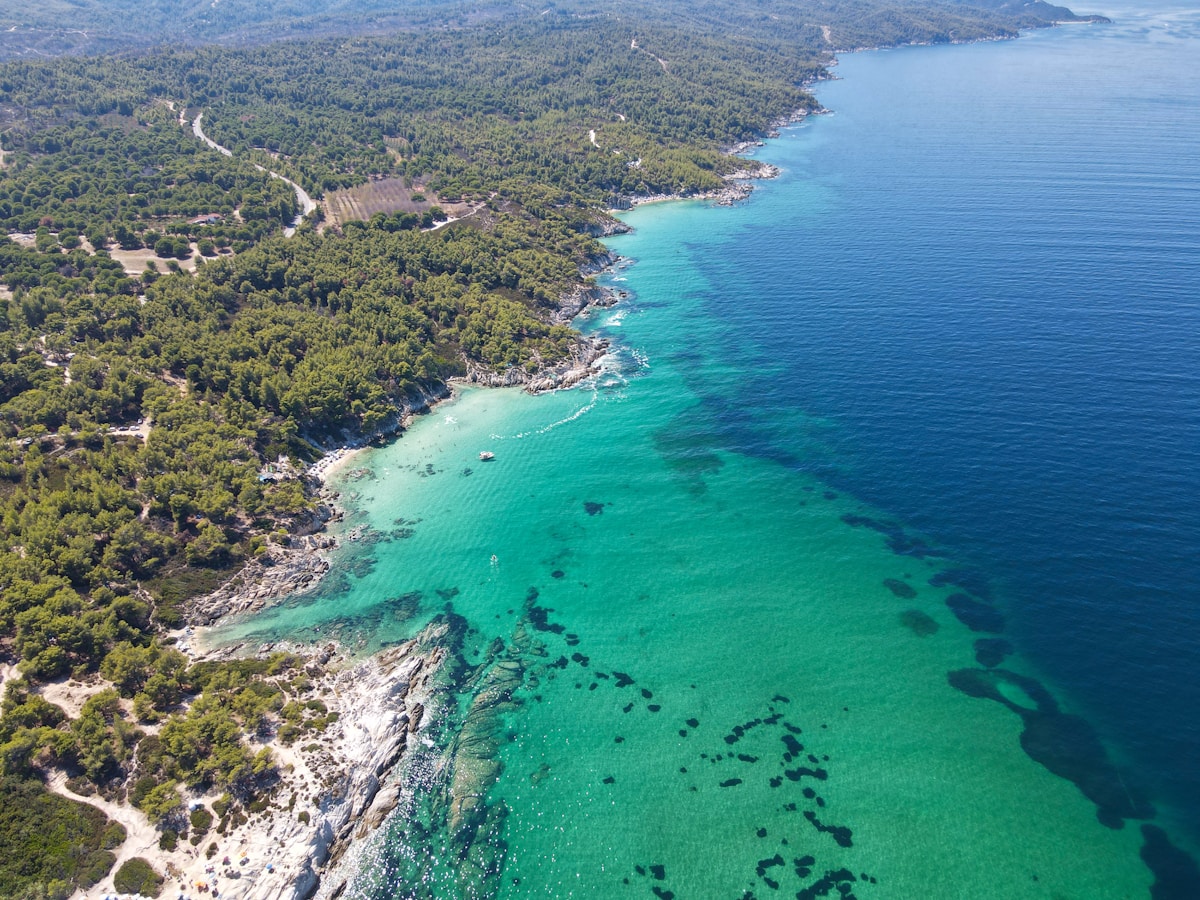
Halkidiki is three fingers of land extending south from the Greek mainland into the Aegean - Kassandra to the west, Sithonia in the middle, and Athos to the east. Each has a distinct character. Kassandra is the most accessible and most developed, with resort hotels and beach bars. Sithonia is less built-up, with pine forest running to the water’s edge and some of the clearest water in Greece. Athos is a monastic republic - the peninsula’s interior is closed to all except Orthodox Christian male pilgrims, but cruises around its coastline are among the more unusual experiences in northern Greece. Here is what is worth your time across all three peninsulas, with practical information for each.
Top Tours at a Glance
| Tour | Duration | Price (from) | Group Size | Highlights |
|---|---|---|---|---|
| Ouranoupoli: Mount Athos Peninsula Sightseeing Cruise | 3.5 hrs | from €30 | Up to 50 | Monastery coastline, sea views, commentary on monastic history |
| Halkidiki: Mount Athos Glassbottom Cruise & Ammouliani Island | 5 hrs | from €45 | Up to 30 | Glassbottom boat, island stop, swimming break |
| Halkidiki: Sithonia Sea Kayaking Tour | 3–4 hrs | from €40 | Small group | Coastal coves, crystal water, Kavourotrypes area |
| Thessaloniki to Halkidiki Beach Day Trip | Full day | from €35 | Up to 20 | Kassandra or Sithonia coast, swimming stops, beach time |
Browse all Halkidiki tours → GetYourGuide
Kavourotrypes and the Sithonia Coastline
Kavourotrypes (literally “crab holes”) is a series of small coves on the eastern side of Sithonia, near the village of Vourvourou - rocky inlets with turquoise-to-emerald water, pine trees growing to the water’s edge, and almost no development. The swimming is excellent; the water clarity is remarkable.
Access requires a hire car and a walk down rough paths from the roadside parking area. There are no beach facilities at the main coves - bring water and food. The lack of infrastructure is the point.
Location: Near Vourvourou, Sithonia, approximately 130km from Thessaloniki. The coves are signposted from the main road.
Cost: Free. No entry charge, no sunbed hire.
Best time: Early morning or late afternoon avoids the peak mid-summer crowds (though “crowded” at Kavourotrypes is modest by Greek beach standards).
Sailing and Kayaking in Sithonia
The coastline of Sithonia is best explored from the water. Sea kayaking tours of 2–4 hours depart from several points along the peninsula - Nikiti, Neos Marmaras, and Porto Carras are the main departure points. Half-day tours covering 8–12km of coastline run approximately EUR 35–55 per person (as of 2026), including a guide and equipment.
Day sailing tours of Sithonia (covering the bays between Neos Marmaras and the southern tip of the peninsula) run approximately EUR 50–80 per person, including swimming stops, a light lunch, and crew.
Mount Athos Cruise
The Athos peninsula is a semi-autonomous monastic community - 20 monasteries, approximately 2,000 monks, and a peninsula that has excluded women since the 10th century and requires an official entry permit (the diamonitirion) even for the Orthodox men allowed inside. The interior is inaccessible to most visitors.
However, the monasteries are built on and into the cliffs and hillsides above the water, and the daily cruise from Ouranoupolis (the last inhabited village before the Athos border) passes within 500 metres of the main waterfront monasteries. The Great Lavra (founded 963 AD), Simonopetra (perched on a sheer 330m cliff), and Docheiariou are visible from the sea.
Boats: Daily cruises depart from Ouranoupolis harbour at approximately 9:30am and return by 3pm. Cost approximately EUR 15–20 per person (as of 2026). Boats also depart from Ormos Panagias on Sithonia’s northeastern coast.
Ouranoupolis itself is worth a brief stop for the Byzantine Prosfori Tower and the beach at Komitsa Bay nearby.
Petralona Cave (Kokkines Petres)
The Petralona Cave (known locally as Kokkines Petres, or “Red Stones”) 56km southeast of Thessaloniki contains one of Europe’s most significant palaeontological finds - a Homo heidelbergensis skull estimated at 200,000–300,000 years old. The cave was discovered by a local shepherd in 1959; the skull was found embedded in a stalactite the following year.
The cave interior is genuinely impressive - large chambers, extensive stalactite and stalagmite formations, and the reconstruction of how the cave was used by prehistoric humans and animals over hundreds of thousands of years. The constant 17°C temperature makes it a good option during the midday heat.
Entry: Approximately EUR 8 as of 2026.
Getting there: The cave is off the main Thessaloniki–Halkidiki road near Nea Moudania (follow signs to Petralona village). By car from Thessaloniki, approximately 1 hour. The onsite museum displays the original skull and associated finds.
Aristotle’s Birthplace - Ancient Stageira
The philosopher Aristotle was born at Stageira, a Macedonian city on the Sithonian coast of Halkidiki, in 384 BC. The ancient site of Stageira (near the modern village of Olympiada, 80km southeast of Thessaloniki) has been partially excavated - the city walls, towers, and sections of the ancient road system are visible.
Nearby, a modern park at the top of the Stratoniki peninsula has a bronze statue of Aristotle and several kinetic sculptures representing his concepts - a philosophical garden that sounds kitsch but is reasonably well executed.
Access: The ancient site of Stageira near Olympiada is open freely. The Aristotle Park above the coast requires a short drive. No significant entry charge.
Context: Stageira was destroyed by Philip II of Macedon (Aristotle’s pupil Alexander the Great’s father) and later rebuilt as a gesture to Aristotle. The combination of the ancient ruins and the coast makes it a good afternoon stop on the way to or from the Sithonia peninsula.
Kallithea Beach and Resort Area
Kassandra’s Kallithea beach, approximately 80km from Thessaloniki, is the most developed beach resort in Halkidiki - a wide sandy bay backed by hotel complexes, beach bars, and water sports facilities. The water is clean and the facilities are extensive. If you want a beach day with sunbeds, bars, water skiing, and easy access from Thessaloniki, Kallithea is the practical choice.
Distance: Approximately 80km from Thessaloniki (1 hour 15 minutes). Regular KTEL buses from Thessaloniki throughout summer.
Cost: Sunbed hire approximately EUR 8–14 per pair (as of 2026). Water sports vary widely by operator.
Sani Beach and Resort
Sani, at the northern tip of Kassandra, is Halkidiki’s upscale resort area - a large private resort complex with its own beach, marina, and summer festival programme (the Sani Festival runs July–August with classical music and jazz performances). The beach is managed and well-maintained; the surrounding wetland area (the Sani wetlands) has notable birdlife.
The public beach at Sani outside the resort complex is accessible freely. The resort’s facilities require a stay or day pass.
Sani Festival: Major concerts run approximately EUR 30–70 per ticket (as of 2026). Check the programme in advance - the lineup varies each year but consistently includes international performers.
For beaches across the wider region, see our best beaches in Greece guide. For the full overview of northern Greece including Thessaloniki, read our Halkidiki travel guide.
Book Halkidiki tours and excursions with GetYourGuide. Pick up a Greece eSIM before you fly - keeps you connected without roaming charges.
Search hotels in Halkidiki, Greece on Booking.com
See Also
- Halkidiki Travel Guide - full overview of Kassandra, Sithonia, and Mount Athos
- Best Restaurants in Halkidiki - where to eat across the three peninsulas
- Day Trips from Halkidiki - Thessaloniki, Vergina, and Mount Olympus
- Thessaloniki Travel Guide - the nearest major city, 75–110km north
- Best Beaches in Greece - where Halkidiki’s beaches rank
- Greece Sailing Guide - sailing routes around the Halkidiki peninsulas
- Greece Car Rental Guide - essential for exploring Sithonia