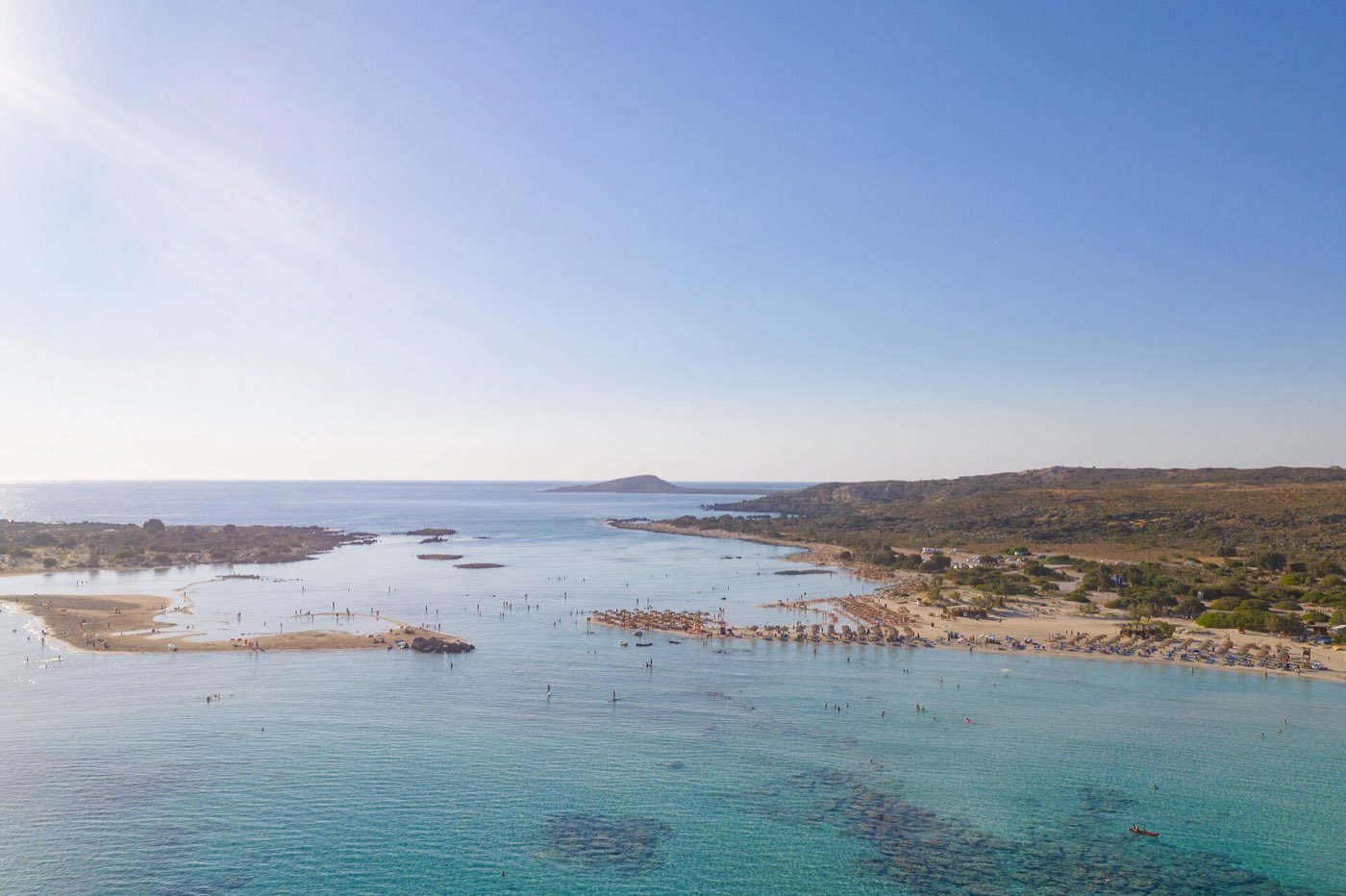
Elafonisi is the beach most people mean when they search for “pink sand Crete”. It sits at the far south-west corner of the island, where a shallow lagoon of turquoise water runs out to a small protected islet, reachable on foot across a sandbar that is rarely deeper than your knees. We think it is worth the long drive, as long as you go early and know what to expect.
This page covers how to get there, parking, facilities, the pink sand question and how to avoid the worst of the crowds. For other beaches on the island, see our best beaches in Crete guide, and for the wider picture start with the Crete island guide.
Getting There From Chania
Elafonisi is roughly 72 to 75 km from Chania, a drive of 1.5 to 2 hours on mountain roads that are paved but winding. The last stretch drops steeply toward the sea, and in peak summer the approach can back up with coaches.
By car: Driving is the most flexible option. Leave Chania by 7:30am in July and August to reach the beach before the queues build. Fuel up in Kissamos or Chania, since stations are scarce on the way. Our Greece car rental guide covers insurance and what to check before you drive Cretan mountain roads.
By KTEL bus: The regional KTEL operator runs a seasonal daily service from Chania’s central bus station. Fares quoted online range from about €6 to €20 each way, and return times vary by source, so confirm both with KTEL on the day you plan to travel. The bus stops a short walk from the main beach.
By organised tour: Day trips from Chania typically combine Elafonisi with a stop at the monastery of Chrysoskalitissa or a gorge viewpoint. Prices start from around €30 per person for a coach trip, as of 2026, and you avoid the drive. Browse Elafonisi and west Crete tours from Chania to compare departure times and inclusions.
Parking, Entry and Facilities
Entry to the beach is free. Vehicles can no longer drive to the sand, so you park in one of the designated lots and walk a few minutes. The largest car park charges about €5 for the day as of 2026. In high season arrive early, because the closest lots fill by late morning.
The main beach has rows of sunbeds and umbrellas, with a set costing roughly €8 to €10 in season. There are snack bars, toilets, a lifeguard in season and some shade from reed umbrellas. The islet side is a protected area: keep to the marked paths, do not remove sand or shells, and take rubbish with you. The wider area is part of the Natura network, according to the official Visit Greece guide to Elafonisi and Balos.
The Pink Sand: What You Will Actually See
The colour comes from tiny red fragments of shells and marine organisms mixed into pale sand. It shows most clearly along the wet line where waves wash up on the lagoon-side beach, and it looks strongest in calm weather and soft morning or late-afternoon light. Do not expect a uniformly pink beach. On a windy day, or at midday under harsh sun, the sand mostly looks cream. The reward is the water itself: shallow, warm and clear, with a colour range from pale aqua to deep turquoise.
Walking to the Islet
Cross the sandbar to the islet in sandals or water shoes. The water is usually knee to waist deep and warm, though currents can pick up on windy days. The islet has dunes, juniper scrub and quieter coves, and it is the best place to find space in July and August. Bring water, sun protection and a hat, since there is almost no shade once you are across.
When to Go and How to Beat the Crowds
Elafonisi is among the busiest beaches in Greece between mid-June and early September, with the peak from 10:30am to 4pm when day-tour coaches arrive. Our advice:
- Arrive before 10am, or after 4pm when the coaches leave and the light improves.
- Choose May, June or September for warmer water and lighter crowds. The sea is cooler before late May.
- Avoid windy days, since the lagoon can turn choppy and the sand blows.
- Stay near the west coast to cut drive time. Staying near Kissamos or Chania both work, and you can browse stays in Chania for options.
Combining Elafonisi With Other Stops
Pair Elafonisi with the Chrysoskalitissa monastery on its rock above the sea, a short drive north, or with the beach at Falassarna on the way back. The two best-known west Crete beaches are on opposite sides of the island’s western tip, so doing both in one day is tiring. For the second, read our Balos lagoon guide, and for a wider list of day options see the Crete day trips page.
Practical Tips
- Bring cash for parking and sunbeds, since some vendors do not take cards.
- Pack your own water and snacks; prices at the beach bars are higher than in town.
- Wear water shoes for the sandbar, where shells and rocks can be sharp.
- Check the weather: strong north winds close some boats and make the lagoon rough.
Prices and timetables in this guide are approximate as of 2026 and change each season, so confirm bus times and parking costs locally before you go.
Photo: dronepicr / Wikimedia Commons, CC BY 2.0.