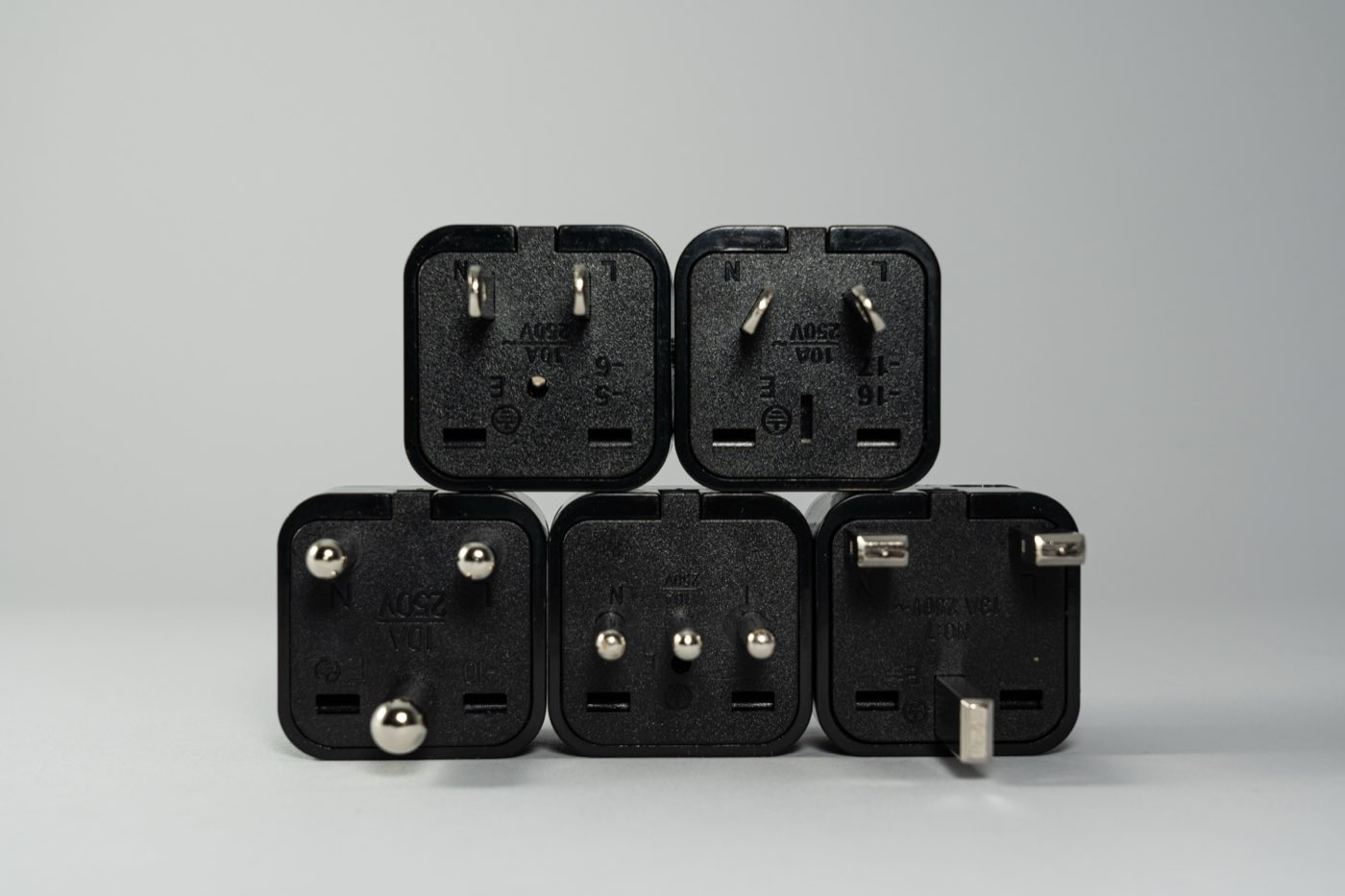
Greece uses the standard European system: 230 volts, 50 Hz, with Type C and Type F sockets. If you arrive from another EU country, your chargers will work as they are. Visitors from the UK, the US, Canada, Australia and most of Asia need an adapter, and a few need to check their device voltage as well. This guide covers the plug types you will meet, which devices are safe, and where to pick up an adapter before or after you land.
Plug types and voltage in Greece
| Detail | Greece |
|---|---|
| Plug types | Type C and Type F |
| Voltage | 230 V |
| Frequency | 50 Hz |
| Socket shape | Two round holes, 19 mm apart |
Type C is the thin two-pin plug found on most phone chargers and small appliances. Type F (often called Schuko) is the same two round pins with metal earthing clips on the top and bottom edges of the plug, used for laptops, kettles and hair dryers. Greek sockets accept both. In older buildings, especially on the islands, you may find sockets recessed into the wall, which makes chunky travel adapters hard to seat. A slim adapter or a short extension lead solves that.
Which adapter do you need?
- UK and Ireland: buy a UK to EU adapter. Your 230V devices work normally once the plug fits.
- USA and Canada: buy a US to EU adapter, and check the voltage on each charger (see below).
- Australia and New Zealand: an AU to EU adapter is enough. Voltage is 230V at home, so nothing else is needed.
- South Africa, India and Asia: pins vary by country, so a universal adapter is the safest choice.
- EU and Schengen visitors: no adapter needed. Our Greece travel tips cover the other basics for first-time visitors.
A universal adapter with built-in USB-A and USB-C ports lets one wall socket charge a phone, earbuds and a camera at once, which matters in small rooms with a single outlet.
Voltage: when you need a converter
Most modern electronics carry the label “Input: 100-240V, 50/60Hz”. That includes phones, tablets, laptops, cameras, e-readers and many electric toothbrush chargers. These need only a plug adapter.
Check the label before plugging in anything that heats or spins:
- Hair dryers, straighteners and curling irons rated only 110-120V can burn out on 230V. Buy a dual-voltage travel model, or use the hair dryer provided by your hotel.
- Electric razors and shavers are usually dual-voltage, but older models are not.
- Heating appliances such as travel kettles and irons should be bought in Greece if you need them.
Converters for high-wattage items are heavy and unreliable. For a short trip, leaving the device at home is easier.
Where to buy an adapter
Buy before you travel if possible, since airport prices are higher. At Athens International Airport the shops past security and the electronics stores in the arrivals area stock basic adapters, usually at a premium, as we note in our Athens airport guide. In the city, electronics shops around Ermou Street and Monastiraki sell adapters for approximately EUR 3-8 as of 2026. Supermarkets in larger towns, such as those on Crete and Rhodes, often carry them in the household aisle. On small islands, stock is thin and mostly sold out in peak season.
Practical tips for Greek accommodation
- Few sockets: budget guesthouses and island rooms often have one or two outlets. A compact power strip with an EU plug helps, and it needs only the single adapter.
- Key-card switches: many hotels need your key card in a slot by the door to turn on the power. Leave a spare card, or a hotel card, there to keep chargers running while you are out.
- Power cuts: short outages happen on smaller islands during summer heat waves and storms. A power bank is worth carrying, and keep phone maps downloaded for offline use.
- Safety: avoid plugging several high-wattage devices into one cheap multi-adapter. Use the grounded Type F socket for laptops.
Staying connected abroad
Once your charging is sorted, arrange data. Our Greece eSIM guide compares options for non-EU visitors. For packing the rest of your kit, see the Greece packing list.
Planning your first day? Browse guided tours in Athens and charge your phone fully before you head to the Acropolis.