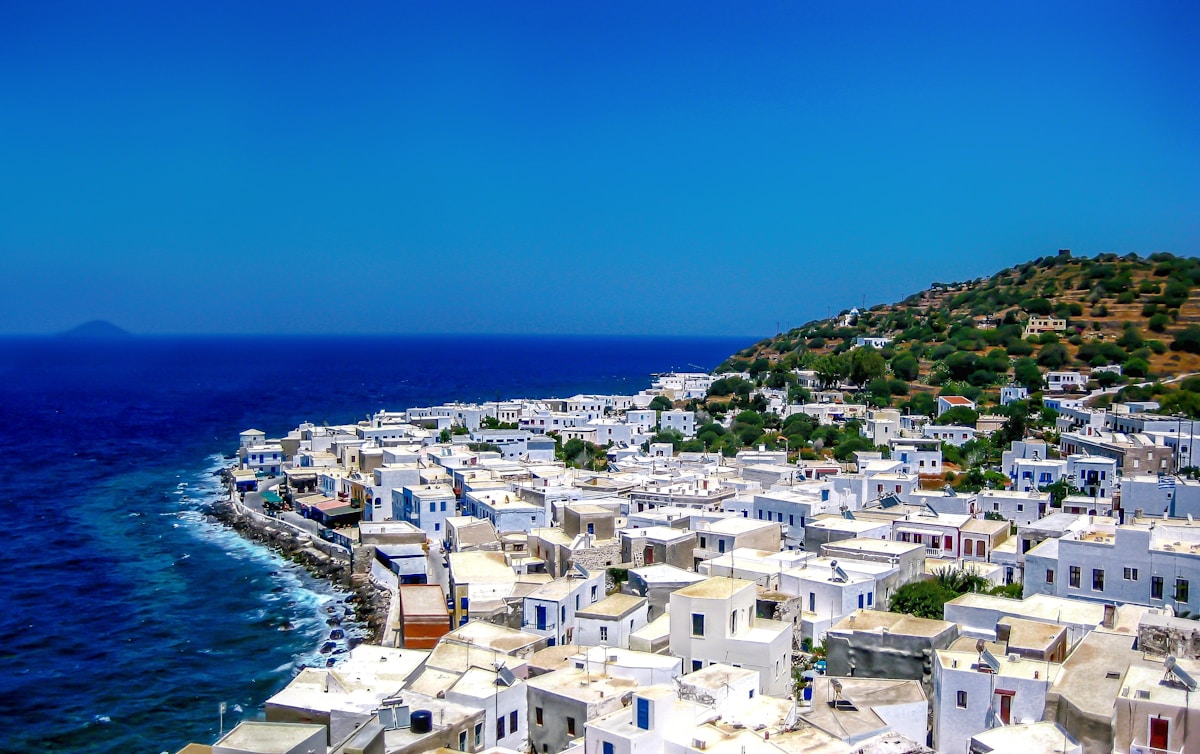
Nisyros Travel Guide: Active Volcano and Thermal Springs
Nisyros island guide: walk into an active volcano crater, soak in thermal springs, explore Mandraki village, and reach by ferry from Rhodes in 2.5 hours.
Guides for Nisyros
Nisyros is the Dodecanese’s most geologically extraordinary island: the entire landmass is a dormant-to-active volcano, and the Lakki plateau at the island’s centre is a caldera - a collapsed volcanic crater - roughly 4 kilometres in diameter. Within this caldera sits the Stefanos crater, an active volcanic vent where visitors can walk across the warm, sulphurous floor and peer into fumarole vents that occasionally emit small puffs of steam. It is a genuinely unusual travel experience, available with very little effort from Rhodes.
Beyond the geology, Nisyros has a proper village in Mandraki, a clutch of excellent traditional tavernas, and thermal springs that have attracted Greeks since ancient times. The island has a population of around 1,000 and receives a reasonable number of day-trippers from Kos and Rhodes, but overnighting here is rarely crowded and gives access to the island at its quietest.
Getting to Nisyros from Rhodes
Ferries from Rhodes Town (Kolona Harbour) reach Nisyros in approximately 2–2.5 hours, with fares around €12–18 one-way as of 2026. Blue Star Ferries covers the route as part of the Dodecanese circuit; smaller catamaran services run more direct crossings. In peak summer there are typically 5–7 sailings per week.
From Kos, the crossing is around 1.5 hours and is an option if you are travelling the Dodecanese from north to south or vice versa. The main port on Nisyros is Mandraki - all ferries dock here. Confirm timetables before travel as they vary significantly between summer and shoulder season.
Top 3 Things to Do on Nisyros
1. Walk the Stefanos Volcano Crater
The Stefanos crater is the single most compelling attraction in the Dodecanese. It sits on the Lakki plateau, 4 kilometres from Mandraki and reached by the island’s bus or by taxi (approximately €8–10 from Mandraki). Entry to the crater area costs approximately €3–5 as of 2026.
From the plateau rim, a clear path descends into the crater floor - roughly 100 metres of elevation change over a few hundred metres of horizontal distance. On the floor, you walk across a pale grey-yellow surface of volcanic ash and sulphur deposits, the ground noticeably warm underfoot in places. The fumarole vents hiss and emit sulphur dioxide; the smell is sharp but not overwhelming at a normal pace. Active vents are not roped off - you choose how close to approach.
There are four named craters on the Lakki plateau: Stefanos is the most accessible and the one typically visited. Polyvotis, adjacent to Stefanos, is more rugged and requires more scrambling. The plateau as a whole is a landscape unlike anywhere else in Greece - grey volcanic moonscape ringed by green caldera walls.
Visit early in the morning (before 9am) to avoid the day-tripper buses from Kos, which typically arrive mid-morning and turn the crater into a crowded experience for an hour or two before departing by early afternoon.
2. Explore Mandraki Village and Its Byzantine Kastro
Mandraki, Nisyros’ port and main village, is built into the caldera rim - the upper part of the village sits inside the volcano’s outer wall. The kastro at the top of the settlement incorporates a Venetian tower, sections of Byzantine masonry, and a monastery dedicated to Panagia Spiliani (Our Lady of the Cave), whose icon is kept in a grotto in the cliff face. Entry to the monastery is free; a small donation is customary.
The village itself is whitewashed Dodecanese architecture with black volcanic stone detailing - the local rock used in walls and paving gives Mandraki a distinctive visual character you do not find elsewhere. The plateia is lined with kafeneions and the main street descends to a small black-sand beach.
The village market sells locally produced pumice stone (the island exports it industrially), Nisyrian loukoumades (honey doughnuts), and pitaroudia (chickpea fritters with herbs) - a local speciality that appears on most taverna menus alongside the standard Dodecanese mezedes.
3. Soak in the Thermal Springs at Loutra
The thermal baths at Loutra on the island’s east coast have functioned since antiquity - Hippocrates referenced the springs of Nisyros, and Romans came here to treat rheumatic conditions. The current facilities are modest: outdoor pools of volcanic thermal water (35–40°C) with basic changing areas. Entry costs approximately €3–4 as of 2026.
The water is heavy with sulphur and minerals and takes on a milky quality when agitated. The therapeutic claims are traditional rather than medically substantiated, but the experience of sitting in naturally heated volcanic water on a Greek island, usually with only a handful of other visitors, is genuinely restorative. The baths open seasonally, typically May–October.
Getting to Loutra: the island’s bus covers the route in summer, or a taxi from Mandraki costs approximately €12–15 return. The journey crosses the caldera interior, which itself has good views of the volcanic landscape.
Where to Stay on Nisyros
Nisyros is a small island and all accommodation is in or near Mandraki, the main village. Options are genuinely limited to a handful of hotels and guesthouses; there are no large resort hotels and the island has no intention of attracting them. Book early for any July or August visit.
Budget (from approximately €50–75/night)
Haritos Hotel in Mandraki is a family-run guesthouse offering clean, basic rooms at the most affordable prices on the island. The central location puts you within walking distance of the harbour, tavernas, and the bus to the volcano. Book at least six to eight weeks ahead for peak season. From approximately €55/night as of 2026.
Small guesthouses in Mandraki provide simple rooms from various owners, typically with shared or private bathrooms and basic furnishings. These are the island’s most affordable options and suit travellers who need little more than a clean base and a bed. From approximately €50/night as of 2026.
Mid-range (from approximately €75–120/night)
Porfyris Hotel is the island’s most established mid-range hotel, set about 200 metres from the harbour in Mandraki. Rooms are air-conditioned with traditional tilework and several have terraces overlooking the village rooftops. Breakfast is available and the staff know the island well. From approximately €90/night as of 2026.
Romantzo Hotel in Mandraki is a comfortable mid-range option with well-kept rooms and a central position in the village. It suits visitors who want reliable standards without the basic-only options. From approximately €80/night as of 2026.
Luxury (from approximately €150/night)
Nisyros has no conventional luxury resort hotels and the island’s character is deliberately low-key. The upper tier of accommodation consists of the better-appointed boutique rooms and renovated houses. Some of these are available only through specialist Dodecanese operators. Expect to pay approximately €150–190/night for the island’s most comfortable options in peak season as of 2026.
Book Nisyros volcano day trips from Kos with GetYourGuide - day excursions operate daily from Kos Town in summer.
Search hotels in Nisyros on Booking.com
Best Time to Visit
May and June are excellent: comfortable hiking and crater-walking temperatures (22–28°C), the thermal baths are open, and day-tripper pressure from Kos is lower than in full summer. The caldera vegetation - wildflowers and scrub - is at its most colourful in May.
September and early October mirror the spring conditions without the flowers. The sea is at its warmest (26–27°C) and the island is quieter than August. The thermal baths typically remain open through October.
July and August are the busiest months and the crater area sees the most day-trippers - arriving before 9am or after 3pm largely avoids the mid-morning rush. Temperatures in the caldera exceed 40°C in midsummer; carry water and avoid the midday hours on the crater floor.
Practical Tips
Nisyros has a small supermarket and bakery in Mandraki, two or three pharmacies, and a medical centre. The nearest hospital is in Kos. There is an ATM in Mandraki - bring cash as a backup since it periodically runs dry.
The island’s bus runs circuits between Mandraki, the crater, and the main villages several times daily in summer - fares are approximately €1.50–2.50. Scooter and ATV rentals are available from the harbour area for independent exploration.
The black sand beach in Mandraki is a curiosity but not particularly good for swimming. The better option is the beach at Pahia Ammos on the south coast - a 15-minute drive or a longer walk - which has darker coarse sand and clear water.
Nisyros is a working agricultural island as well as a tourist one: the fertile caldera floor is used for vineyards and vegetable plots. Local wine is produced in small quantities and available in village shops and tavernas.
For the full context of the Dodecanese island chain, see our Dodecanese travel guide.
Frequently Asked Questions
- Is the Nisyros volcano active?
- Yes - Nisyros is an active stratovolcano, and the Stefanos crater on the Lakki plateau is accessible to visitors on foot. The island last had significant volcanic activity in 1888; minor seismic events and fumarolic activity (sulphur vents) are ongoing. The crater itself is stable enough for visitors to walk across. The ground is warm underfoot in places, and the sulphur smell is strong near the vents. This is one of the few places in Europe where you can walk inside an active caldera.
- How do I get to Nisyros from Rhodes?
- Regular ferries run from Rhodes Town (Kolona Harbour) to Nisyros (main port: Mandraki). The crossing takes approximately 2–2.5 hours and costs around €12–18 one-way as of 2026. Blue Star Ferries and local catamaran operators cover the route. There are also connections from Kos (approximately 1.5 hours). Frequency varies by season - aim for 5–7 departures per week in summer.
- Can I visit Nisyros as a day trip from Kos or Rhodes?
- Yes, and many people do. The Stefanos volcano crater is only 4 kilometres from the port of Mandraki, making it reachable by taxi or the island bus. A half-day is sufficient to see the crater and walk Mandraki village. That said, the island rewards a longer stay - the thermal springs at Loutra, the village of Emboreios overlooking the caldera, and the Black Beach all require more time. Staying at least one night changes the experience substantially.
- What are the thermal springs at Nisyros like?
- The thermal baths at Loutra, on the east side of the island, have been in use since antiquity. The water temperature reaches approximately 35–40°C and is rich in sulphur and minerals. The facilities are basic - outdoor pools with changing rooms - but the setting is authentic and the experience unlike the commercial spa scene. Entry is approximately €3–4 as of 2026. The baths are not recommended for those with heart conditions or respiratory issues due to the sulphur content.
Book an experience
Top experiences in Nisyros
Explore the best tours and activities in Nisyros, with instant confirmation and free cancellation on most bookings.