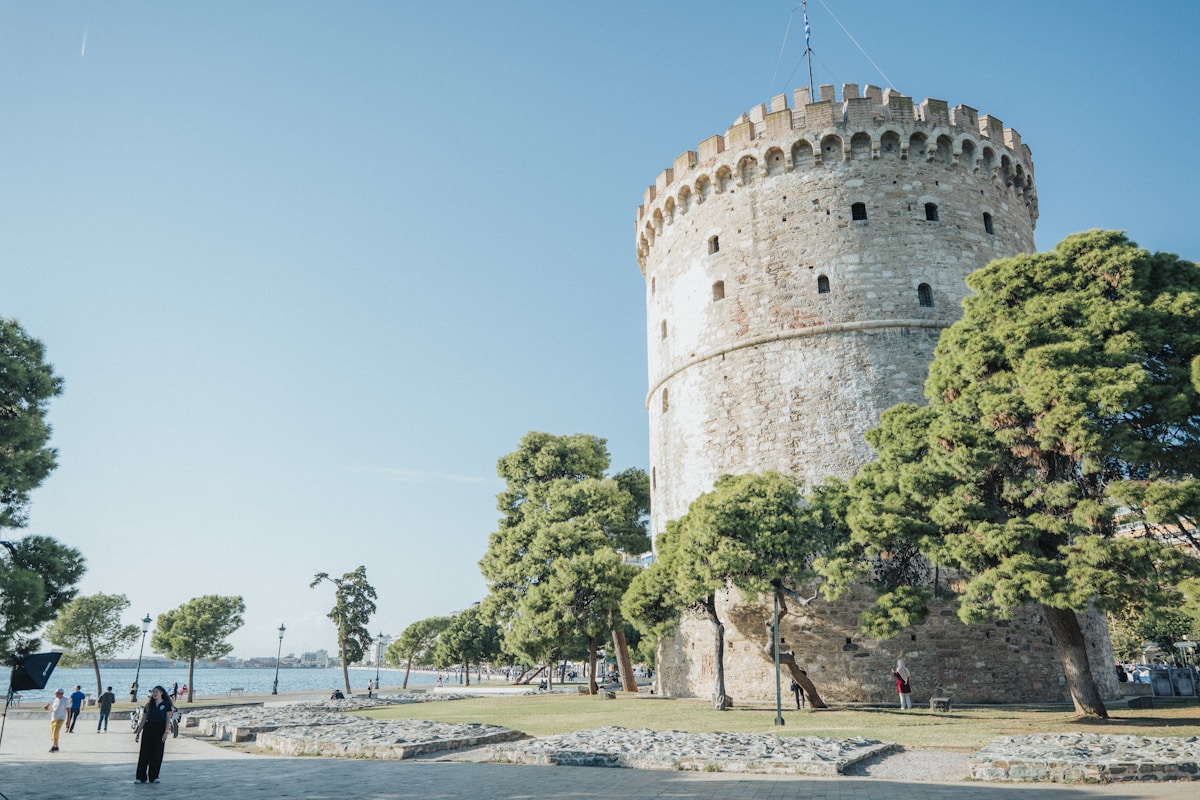
Thessaloniki is Greece’s second city, but for digital nomads it is in many ways the better choice. Rents are lower than Athens, the university population keeps the café infrastructure permanently active and affordable, the food is considered by many Greeks to be superior to the capital, and the city has the Byzantine heritage, the waterfront, and the cultural weight to make a month-long or longer stay genuinely rewarding. There is no tourist economy inflating costs in the way Athens’ central neighbourhoods can.
The number of nomads working here remains small relative to the city’s infrastructure, which means coworking spaces are not oversubscribed, cafés have tables, and apartments in good central locations are available at reasonable rates year-round.
Coworking Spaces in Thessaloniki
Impact Hub Thessaloniki
The most established coworking space in the city, located close to Aristotelous Square in the city centre. Impact Hub is community-oriented - it runs regular events, networking mornings, and connects members across the startup and creative sectors active in the city. The building has reliable fibre, a range of desk and office configurations, and printing facilities.
- Day pass: approximately €15
- Monthly hot desk: approximately €160–200
- Private office: available on request; rates vary by size
Good for nomads who want more than a desk - the events calendar and community introductions are genuine and Thessaloniki’s startup scene is stronger than most outsiders expect.
CoWork Thessaloniki
A smaller, independent space near the Aristotle University campus on Egnatia Street. Popular with students, local freelancers, and remote workers who want a quieter working environment than Impact Hub. Less event-programming, more pure heads-down workspace.
- Monthly hot desk: approximately €120–150
- Day access: approximately €12
Well-suited to nomads who already have a network and just need a productive space with stable wifi.
University-Area Cafés as Informal Coworking
The density of cafés around Aristotle University - particularly along Egnatia, Proxenou Koromila, and the streets north of the main campus - is one of the best informal coworking environments in Greece. These are working cafés used by students and faculty throughout the day, not tourist cafés. Wifi is fast (30–80 Mbps typical), there is no expectation that you will vacate your table, and the coffee is cheap (€2–3.50 for a freddo cappuccino).
This is where most self-employed locals and longer-staying nomads do the majority of their work. Budget approximately €5–8/day in coffee and food and you have a perfectly functional base.
Best Neighbourhoods for Remote Work
Aristotelous Square and the Centre
The most practical base. The central axis - Aristotelous Square to the waterfront - puts you within 15 minutes’ walk of the White Tower, the Archaeological Museum, the main commercial street (Tsimiski), and the highest concentration of cafés with reliable wifi. Impact Hub is a 10-minute walk from most central apartments.
The neighbourhood has the widest range of long-stay accommodation - serviced apartments, apart-hotels with kitchen facilities, and private apartments available on monthly rates.
Best streets for daytime café work: Proxenou Koromila (independent cafés, strong wifi), Tsimiski Street (chain and independent mix, consistent connectivity), the pedestrian streets east of Aristotelous Square.
Ladadika
The former oil-trading district near the port - revived as Thessaloniki’s main restaurant and bar neighbourhood. About 10 minutes west of Aristotelous Square on foot. Ladadika is best in the evenings; daytime café infrastructure is thinner than the centre. Katouni Street has a handful of good morning spots.
Best suited to nomads on an evening-heavy schedule or those returning to the city who know the area. The stone-building atmosphere is excellent; the wifi coverage is adequate rather than exceptional.
Toumba and Eastern Neighbourhoods
Toumba, Analipsi, and Kalamaria to the east are Thessaloniki’s most residential districts - cheapest apartments, good supermarket infrastructure (large Sklavenitis at Kalamaria), and a quieter daily pace. The bus network connects to the centre in 15–20 minutes. The new Kalamaria Metro stations (opened August 2026) now link this area directly into the central line.
If you have a good home-working setup, the eastern neighbourhoods offer the cheapest monthly apartments in the city.
Cost of Living Breakdown
All figures are approximate as of 2026. Prices vary by neighbourhood and season - September brings the Trade Fair, which spikes central hotel rates sharply for 5–7 days.
| Category | Thessaloniki (2026) |
|---|---|
| Furnished studio, central | €550–850/month |
| Furnished one-bedroom, central | €800–1,200/month |
| Furnished studio, east (Toumba/Kalamaria) | €450–700/month |
| Coworking hot desk, monthly | €120–200/month |
| Groceries | €180–300/month |
| Eating out (taverna/mezedopolio), per meal | €10–16 |
| Freddo espresso / cappuccino | €2–3.50 |
| Monthly bus pass | approximately €25–30 |
| Monthly scooter rental (small engine) | approximately €180–300 |
| All-in comfortable monthly total | €1,100–2,000 |
For comparison, a comparable quality of life in Athens costs approximately €1,400–2,400/month. Thessaloniki is meaningfully cheaper - roughly 20% - and the quality-of-life trade-off is small.
Where to Find Apartments
- Booking.com - best for furnished apartments and apart-hotels bookable for 1–3 month stays. Use the filter
Property type: Apartment / Aparthoteland enter your full stay dates to trigger monthly pricing (typically 25–40% below nightly rate). - Airbnb - 30+ night bookings typically trigger 30–50% discounts vs nightly rate. Useful for furnished stays where you want flexibility.
- Xe.gr - the main Greek property listing site for unfurnished longer-term rentals. Basic Greek helps but listings often include English contact details.
- Spitogatos - the other major Greek property portal; overlaps significantly with Xe.gr.
Browse Thessaloniki furnished apartments on Booking.com
Internet and Connectivity
Apartment wifi: Fibre is standard in most buildings constructed after 2010. Typical speeds in central apartments: 100–300 Mbps. Older buildings in Ladadika and Ano Poli can have slower infrastructure - confirm the actual speed in the listing before committing to a month-long stay.
Café wifi: 30–100 Mbps is typical across the central neighbourhoods. The university area is the most consistently fast - student demand drives the infrastructure.
Mobile data: Cosmote and Vodafone are the two main providers. Cosmote has the strongest national coverage. A Greek SIM with a data plan costs approximately €10–25 for 30 days. Buy at the airport or any mobile shop in the centre with your passport. Alternatively, an eSIM via Airalo works for Greece from around €7–15 depending on data allowance - useful if you want connectivity before finding a physical SIM.
Backup strategy: In central Thessaloniki, mobile 4G/5G makes a solid backup to apartment wifi. In the east and upper city (Ano Poli), 4G coverage is slightly patchier - Cosmote performs best.
The Greece Digital Nomad Visa - Thessaloniki Process
Greece’s digital nomad visa (introduced under Law 4825/2021) is the correct route for non-EU nationals planning to stay longer than 90 days with a remote income. The headline benefit is a 50% income tax exemption for up to 7 years of Greek tax residency - a substantial financial advantage over most competing European programmes.
Application Before Arrival
The visa application is made at a Greek consulate or embassy in your country of residence, not in Greece itself. Processing typically takes 4–8 weeks.
Requirements:
- Proof of remote income of at least €3,500/month (after tax) - employment contracts, client agreements, or 6 months of bank statements
- Valid private health insurance covering Greece for the visa period
- Clean criminal record certificate from your home country
- Valid passport (at least 12 months remaining)
- Completed application forms and passport photos
You receive a national D-visa on approval, which allows entry into Greece and acts as your initial authorisation to stay. This visa is the starting point - you then register for a full residence permit once you are in Greece.
Registering Your Residence Permit in Thessaloniki
Once you arrive in Thessaloniki on your D-visa, you register for a residence permit (άδεια διαμονής) at the Regional Immigration Office for Central Macedonia:
Office: Υπηρεσία Αλλοδαπών & Μετανάστευσης, Θεσσαλονίκη (Regional Aliens and Migration Service, Thessaloniki). Located at Kamara / central Thessaloniki area - confirm the current address at the official Περιφέρεια Κεντρικής Μακεδονίας website as offices occasionally relocate.
The Thessaloniki office handles digital nomad visa applications competently - this is not an Athens-only process. Processing times for the residence permit are similar to Athens: expect 4–12 weeks depending on the period and current caseload.
What you need at registration:
- Your D-visa in your passport
- Proof of registered address in Thessaloniki (rental contract)
- Health insurance documentation
- Recent income proof (bank statements, contracts)
- Recent passport photos
- Completed application forms (download from the official government site or collect at the office)
- Application fee (approximately €500 for the permit - verify current rate)
Tax Registration (ΑΦΜ)
Once you have your residence permit, register for a Greek tax number (ΑΦΜ) at the local tax office (Εφορία). This is a straightforward process requiring your passport and the permit. Once you have your ΑΦΜ, you can open a Greek bank account and begin the process of formally claiming the 50% tax exemption.
Accountant note: The 50% tax exemption must be applied for - it is not automatic. Get a Greek accountant (λογιστής) who speaks English before making financial decisions based on the exemption. Annual accountant fees for a straightforward remote-work tax return run approximately €200–400 in Thessaloniki.
EU Citizens
EU/EEA nationals have freedom of movement in Greece and do not need the digital nomad visa. Register at the local municipal office (ΚΕΠ) if you intend to stay beyond 3 months.
Community and Social Scene
Thessaloniki’s nomad and expat community is small but genuine. The city has not been packaged for the international remote-work market in the way Lisbon or Chiang Mai have, which means connections form through coworking spaces and cafés rather than coordinated nomad meetups.
Best starting points:
- Impact Hub Thessaloniki events - the space runs regular workshops and networking events; most are accessible to non-members
- Facebook groups: “Expats in Thessaloniki” and “Digital Nomads Greece” have active Thessaloniki-based members
- Aristotle University startup and tech events - the university has an active entrepreneurship office and runs frequent talks and events, some of which are open to the broader community
- Meetup.com Thessaloniki - English-language social events, though less active than Athens
The city’s social life is genuine and year-round - driven by the university population and local culture rather than tourist infrastructure. The café and bar scene in Ladadika and the waterfront area stays lively through the winter in a way that most comparably sized Mediterranean cities do not.
Seasonal Patterns
Thessaloniki maintains much more consistent year-round energy than Athens (which empties in August) or the islands (which close in winter). The city is liveliest from September through June; August is quieter as locals leave for island and mountain holidays, but nowhere near as dead as August in Athens.
Peak disruption: The Thessaloniki International Trade Fair (September) fills central hotels for 5–7 days and pushes accommodation prices sharply upward. If you are already in an apartment on a monthly rate, this does not affect you - but do not plan to search for short-term accommodation that week.
Getting Around
Bus: OASTH operates a thorough city bus network. Monthly pass approximately €25–30. Key lines for central nomads: trolley 12 along the waterfront; bus 78A to the airport. Central journeys cost approximately €1.
Metro: The Thessaloniki Metro (Line 1) is now operational, with the Kalamaria branch extension opened in August 2026, adding five stations through the eastern suburbs. The metro connects the airport (Thessaloniki International Airport, SKG) to the city centre - journey time approximately 35–40 minutes, fare approximately €1.
Taxi / ride-share: Cross-city rides rarely exceed €8–10. Taxibeat operates in Thessaloniki.
Bicycle: The flat central city is good for cycling. The waterfront bike path runs from the port past the White Tower and into the eastern suburbs.
Scooter: Hire from approximately €180–300/month for small engine sizes. The most practical option for regular trips between neighbourhoods.
Related Thessaloniki Guides
- Where to Stay in Thessaloniki for a Week or Month - neighbourhood breakdown with apartment rates and serviced options
- Where to Stay in Thessaloniki - standard short-stay neighbourhood guide
- Thessaloniki City Guide - practical overview including transport, sights, and orientation
- Best Restaurants in Thessaloniki - where to eat across the neighbourhoods
- Greece Digital Nomad Guide - full country overview including Athens, Crete, and the islands
- Athens vs Thessaloniki - comparing the two cities for extended stays