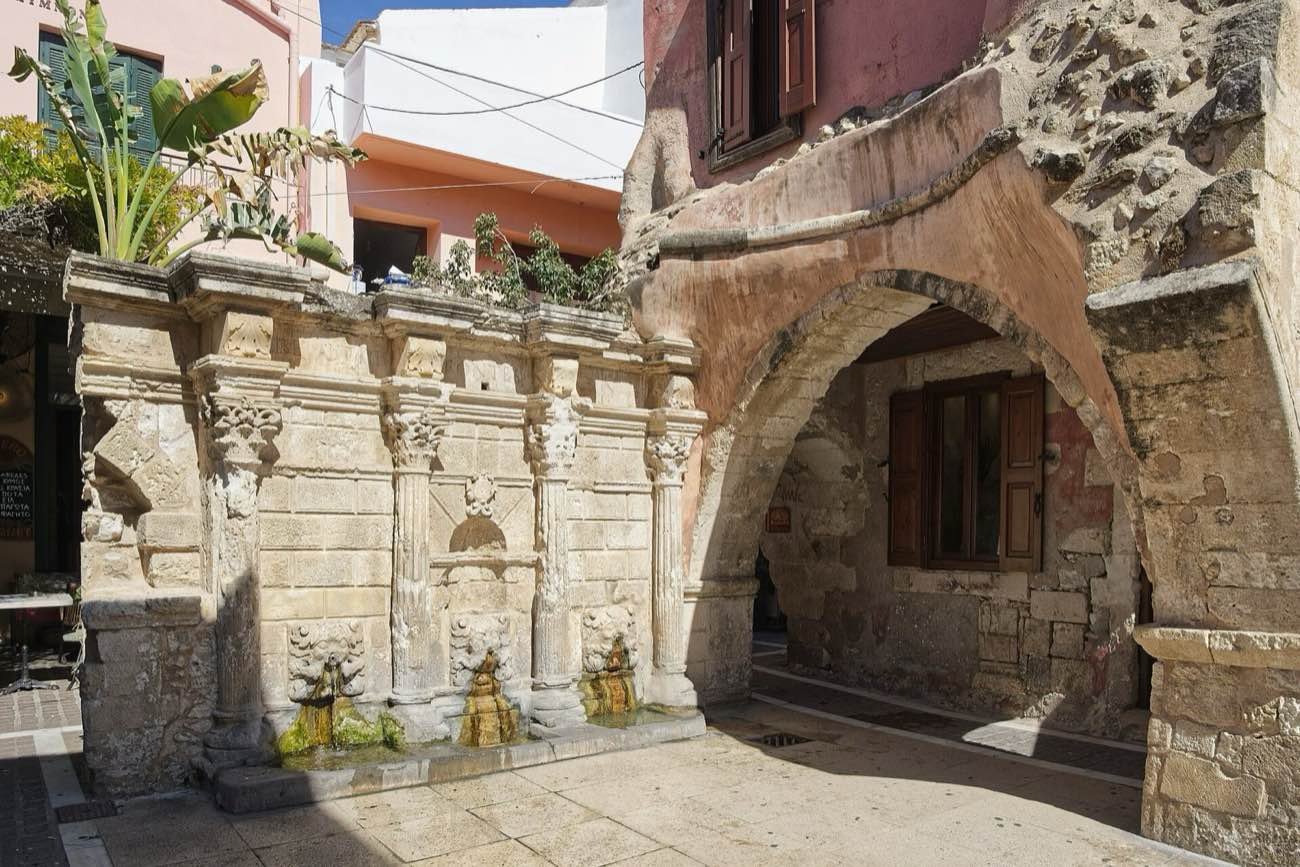
Rethymno is one of the easier places in Crete to eat well, because the old town is small and the competition is dense. The catch is the same as in any Venetian harbour town: the front row by the water sells views, and the best value sits a few lanes back. This guide explains where to eat, what to order and what you should expect to pay. All prices are approximate as of 2026, and menus change, so confirm opening days before you walk across town. For wider context on Cretan cooking, see our Cretan cuisine guide.
What to Eat in Rethymno
Cretan food is built on olive oil, wild greens, pulses, local cheese and slow-cooked meat, and it differs from the mainland menu you may know from Athens.
- Dakos: a barley rusk topped with grated tomato, soft cheese and olive oil. It is the standard starter and a good test of any taverna.
- Kalitsounia: small pastries filled with soft cheese or wild greens, sold from bakeries for about EUR 1.50 to 3 each, as of 2026.
- Wild greens (horta): boiled and dressed with oil and lemon, or baked in pies. Stamnagathi is the best-known variety.
- Antikristo and apaki: lamb roasted close to an open fire, and smoked, vinegar-cured pork. Both are classic Cretan meat dishes.
- Snails (chochlioi): fried with vinegar and rosemary, a traditional mezze in the hills.
- Gamopilafo: a rich rice dish cooked in meat broth, traditionally served at weddings and celebrations.
- Graviera and mizithra: local cheeses. Graviera is firm and slightly sweet, and mizithra is fresh and soft.
Order a few shared plates rather than separate mains, and expect a small bottle of raki and a sweet to arrive free at the end.
Old Town Tavernas Worth Seeking Out
We name only places that guides and recent visitor reviews consistently recommend. Standards shift between seasons, so check current opening hours and recent comments before you go.
Othonas is a family-run taverna in the old town, near Platanos square, and a regular recommendation for traditional Cretan home cooking and local families dining at weekends. Order the day’s stews and the greens, and plan for a long, relaxed meal.
Zisis has a reputation as a budget-friendly traditional taverna, popular for simple grilled meat, stews and generous portions. It suits lunch before the Fortezza or an early dinner without the harbour premium.
To Sefteri sits on a narrow old town lane and is often cited as an authentic stop for Cretan dishes away from the main crowds. It is the kind of place to try after you have walked past the main square.
Veneto is an old town restaurant with a Cretan menu that sits in the mid-range to upper-mid-range bracket, a reasonable option for a slightly smarter evening.
Avli is the splurge. It operates from a restored 16th-century Venetian mansion and has built its reputation since the late 1980s on refined Cretan cooking, a long wine list and a garden setting. Expect upscale prices, around EUR 40 to 70 per person for a full meal, and book ahead in high season.
The Venetian Harbour: Seafood and Views
The harbour front is the postcard dining spot. Fish is sold by weight, so ask the price per kilo before you order, check what is local and fresh, and agree the total with the waiter. Expect approximately EUR 30 to 45 per person for a seafood dinner, as of 2026, which is noticeably higher than a taverna one lane back. If you want the view without the premium, order a coffee or a drink on the front and eat elsewhere.
Rethymno also has tavernas along the beach promenade east of the harbour. They suit families and sunset meals with sand underfoot, but quality is more variable than in the old town. Choose busy tables with Greek families rather than menus with photos and touts at the door.
Cheap Eats and Bakeries
You can eat very cheaply in Rethymno. Bakeries sell cheese pies, spinach pies and Cretan rusks for EUR 1.50 to 4, a gyros or souvlaki wrap costs EUR 3 to 5, and a simple taverna lunch with a salad and a main stays around EUR 12 to 18. Our where to eat in Chania and Heraklion restaurants guides use the same logic, so the pattern holds across the north coast.
Village Tavernas and Eating Out of Town
Some of the best meals around Rethymno are in the hills. Villages on the road to Arkadi and the Amari valley serve whatever is in season, usually from a short handwritten menu. A lunch stop after Arkadi Monastery is an easy way to eat at a village taverna, and our Rethymno day trips guide suggests how to build it into a route. If you would rather have a guide, Rethymno food tours and tastings on GetYourGuide combine the old town with local producers.
Practical Tips
- Timing: lunch runs from about 12:30pm and dinner from 7pm, but Greeks usually sit down after 9pm. Arrive early for the best tables.
- Cover charge: many places add a small bread-and-cover charge to the bill. It is normal and not a scam.
- Tipping: rounding up or leaving 5 to 10 per cent for good service is standard.
- Opening days: some tavernas close on one weekday and many shut from November to March.
Staying nearby makes evenings easier. See where to base yourself in our where to stay in Rethymno guide, and plan your days with things to do in Rethymno. For official information on Greek food and regions, visit the Greek National Tourism Organisation.
Photo: Berthold Werner / Wikimedia Commons, CC BY-SA 4.0.