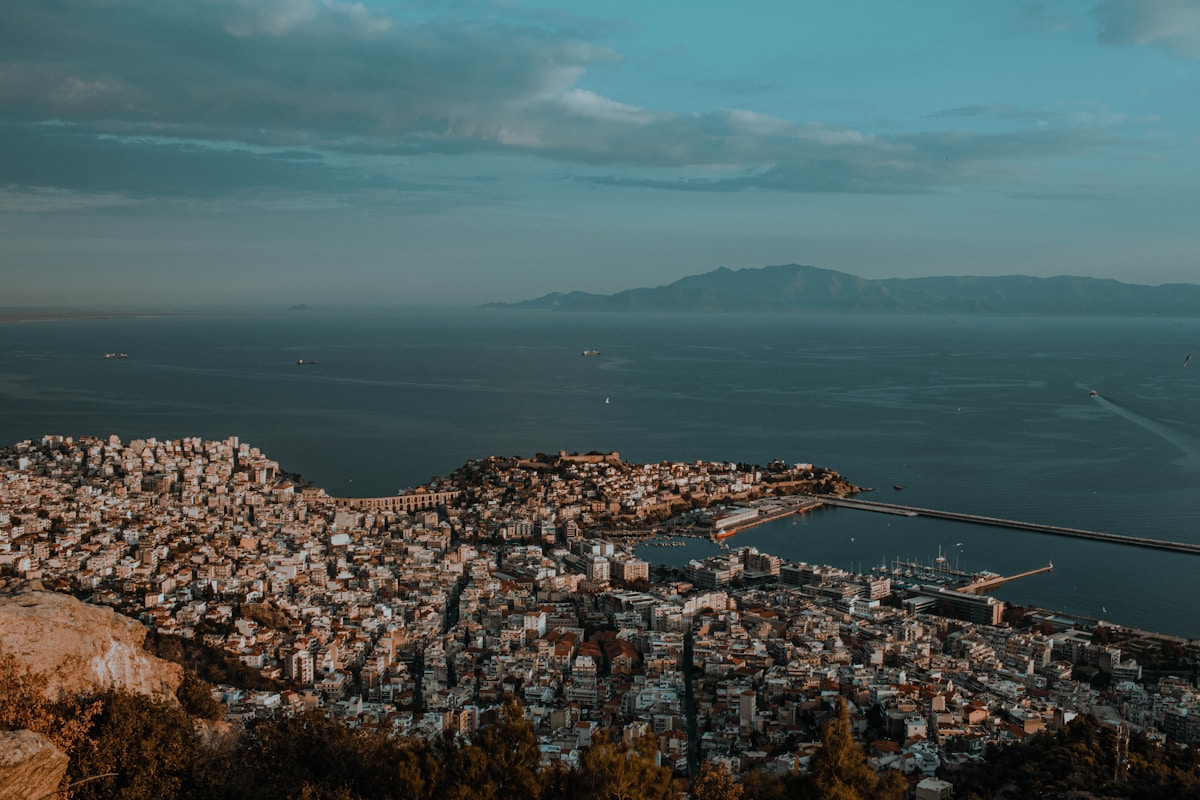
Kavala is one of northern Greece’s best surprises - a genuine harbour city with a dramatic position on a bay, an extraordinary Ottoman old town on a rocky peninsula, and a Byzantine aqueduct walking through its modern centre as if it simply belongs there. Most visitors to northern Greece spend their time in Thessaloniki and miss Kavala entirely, which means those who do come find a city working at its own rhythm, without the tourist overlay of the more-visited places.
Here is what to do in Kavala. All prices are approximate as of 2026.
Top Tours at a Glance
| Tour | Duration | Price (from) | Group Size | Highlights |
|---|---|---|---|---|
| Kavala: Panagia Old Town Walking Tour | 2 hrs | from €18 | Small group | Byzantine walls, Ottoman mansions, Mehmed Ali house |
| Kavala: Philippi Ancient City Archaeological Tour | 3 hrs | from €30 | Small group | Roman forum, early Christian basilicas, Paul’s first church |
| Kavala: Thassos Island Day Trip by Ferry | Full day | from €40 | Small group | Ancient Thassos, Marble Beach, village tavernas, ferry included |
| Kavala: Byzantine Aqueduct and History Walk | 2 hrs | from €20 | Small group | Roman-era aqueduct, castle, harbour views |
Browse all Kavala tours → GetYourGuide
Panagia Old Town
The Panagia is Kavala’s old quarter - built on a rocky peninsula that juts into the sea east of the main harbour. The name refers to the Church of the Dormition at the heart of the settlement, but the district as a whole is a dense grid of Ottoman-era stone mansions, alleyways, and Venetian-influenced architecture, all within the Byzantine fortification walls.
The character of the Panagia is different from most Greek old towns: the buildings are larger, more solid, and more architecturally ambitious than the whitewashed village aesthetic of the islands. Several are three- and four-storey mansions in various states of restoration. Walking the Panagia requires no plan - simply enter through the main gate and follow the lanes.
Best route: Enter from the western gate (below the aqueduct), walk up through the neighbourhood to the castle at the tip, then loop back along the sea wall for harbour views. Allow 1–2 hours.
Mehmed Ali’s Birthplace
In the Panagia’s upper street stands the house where Mehmed Ali was born in 1769. Mehmed Ali was an Albanian-born Ottoman officer who rose to become the ruler of Egypt, founded the dynasty that governed Egypt until 1952, and is widely considered the father of modern Egypt. His Kavala birthplace is now a small museum and one of the more historically surprising places you will visit in Greece.
Entry: Free (or small donation). Open sporadically - the house is technically always open during daylight; if the gate is locked, knock. A statue of Mehmed Ali on horseback stands in the square just outside.
Kavala Castle (Kastro)
At the tip of the Panagia peninsula, the Byzantine castle dates in its current form primarily to the 15th century. It houses the Archaeological Museum of Kavala’s collection when closed for refurbishment - check current status locally. The walls themselves are the main reason to visit: they extend around the full tip of the peninsula, providing views in every direction - back over the city, across to Thassos, and out to sea.
Entry: Approximately EUR 4 as of 2026 (combined with the Mehmed Ali house at some points; check locally). Open daily.
The Byzantine Aqueduct (Kamares)
The most remarkable piece of infrastructure in Kavala, and one of the most underrated ancient monuments in northern Greece. The aqueduct - known locally as the Kamares (“arches”) - is a multi-storey Roman and later Byzantine structure running through the heart of the city between the northern hills and the Panagia peninsula, where it originally delivered water to the old town.
The structure is approximately 300 metres long and rises to 20 metres at its tallest point. It was built initially in the Roman period, reconstructed and expanded under Byzantine rule, and used continuously until the 19th century. Today it stands completely intact in the middle of a modern city block - there is no fence, no entry fee, and very little signage. You simply walk beneath it.
Access: Free. The best view is from Eleftherias Square, where the full length of the structure is visible.
Kavala Archaeological Museum
One of the better regional museums in northern Greece, holding finds from the area including material from Philippi, Amphipolis, and the local Neapolis (the ancient Greek city that preceded Kavala). The Philippi collection includes Roman-era grave goods, sculptures, and inscriptions. The museum building itself is modern and well-organised.
Entry: Approximately EUR 4 as of 2026. Open Tuesday–Sunday approximately 8:30am–4pm.
The Harbour and Waterfront
Kavala’s working harbour - still an active fishing and commercial port - is one of the most attractive in northern Greece. The main promenade runs from the modern port area westward; the old fishing harbour is closer to the Panagia. In the evenings, the cafés and restaurants along the quayside fill with locals, and the lit-up Panagia and castle provide one of the better urban evening views in northern Greece.
For where to eat in Kavala - harbour restaurants and Panagia spots - see our Kavala restaurants guide. For day trips to Thassos island and Philippi, see our Kavala day trips guide. For planning a wider northern Greece itinerary including Thessaloniki, see our two weeks in Greece guide.
Book Kavala tours with GetYourGuide. Pick up a Greece eSIM before you fly - keeps you connected without roaming charges.
Search hotels in Kavala, Greece on Booking.com
See Also
- Kavala Travel Guide - full city guide with accommodation and getting there
- Best Restaurants in Kavala - harbour tavernas and the best seafood
- Day Trips from Kavala - Thassos, Philippi, Drama wine region
- Thessaloniki Travel Guide - northern Greece’s main hub, 160km west
- Halkidiki Travel Guide - the beach peninsula southeast of Thessaloniki
- Two Weeks in Greece Itinerary - including northern Greece
- Getting Around Greece - transport options in northern Greece