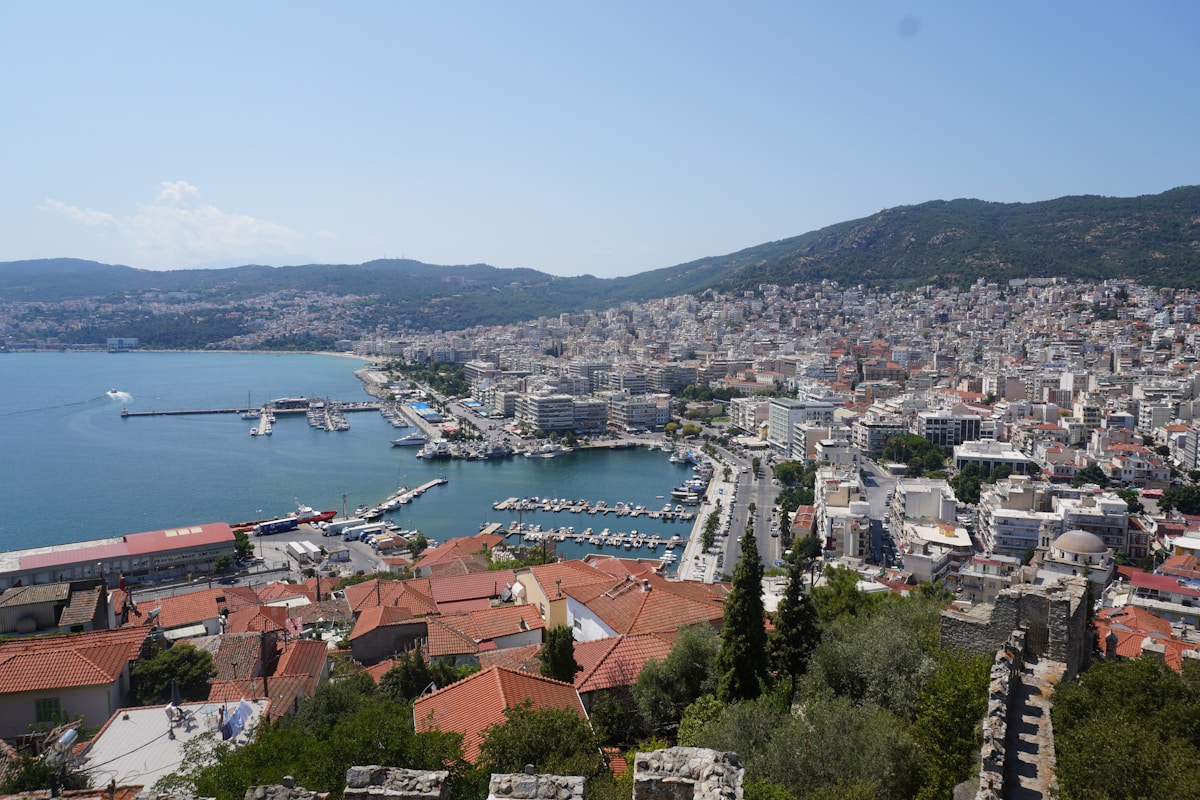
Kavala’s restaurant scene is focused on the harbour and the Panagia old town - two areas with good concentrations of tavernas and mezedes bars. The city’s food tradition draws on northern Greek flavours (stronger Ottoman and Balkan influences than the south) and on the northern Aegean catch, with sardines, mackerel, and sea bass among the staples. Prices are generally lower than in more tourist-heavy cities. Here is where to eat.
Harbour and Old Fishing Quarter
The old fishing harbour area - just below the Panagia peninsula, west of the main quayside - has the best concentration of traditional fish restaurants.
Mpoufis is widely regarded as the best fish taverna in Kavala, a small, consistently excellent restaurant on the harbour road below the Panagia. The menu changes daily based on the catch: grilled bream, pan-fried red mullet, whole baked sea bass, and the local speciality of salted sardines. The setting is nothing remarkable but the quality is high. Budget approximately EUR 18–28 per person as of 2026. Reservations recommended for weekends; closed Mondays.
Imaret is in a different category - a hotel-restaurant set within the beautifully restored 19th-century Ottoman building of the Imaret (almshouse) in the Panagia, which Mohammed Ali commissioned. The setting is extraordinary: vaulted Ottoman rooms, courtyard tables, and one of the finest buildings in northern Greece. The food matches the setting: modern Greek and Mediterranean cuisine at elevated prices - approximately EUR 30–45 per person as of 2026. Worth it for a special occasion; book well in advance.
Kritikos is a reliable harbourfront taverna with a broad menu covering both seafood and grills. Less refined than Mpoufis but larger and easier for groups; budget approximately EUR 12–18 per person. Good for a casual dinner watching harbour activity.
Panagia Old Town
Several restaurants and cafés operate within the Panagia neighbourhood, mostly on the main pedestrian street running through the old town.
Akti occupies a terrace near the sea wall with views across the harbour to the waterfront. The menu is standard Greek taverna fare - mezedes, grilled meats, fish - but the location justifies a visit for a long lunch or pre-dinner drink. Budget approximately EUR 12–18 per person.
To Megalo Kavos is a smaller spot in the upper Panagia streets, known for its slow-cooked meat dishes and strong ouzo selection. The ambience is local rather than tourist-facing; the food is solid without pretension. Budget approximately EUR 8–12 per person.
City Centre and Modern Kavala
The commercial streets of modern Kavala behind the main square have cafés and restaurants catering to the city’s everyday residents.
Giasemi is a well-regarded café-restaurant near Eleftherias Square, known for brunch, mezedes, and a wide selection of local and Macedonian wines. Good for a relaxed midday meal rather than a major dinner. Budget approximately EUR 8–14 per person.
Kipos tou Kefalosopoulou is a larger restaurant near the park area north of the centre, popular for grilled meats and the live music sessions it hosts some weekend evenings. Approximately EUR 12–16 per person as of 2026.
Morning Fish Market
The fish market near the old harbour operates weekday mornings (approximately 7am–1pm). Even if you are not buying, it is one of the better markets to walk through in northern Greece - the northern Aegean catch is different from what you see in southern Greek markets, with more mackerel, large sardines, and tuna in season.
Wine and Local Drinks
The Drama wine region, 60km northwest of Kavala, produces some of the best white wines in Greece - the appellation is not widely known internationally but the quality of its Assyrtiko and Malagousia whites is high. Several restaurants in Kavala keep a good Drama wine list. Expect to pay approximately EUR 15–25 for a local bottle in a restaurant as of 2026.
Take a Guided Food Tour of Kavala
Kavala sits on one of the most productive stretches of the northern Aegean coast, and fresh fish dominates the eating culture - the harbour market runs from early morning, and the tavernas in the Panagia old town serve the day’s catch with nothing more than local olive oil and lemon. A guided food walk through Kavala connects the morning fish market with the hillside restaurants of the Panagia quarter, where the neighbourhood’s history as a tobacco merchant city shaped a food culture more layered than coastal taverna eating alone. The Drama wine region, 60km northwest, adds exceptional local whites to the picture.
Browse Kavala food tours and culinary experiences → GetYourGuide
For sightseeing in Kavala - the Panagia, Byzantine aqueduct, and castle - see our things to do in Kavala guide. For day trips to Thassos island and Philippi, see our Kavala day trips guide.
Book Kavala tours with GetYourGuide. Pick up a Greece eSIM before you fly - keeps you connected without roaming charges. Cover your trip with travel insurance for Greece.
See Also
- Kavala Travel Guide - full city guide
- Things to Do in Kavala - Panagia, Byzantine aqueduct, and the harbour
- Day Trips from Kavala - Thassos, Philippi, and the Drama wine region
- Thessaloniki Travel Guide - northern Greece’s food and cultural capital
- Greek Food Guide - northern Greek seafood and fish roe traditions
Need a base? Search hotels in Kavala.