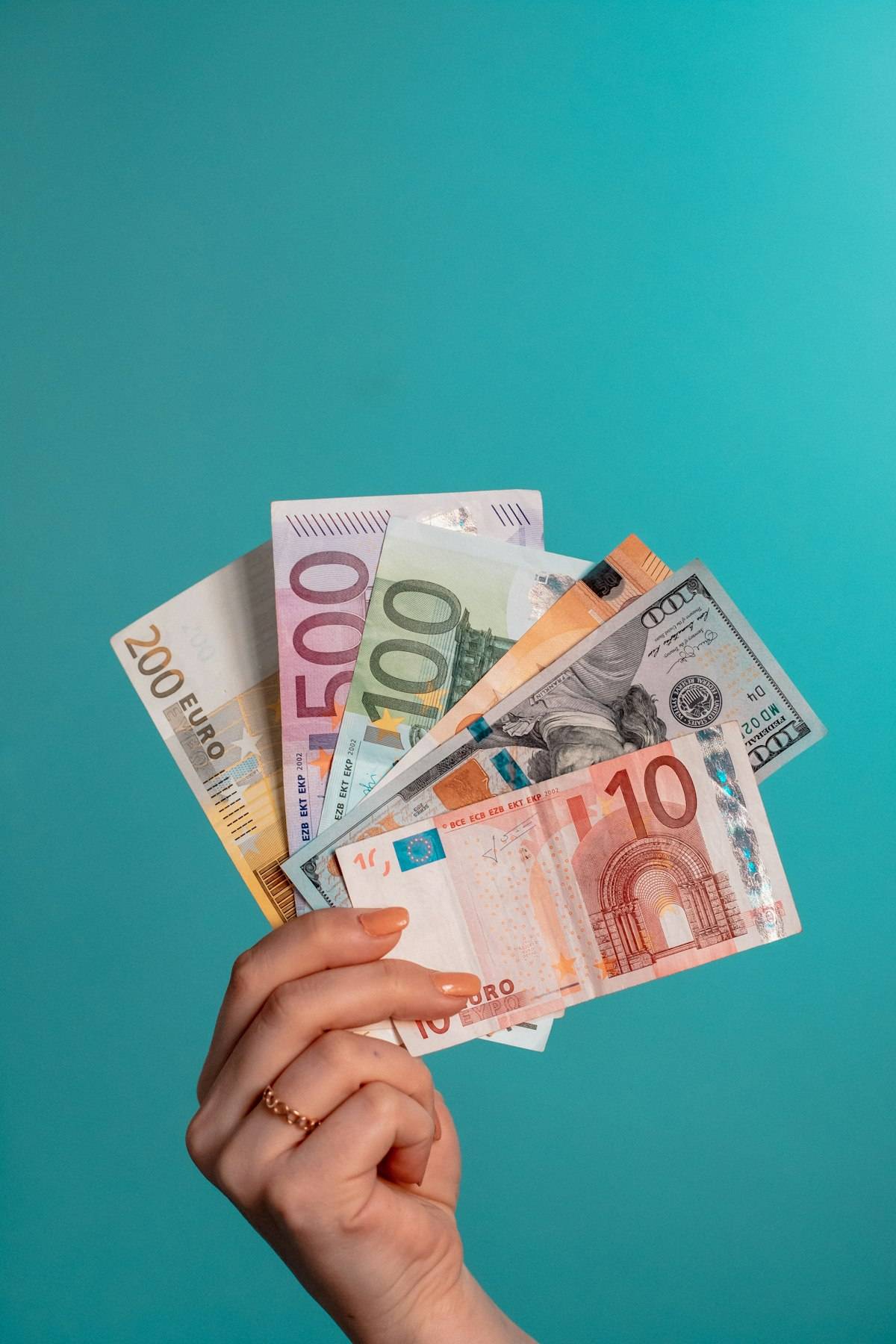
Greece uses the euro - the same currency that runs from Lisbon to Vilnius - so if you are arriving from another eurozone country you need no exchange at all. For everyone else, the practical picture is straightforward: ATMs are reliable in cities and on major islands, cards are accepted almost everywhere modern tourists stay, and a modest amount of cash is still essential for village tavernas, ferry kiosks, and small island shops.
The Currency: Euro (€)
Greece joined the eurozone in 2002, replacing the historic drachma. The euro (ISO code EUR, symbol €) is the only legal tender; no other currency is accepted in shops or restaurants.
Banknotes come in seven denominations: €5, €10, €20, €50, €100, €200, and €500. The €50 note is the workhorse for everyday spending - accepted everywhere. €100 and €200 notes are sometimes refused in small establishments because owners lack change and are wary of counterfeits; break larger notes at a supermarket or bank if you receive them.
Coins run in eight values: 1 cent, 2 cent, 5 cent, 10 cent, 20 cent, 50 cent, €1, and €2. The Greek side of euro coins features different national designs (an owl on the €1, the mythological Europa on the €2) but they spend identically to coins minted in any eurozone country.
Where to Get Euros
ATMs
ATMs are by far the easiest and usually cheapest way to get cash in Greece. The country’s ATM network is dense in cities and resort towns; even most medium-sized islands have machines in the port area or main village.
In Athens: ATMs line Syntagma Square, Monastiraki, the airport arrivals hall (two machines immediately after customs), and every major shopping street. There is no shortage.
In Thessaloniki: Concentrated on Tsimiski Street and around Aristotelous Square. Bank branches with ATMs are plentiful.
On major islands (Santorini, Mykonos, Crete, Rhodes, Corfu, Zakynthos, Kefalonia): Each island’s main town and port area has multiple ATMs. In high season (July–August) queues at machines are common on Saturday nights - withdraw earlier in the day.
On small islands (Folegandros, Symi, Alonissos, Kastelforizo): There may be only one ATM on the entire island. That machine can run dry during busy weekends when the ferry brings a full load of visitors. Withdraw a sufficient buffer before you leave the larger hub island.
ATM Fees
Greek ATMs charge a dynamic currency conversion (DCC) fee if you accept the local bank’s offer to convert your withdrawal into your home currency at the ATM screen. Always choose “continue without conversion” or “charge in euros” - this lets your home bank do the conversion, typically at a better rate.
Most Greek ATMs also levy a fixed service charge of approximately €2–4 per withdrawal, regardless of the amount. If your home bank has a fee-free foreign ATM policy (many travel-focused accounts do), you will only pay this local surcharge. Check your own bank’s terms before travelling.
To minimise fees, withdraw in larger amounts less frequently rather than taking small sums repeatedly.
Bureau de Change
Currency exchange offices (συναλλαγή νομίσματος, sinalagí nomísmatos) are found in the centre of Athens, around Omonia and Syntagma, and in the tourist cores of every major island. Rates vary considerably - airport bureaux de change offer the worst rates; independent offices in city centres are better. Always compare the buy rate and ask if there is a commission before handing over cash.
If you are exchanging a non-euro currency (US dollars, British pounds, Swiss francs, Australian dollars), city-centre exchange offices in Athens generally beat both airport kiosks and the rates offered at your hotel reception.
Greek banks (Eurobank, Alpha Bank, National Bank of Greece, Piraeus Bank) offer exchange but typically require a queue and paperwork even for cash transactions. The rate is comparable to a decent street-rate office but the process is slower. Branches are closed on weekends and public holidays.
Hotels
Most hotels offer currency exchange for guests, but the rates are almost always unfavourable. Use this only as a last resort if you need a small amount of local cash outside banking hours.
Paying by Card
Credit and debit cards are widely accepted across Greece, though the picture is uneven depending on where you are.
Where cards work reliably:
- Hotels (including most family-run guesthouses in Athens and resort towns)
- Supermarkets and pharmacies
- Sit-down restaurants and tavernas in tourist areas
- Petrol stations on main roads (useful if you hire a car in Greece, though some rural stations and toll booths prefer cash)
- Ferry companies (booking at the port ticket office or online)
- Museum and site entry tickets (online pre-purchase recommended)
Where cash is still king:
- Village kafeneions (traditional coffee houses) - almost always cash only
- Street food and souvlaki kiosks
- Small island grocers and bakeries
- Local markets and fruit stalls
- Taxis (though Athens taxis increasingly accept cards in newer vehicles)
- Small ferries and water taxis between islands
Visa and Mastercard are universally accepted where cards are taken. American Express has limited coverage outside larger hotels and upmarket restaurants. Contactless payments work well in urban areas; some older terminals on islands only accept chip-and-PIN.
A note on Greek laws: Greek law requires businesses above a certain revenue threshold to accept card payments, but enforcement is inconsistent - particularly in seasonal island operations. Do not assume the rule translates to practice.
Cash vs Card: The Practical Verdict
The short answer: bring both, default to card, keep €50–100 in cash at all times.
For a standard itinerary through Athens and two or three major islands, you can cover probably 80% of expenses by card. The remaining 20% - taxis, market snacks, village meals, ferry cafeteria purchases, small family shops - works much more smoothly with cash.
If your itinerary includes remote islands or serious off-the-beaten-path hiking villages, shift that ratio: carry more cash and treat ATM access as something to plan around rather than assume.
Tipping in Greece
Tipping is customary in Greece, though tips are smaller than in North American contexts and are never expected to the same degree.
- Restaurants: Rounding up the bill or leaving 5–10% is standard. At a taverna where dinner for two costs €40, €4 extra is generous and appreciated.
- Cafés and bars: Leave the coins from your change, or round up to the nearest euro.
- Taxis: Round up the meter to the nearest euro or add €0.50–1 for a helpful driver. Athens airport taxis have fixed fares - a small tip on top is still appreciated.
- Hotel housekeeping: €1–2 per night, left on the pillow daily or at checkout.
- Tour guides: €5–10 per person for a half-day group tour; more for a private guide.
Tips are rarely added automatically to the bill in Greece - this is not common practice - so read the receipt before paying. If you see a service charge (σέρβις) listed, a further tip is not obligatory. For a full breakdown by venue type, see our Greece tipping guide.
Planning how much cash and card spend you need? Our Greece trip cost calculator gives a quick estimate in euros.
Practical Money Tips
- Arrive with some euros: Even €50–100 gives you flexibility before you reach an ATM after landing.
- Break €50 notes early: Fill up with petrol, buy something at a supermarket, or use a bank machine - small vendors often refuse €50 for a €3 coffee.
- Sunday and holiday closures: Banks are closed; ATMs continue working, but may be busier than usual.
- Carry a backup card: ATM failures and temporary card blocks from fraud detection happen. A second card from a different provider saves real headaches on a remote island.
- Check your card’s foreign transaction fee: If your card charges 2–3% on every foreign purchase, consider a travel card with zero foreign fees (Wise, Revolut, and similar options are popular with regular Greece visitors).
- Stay connected for banking apps: Card approvals and bank alerts often need a data connection, so a Greece eSIM avoids expensive roaming charges and lets you check your balance anywhere.
- Summer ATM queues: On Santorini and Mykonos in July–August, ATMs at port areas sometimes have queues of 15–20 people in the evening. Withdraw in the morning.