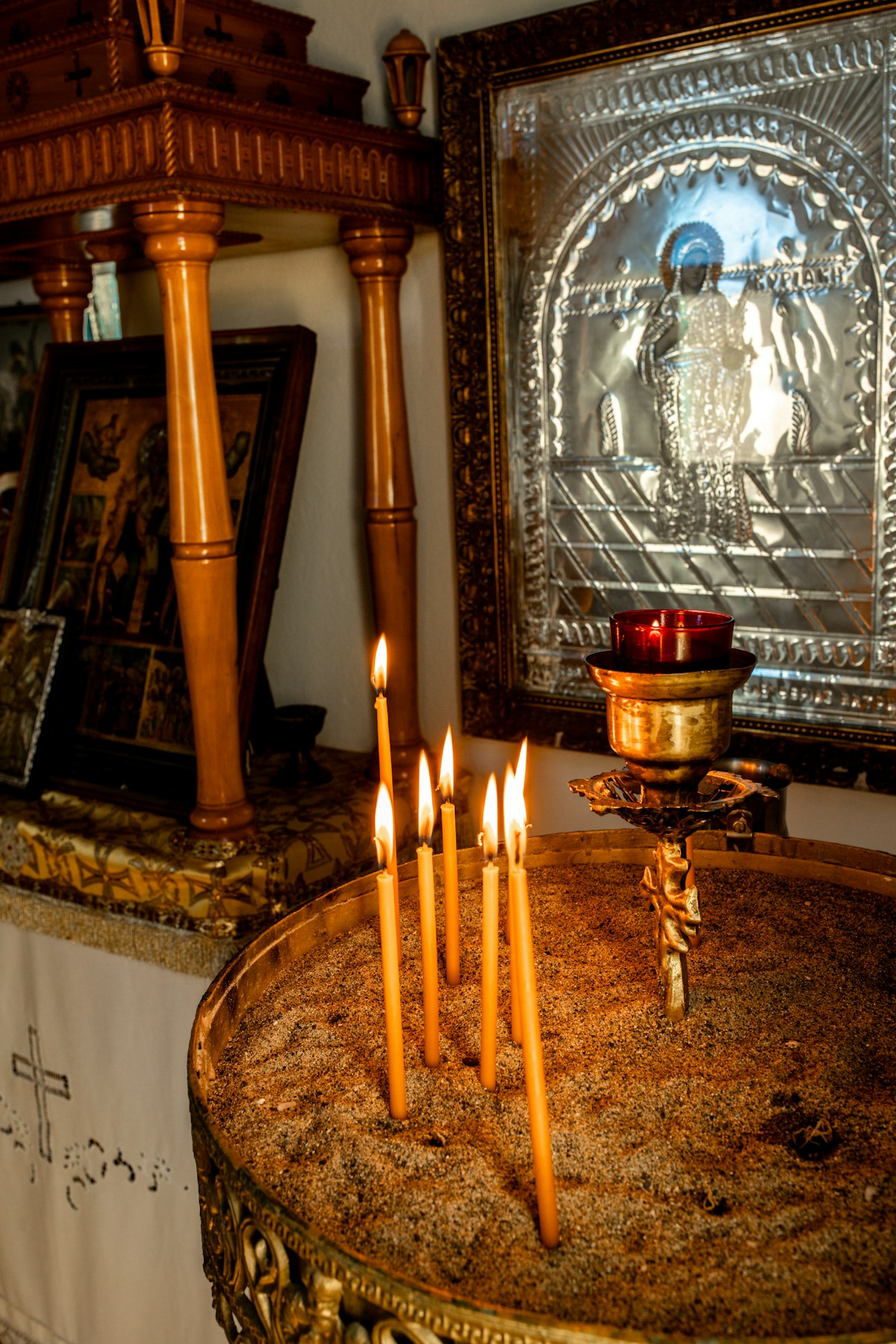
Greek Easter is the most important celebration in the Orthodox calendar, and experiencing it in Greece is one of the most atmospheric things you can do in the country. The smell of candle wax, the chanting of priests, and the moment the light passes from person to person through a packed churchyard at midnight - nothing else in Greek life carries quite the same weight.
Planning to visit during Easter is genuinely worth it, but timing matters. Orthodox Easter moves every year and does not always coincide with Western Easter.
When Is Greek Easter in 2026 and 2027?
Greek Orthodox Easter is calculated using the Julian calendar, which runs 13 days behind the Gregorian calendar used in the West. As a rule, Orthodox Easter falls between 4 April and 8 May.
2026: Orthodox Easter Sunday falls on 12 April 2026. Western Easter falls on 5 April 2026 - one week earlier. Holy Week in Greece runs 6–12 April 2026.
2027: Orthodox Easter Sunday falls on 2 May 2027. Western Easter 2027 falls on 28 March - over five weeks earlier. This is one of the larger gaps between the two calendars.
If you’re visiting for Easter, book accommodation and ferries at least two months ahead. Holy Week - especially Holy Thursday, Good Friday, and Holy Saturday - sees intense domestic travel demand. Islands fill with Athenians and Thessalonians returning home, and ferry tickets sell out weeks in advance.
Holy Week: What Happens Day by Day
Easter in Greece is not one day but a week-long arc of observances, each with its own character.
Palm Sunday (Kyriaki ton Vaiokladon): Churches distribute palm branches woven into crosses. Families begin spring cleaning, and bakeries roll out tsoureki - the sweet braided bread flavoured with mahlab and mastic.
Holy Monday to Wednesday: The pace is quieter. Traditional households follow the fasting rules strictly: no meat, no dairy, no oil. Street markets in Athens and Thessaloniki sell red Easter eggs and decorative candles.
Holy Thursday (Megali Pempti): This is the day eggs are dyed red across Greece - the colour represents the blood of Christ. The dye (and red eggs for sale) appear everywhere. In churches, evening liturgies include the reading of the Twelve Gospels, lasting around two hours.
Good Friday (Megali Paraskevi): The most solemn day. Church bells toll from noon. At dusk, the Epitaphios - an ornate wooden bier draped with flowers representing Christ’s tomb - is carried through the streets in candlelit procession. Every church organises its own procession. In small villages, the whole community turns out; in cities, multiple processions wind through different neighbourhoods simultaneously. Shops close. People greet each other with “Christos Anesti” even before midnight.
Holy Saturday (Megalo Savvato): The main event. Churches fill from 10pm onward. The service builds toward the Anastasi at midnight: all lights in the church go out. The priest lights a single flame from the Holy Fire (flown each year from Jerusalem to Athens and relayed across the country) and begins passing it to the congregation. The moment the lights go out and the flame begins to spread through the dark churchyard is one of the most powerful things we’ve seen anywhere in Greece. At midnight: “Christos Anesti!” - Christ is Risen. Fireworks explode, church bells ring, and people embrace. The tradition is to carry your lit candle home; many people trace a cross in soot above their front door for good luck.
After the midnight service, the fast breaks with magiritsa - the lamb soup that Greeks eat at 1 or 2am around the family table.
Easter Sunday: Lamb on the spit. This begins early: whole lambs or goats have been turning on charcoal rotisseries since dawn. By 1pm, families sit down to the main feast. Kokoretsi (lamb organs wrapped in intestine and roasted on the spit) is a controversial Easter staple that divides Greeks and fascinates first-time visitors.
Easter Monday: A public holiday. Many families continue the celebration with leftovers, more wine, and folk music.
The Midnight Anastasi: Where to Experience It
You don’t need a famous location to experience a moving Anastasi - any small village church will do. But some locations are particularly atmospheric:
Athens (Monastiraki and Plaka): The churches of Agios Filippos and Kapnikarea in Plaka hold well-attended services. The hill of Lycabettus is famous for its candlelit gathering, visible from much of central Athens, though it can feel crowded. Arriving by 10pm secures a good position.
Tinos: The island of the Panagia Evangelistria basilica is one of the holiest sites in Greece. Tinos sees thousands of pilgrims at Easter; the basilica’s Anastasi is particularly moving given the island’s strong religious significance.
Syros: The Cycladic island capital of Ermoupoli has two communities - Greek Orthodox and Catholic - who celebrate Easter at the same time. The Catholic Cathedral of St George faces the Orthodox Church of the Resurrection; the sound of both congregations singing simultaneously at midnight is extraordinary.
Small Cycladic villages: Naxos, Sifnos, and Folegandros offer intimate village services where you’ll be welcomed into a tight-knit community. The processions wind through narrow whitewashed streets that feel unchanged from decades past.
Monemvasia: The medieval fortress town on the Peloponnese holds its Anastasi service inside the old town. The candlelight reflecting off Byzantine walls and cobblestones is striking.
Corfu: Pot-Throwing and Philharmonic Processions
Corfu stands apart from the rest of Greece in how it celebrates Easter, and specifically Holy Saturday morning. The tradition of botides (from the word for clay pot) plays out from 11am: residents of the old town throw large clay pots - and sometimes smaller decorated ones - from upper-storey windows and balconies onto the streets below. The pots are filled with water or soil and burst on impact. The sound is immense.
The origins are debated. One interpretation ties it to a Venetian New Year custom (Corfu was under Venetian rule for four centuries). Another links it to the opening of Christ’s tomb - the crashing sound symbolising the stone being rolled away.
After the botides, the Philharmonic Societies of Corfu - among the oldest in Greece - lead brass band processions through the old town, with local dignitaries and clergy following behind. The old town of Corfu (a UNESCO World Heritage Site) is the backdrop for all of this.
If Corfu is on your list, book Easter accommodation six months in advance. Prices are significantly higher than the surrounding shoulder season, and the town fills quickly.
Best Islands and Destinations for Easter in Greece
Corfu: For the botides, the brass bands, and the Venetian-influenced architecture. Theatrical and unique.
Tinos: For genuine religious pilgrimage. Tinos attracts some of the most devout Easter worshippers in the Cyclades.
Syros: For the dual-faith experience - Orthodox and Catholic liturgies side by side in the same town.
Hydra: No cars, just candlelit cobblestone lanes and donkeys. The processions feel medieval.
Patmos: The “Jerusalem of the Aegean” - the island of St John the Theologian, where the Book of Revelation was written. Easter services at the Monastery of St John the Theologian are held in atmospheric surroundings, though access to the monastery church is limited.
Nafplio (Peloponnese mainland): Greece’s first modern capital. The Epitaphios procession winds through the neoclassical streets of the old town; the candlelit harbour is the gathering point afterward.
Thessaloniki: A city Easter with a different energy - multiple processions, rooftop bars, and the working-class neighbourhoods of Ano Poli putting out tables in the street.
The Food: Magiritsa, Red Eggs, and Lamb on the Spit
Magiritsa is the soup that breaks the Lenten fast at midnight on Holy Saturday. The recipe varies by family and region, but the base is always lamb offal (liver, lung, heart, intestine) simmered with spring onions, dill, and rice, finished with egg-lemon sauce (avgolemono). It sounds challenging; most first-timers are surprised by how good it is. Tavernas around Greece serve it through Holy Week and on Easter Sunday.
Red eggs (kokkina avga): Hard-boiled eggs dyed deep red - the colour of Christ’s blood - are a fixture of Easter tables. The game is tsougrisma: two people each grip an egg and knock them together tip-to-tip, then base-to-base. The person whose egg survives uncracked is said to have good luck for the year. Greeks take tsougrisma seriously.
Lamb on the spit (arnaki sto souvla): Easter Sunday lunch. Whole lambs or goats, on charcoal-fired rotisseries, turning slowly from dawn. The process is social - neighbourhood groups or extended families gather around the spit from 8am, drinking tsipouro or wine and tending the coals. By 1pm, the meat is served with salads, tzatziki, and more wine.
Kokoretsi: Lamb offal (liver, spleen, kidneys, sweetbreads) wrapped tightly in intestine and roasted on a separate spit alongside the lamb. It’s crispy, fatty, smoky, and deeply savoured by Greeks who’ve eaten it since childhood. If someone offers you kokoretsi, accept - it’s a compliment.
Tsoureki: The Easter bread, available at bakeries from Palm Sunday onward. The braided sweet loaf is flavoured with mahlab (a cherry-pit spice) and sometimes mastic. A red egg is often pressed into the top. Buy it fresh from a bakery rather than pre-packaged.
Where to Stay at Easter
Book well ahead - accommodation prices rise sharply during Holy Week and Easter weekend, sometimes 50–100% above standard spring rates.
Corfu: The old town is the place to stay for the celebrations. Casa Vitae Corfu (double rooms from approximately EUR 130/night as of 2026) sits within the old town. Cavalieri Hotel has a rooftop with views over the Liston arcade and the sea.
Syros: Ermoupoli is walkable. Volissos Studios and smaller guesthouses around the town square are central to both churches.
Hydra: Everything is close on this car-free island. Bratsera Hotel (from approximately EUR 160/night as of 2026) is a converted sponge factory near the port. Book four to five months ahead for Easter.
Athens: Psyrri and Monastiraki put you within walking distance of multiple churches. The Epitaphios processions from Agios Filippos in Plaka draw crowds into the area around the old town.
Search hotels in Greece on Booking.com
Practical Tips
Candles: Buy a white Easter candle (lambada) in advance from a church or kiosk - they range from simple tapers to elaborate decorated candles that children love. The ritual of carrying your flame home from the midnight service is the experience you’re there for.
Dress: Cover shoulders and knees for church services. It’s polite and expected. Bring a light layer - April nights can be cool, especially on the islands.
Ferries: Book well ahead. The Friday before Palm Sunday and Holy Thursday/Saturday see some of the busiest ferry movement of the year. Tickets for popular routes (Athens–Mykonos, Athens–Santorini, Athens–Crete) sell out weeks in advance.
Restaurants: Many traditional tavernas close on Good Friday; most reopen for Easter Sunday lunch. If you want Easter lamb, look for signs saying “sto souvla” - it means they’re roasting whole.
Noise: The midnight fireworks and church bells in Corfu especially can be genuinely loud. Earplugs if you’re a light sleeper.
Greek Easter asks more of you than a beach holiday - it runs late, it involves crowds, and it can be emotionally intense for those who weren’t expecting it. Most people who experience it once want to come back.
Plan your trip: Flights to Greece | Travel Insurance | Greece eSIM | Tours & Activities
Plan Your Trip
✈️ Book your flights to Greece 🛡️ Get travel insurance 📱 Stay connected with an eSIM 🚗 Rent a car