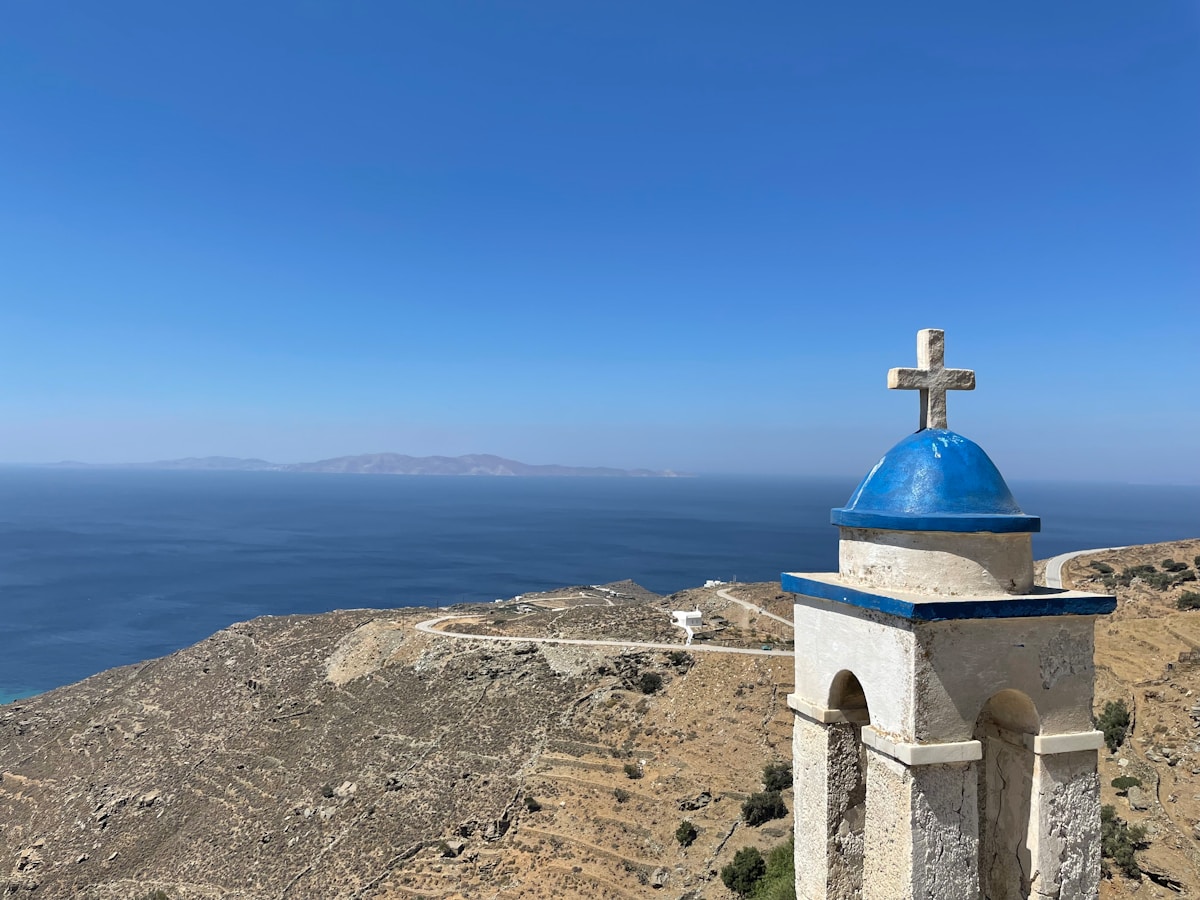
Tinos is the Cyclades’ most layered island - a functioning pilgrimage centre, an agricultural island with a serious food tradition, and a marble-carving heritage that produced some of 19th-century Greece’s finest sculptors. It is also significantly less touristy than Mykonos (30 minutes away by ferry) despite being larger and more interesting. The combination of religious significance, village architecture, and an emerging food and arts scene makes Tinos one of the most rewarding less-visited islands in the archipelago.
Prices listed are approximate as of 2026.
Top Tours in Tinos
| Tour | Duration | Price (from) | Group Size | Highlights |
|---|---|---|---|---|
| Tinos Highlights Tour - Panagia, Pyrgos & Marble Villages | 5 hrs | from €40/person | Small group | Evangelistria church, Chalepas Museum, Volax boulder village |
| Tinos Food & Villages Experience | 4 hrs | from €45/person | Small group | Farm-to-table tasting, Tripotamos taverna, local cheese and artichokes |
| Cyclades Day Cruise from Mykonos - Tinos & Delos | 7 hrs | from €55/person | Small group | Delos ruins, Tinos overview, sailing between islands |
Browse all Tinos tours → GetYourGuide
Visit Panagia Evangelistria
The Church of Panagia Evangelistria dominates Tinos Town from the top of the main street - a white marble Baroque-neoclassical building visible from the ferry as you approach. The church was built in 1823 to house an icon of the Virgin Mary discovered after a vision by the nun Pelagia, and has been a major pilgrimage site ever since.
The icon itself is encrusted with offerings - gold and silver votive tablets, jewellery, and precious stones donated by pilgrims over two centuries - and is processed through the town on 15 August, the Feast of the Assumption, in an annual ceremony that draws tens of thousands of people from across Greece and the diaspora.
Entry to the church is free; it is open daily from approximately 7am to 8pm. The main street leading up from the harbour is carpeted on 15 August so that pilgrims can crawl the entire length on their knees - a sight unlike anything else in the Aegean islands. Visit outside the August pilgrimage period if you prefer a quieter atmosphere; the church is impressive year-round.
The church museum below the nave holds a substantial collection of votive offerings and historical paintings; entry approximately €2.
Explore the Marble Villages - Pyrgos and Volax
Pyrgos, in the north of the island, is the centre of Tinos’ marble-carving tradition. The village is built almost entirely from the local grey-white stone, with intricately carved facades, door frames, and public fountain (pigados) that demonstrate why Tinos was the source of stonemasons for some of the 19th century’s most ambitious Greek building projects.
The Giannoulis Chalepas Museum in Pyrgos celebrates the island’s most famous sculptor (1851–1938), whose work sits in the National Gallery in Athens. The museum is housed in his preserved family home and studio and contains original works, casts, and personal objects. Entry approximately €3. The village also has the School of Fine Arts Museum (Museum of Marble Crafts), a well-designed exhibition on the history and techniques of Cycladic marble working, with demonstrations and a workshop programme. Entry approximately €4.
The village of Volax, in the island’s interior, is built among a field of enormous granite boulders - a geological curiosity that makes the village look as if it was placed among giant dropped stones. The boulders are of volcanic origin and some are larger than the houses. The village has a small amphitheatre and is known locally for basket-weaving.
Eat Your Way Around the Island
Tinos has quietly become one of the better food islands in the Cyclades. The agricultural base is strong: the island produces artichokes, capers, loukoumades (honey doughnuts), local cheeses (including a hard cheese called manoura and a fresh cheese similar to anthotyro), and sundried tomatoes that appear across the local menus.
The village of Tripotamos near the centre of the island has a cluster of restaurants that have attracted attention from Athenian food critics - cooking using exclusively island ingredients, with menus that change with the season and availability. Reservation recommended in summer.
In Tinos Town, the area behind the waterfront has a range of options from simple tavernas to more contemporary cooking. The waterfront itself has the standard tourist-facing places. Loukoumades stands at the port sell fresh honey doughnuts - the Tinos version are smaller and crispier than mainland versions.
The Villages of the Interior
Tinos has over 40 villages, most of them small, marble-built, and remarkably unchanged. The most architecturally interesting are clustered in the north: Falatados, Steni, and Dio Choria all have the characteristic Tinian vernacular - arched lanes, marble-carved doorways, pigeon houses (peristeriones) built in elaborate stone latticework on the hillsides. Tinos has more of these elaborate pigeon towers than anywhere else in Greece; the Venetians introduced them in the 16th century.
The drive or moped ride through the interior via these villages takes a full day and is the best way to understand the island’s character beyond the religious pilgrimage element. Most villages have a kafeneion open in the mornings.
Beaches
Tinos is not primarily a beach island, but there are good options. Kolymbithra on the north coast has two bays - one protected and calm, one exposed and better for waves and windsurfers. The north coast receives the Meltemi wind and is good for windsurfing in July–August. Agios Fokas is the closest beach to the port town, a sandy bay about 3km from Tinos Town, accessible by bus or taxi. Pahia Ammos in the south is a longer sandy beach popular with families.
For getting to Tinos and accommodation options, see our Tinos travel guide. For island-hopping context, see our Cyclades island guide and Greek island ferry guide.
Book Tinos tours and experiences through GetYourGuide. Pick up a Greece eSIM before you travel.