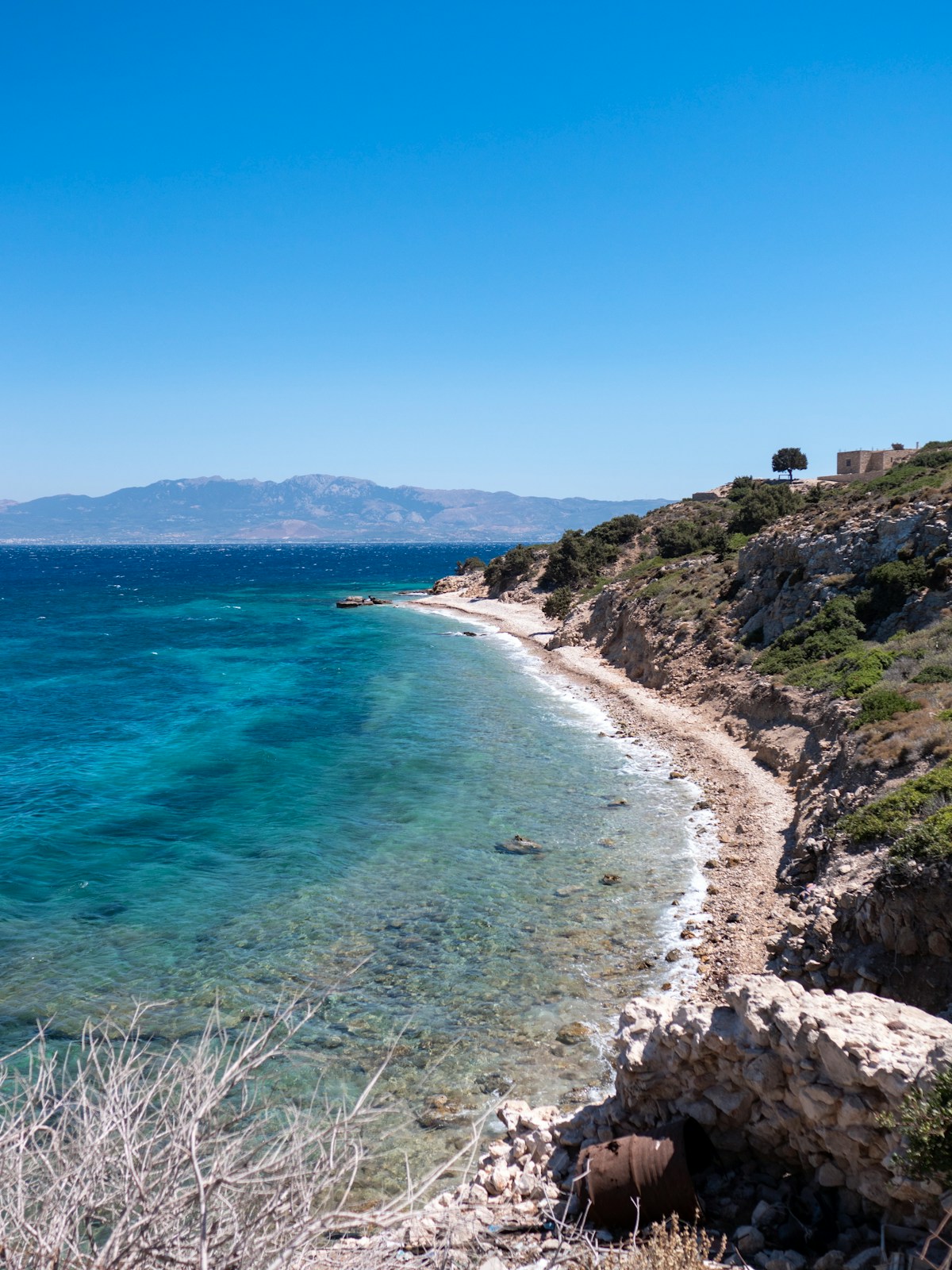
Tilos Travel Guide: Birdwatching and Medieval Castles
Tilos island guide: rare bird species, medieval Megalo Chorio castle, pebble coves, and ferry from Rhodes. Greece's quiet Dodecanese birdwatching island.
Guides for Tilos
Tilos sits between Nisyros and Halki in the central Dodecanese, an island of approximately 64 square kilometres with a permanent population of around 500. It is greener than most Dodecanese islands thanks to natural springs, and distinctly quieter than its better-known neighbours - there is no package tourism to speak of, and the island’s nature-reserve status has attracted a self-selecting crowd of walkers, birdwatchers, and travellers who specifically want unhurried time in the Greek countryside.
The two main settlements are Livadia, the port village, and Megalo Chorio (meaning “big village”), the historic capital 7 kilometres inland. A third, smaller village, Mikro Chorio, has been uninhabited since the 1960s.
Getting to Tilos from Rhodes
Ferries depart Rhodes Town (Kolona Harbour) for Tilos on the DANE and Blue Star routes, with travel time around 2.5–3.5 hours depending on the service. During summer, expect 4–6 sailings per week; in winter this drops to 2–3. Fares run approximately €12–20 one-way as of 2026. There are also connections from Kos and Nisyros that can be useful if you are travelling the Dodecanese route rather than returning directly to Rhodes.
The Tilos municipal website and local ferry agents in Rhodes Town post current schedules. Timetables shift substantially between high and low season - always confirm before planning your travel.
Top 3 Things to Do on Tilos
1. Birdwatching in the Tilos Nature Reserve
Tilos declared a hunting ban in 1993 and has been a protected nature area since the early 2000s - one of the first places in Greece to take active steps toward wildlife conservation at an island scale. The result is a measurable increase in bird populations, particularly migratory species using the Dodecanese as a stepping stone between Africa and Europe.
Eleonora’s falcons breed on the sea cliffs. Little owls, hoopoes, and blue rock thrushes are resident. During migration windows (April–May and September–October), the island receives wading birds, harriers, and occasionally flamingos at the seasonal wetland near Livadia. The Tilos Park Association (based in Megalo Chorio) publishes a species list and can connect visitors with guided birdwatching walks - enquire locally for current pricing, which was approximately €25–30 per person in 2025.
Even without a dedicated guide, the walking trail network passes through prime habitat: the valley floor between Livadia and Megalo Chorio is particularly productive in the morning hours.
2. Explore Megalo Chorio and the Knights’ Castle
The castle above Megalo Chorio was constructed by the Knights of St John, who held the Dodecanese from the 14th to the 16th century, on the foundations of a much older Byzantine fortification. The walk from the village takes 20–25 minutes on a reasonably clear path. Entry is free. The ruins retain sections of the original walls and towers, and the views from the top extend across the island’s olive groves and down to the southern coast.
Megalo Chorio itself is a traditional Dodecanese village with a central plateia, a whitewashed church, and a handful of kafeneions serving Greek coffee and local mezedes. The Harkadio Cave nearby is where the bones of a pygmy elephant species (Elephas falconeri) were discovered in the 1970s - remains of a dwarf elephant that lived on Tilos until approximately 4,000 years ago. The cave is not regularly open to casual visitors, but the natural history museum in Megalo Chorio displays some of the finds.
3. Swim at Eristos Beach
Eristos is Tilos’ largest beach, a 600-metre stretch of dark sand and fine pebble on the southwest coast, approximately 4 kilometres from Megalo Chorio. The beach is rarely crowded even in peak season and has a seasonal taverna (open June–September) serving fresh fish and cold drinks. Sun loungers and umbrellas can be hired for approximately €8–12 per pair.
Getting there without a vehicle requires either the island’s minibus service (which runs a circuit between Livadia, Megalo Chorio, and Eristos in summer, fare approximately €1.50–2) or a 50-minute walk from Megalo Chorio on a partially shaded track. The water at Eristos is calm and excellent for swimming; the bay curves enough to provide some shelter from the prevailing northwesterly winds.
Where to Stay on Tilos
Tilos is a small island with all accommodation concentrated in Livadia (the main village and port) and Megalo Chorio (the main inland village). The total number of beds on the island is small and the regular visitors book their preferred places months in advance. There are no large resort hotels and none are planned.
Budget (from approximately €45–70/night)
Irini Hotel is a family-run guesthouse right on Livadia’s waterfront, popular with repeat visitors and birdwatchers who return year after year. Rooms are clean with tiled floors, ceiling fans, and small balconies. Breakfast is available at the ground-floor cafe. Booking is essential for July and August. From approximately €52/night as of 2026.
Small guesthouses in Livadia provide simple rooms from various owners at the island’s lowest prices. These suit budget travellers who need only a clean base and are happy to spend their time on the hiking trails and beaches. From approximately €48/night as of 2026.
Mid-range (from approximately €80–130/night)
Ilidi Rock Hotel in Livadia is the island’s most comfortable accommodation, a small hotel with around 15 rooms set into the hillside above the harbour. Rooms are air-conditioned and several have sea-facing terraces. The hotel has a pool, unusual on Tilos, and the owners are a reliable source of advice on the island’s hiking routes and wildlife. From approximately €100/night as of 2026.
Livadia Mare Hotel on the Livadia waterfront offers comfortable mid-range rooms with direct sea views at prices that work for most travellers visiting the island. From approximately €85/night as of 2026.
Luxury (from approximately €160/night)
Tilos has no conventional luxury resort. The island’s upper-tier accommodation consists of the better-appointed boutique options and privately bookable houses. Some visitors book entire houses through specialist operators for a more private experience. Expect approximately €160–200/night for the island’s most comfortable properties in peak season as of 2026. This remains modest by Aegean standards, which is part of the island’s appeal.
Book Rhodes island tours and day trips with GetYourGuide - Rhodes is the main ferry hub for reaching Tilos.
Search hotels in Tilos on Booking.com
Best Time to Visit
April and May are outstanding: wildflowers cover the hillsides, bird migration is at its peak, the island is completely uncrowded, and hiking is comfortable in temperatures around 20–25°C. This is the best period for those whose primary interest is birdwatching or walking.
June and September offer a good balance of warmth (sea temperatures 24–26°C), light visitor numbers, and all facilities open. July and August are the busiest months, though Tilos never reaches the crowding levels of larger Dodecanese islands.
The island quietens substantially after mid-October. Most accommodation and restaurants close by late October and some reopen only in April.
Practical Tips
Tilos has a small supermarket in Livadia, a bakery, a pharmacy, and a medical centre (for emergencies, the nearest hospital is in Kos or Rhodes). There is one ATM - bring cash from Rhodes as backup. Mobile coverage is reasonable in both villages but patchy in the valleys and on hiking trails.
The island’s minibus links Livadia and Megalo Chorio several times daily in summer (confirm the schedule at the harbour - it changes year to year). Scooter and quad rentals are available in Livadia for those who want to reach outlying beaches independently.
Tilos runs on 100% renewable energy via a solar-wind hybrid system, making it one of the most energy-independent islands in the Mediterranean. The project was completed with EU funding and is a point of genuine local pride.
For the broader context of island-hopping in the southern Aegean, see our Dodecanese travel guide.
Frequently Asked Questions
- How do I get to Tilos from Rhodes?
- Tilos is served by regular ferry from Rhodes Town (Kolona Harbour) on the DANE Sea Lines and Blue Star Ferries routes. The crossing takes approximately 2.5–3.5 hours depending on the vessel and whether it makes intermediate stops. Fares are approximately €12–20 one-way. Frequency varies by season: 4–6 ferries per week in summer, less in winter. The island's main port is Livadia.
- What is Tilos famous for?
- Tilos is primarily known for two things: its exceptional birdwatching, and its status as Greece's first entirely renewable-energy island (a solar-wind hybrid project). The island declared a hunting ban in 1993 and has since attracted rare and migratory bird species. The pink flamingo occasionally winters here. Tilos also has a medieval castle above Megalo Chorio and a cave where prehistoric elephant bones were discovered.
- Is Tilos good for hiking?
- Yes - Tilos has a well-developed network of marked trails, particularly between the two main villages of Livadia and Megalo Chorio and to the outlying beaches. The terrain is less harsh than some Dodecanese islands due to the greenery retained by natural springs. The most popular hike links Livadia to Megalo Chorio in around 1.5 hours. Trail maps are available from the Tilos municipality and local guesthouses.
- When should I visit Tilos for birdwatching?
- Spring (April–May) is the peak migration period when the greatest number of species pass through. April is particularly good for wading birds and raptors. Summer brings resident species and breeding activity but fewer migrants. Autumn (September–October) offers a second migration window. The Tilos Park Association, based in the village, can advise on current sightings and arrange guided birdwatching walks.
Book an experience
Top experiences in Tilos
Explore the best tours and activities in Tilos, with instant confirmation and free cancellation on most bookings.