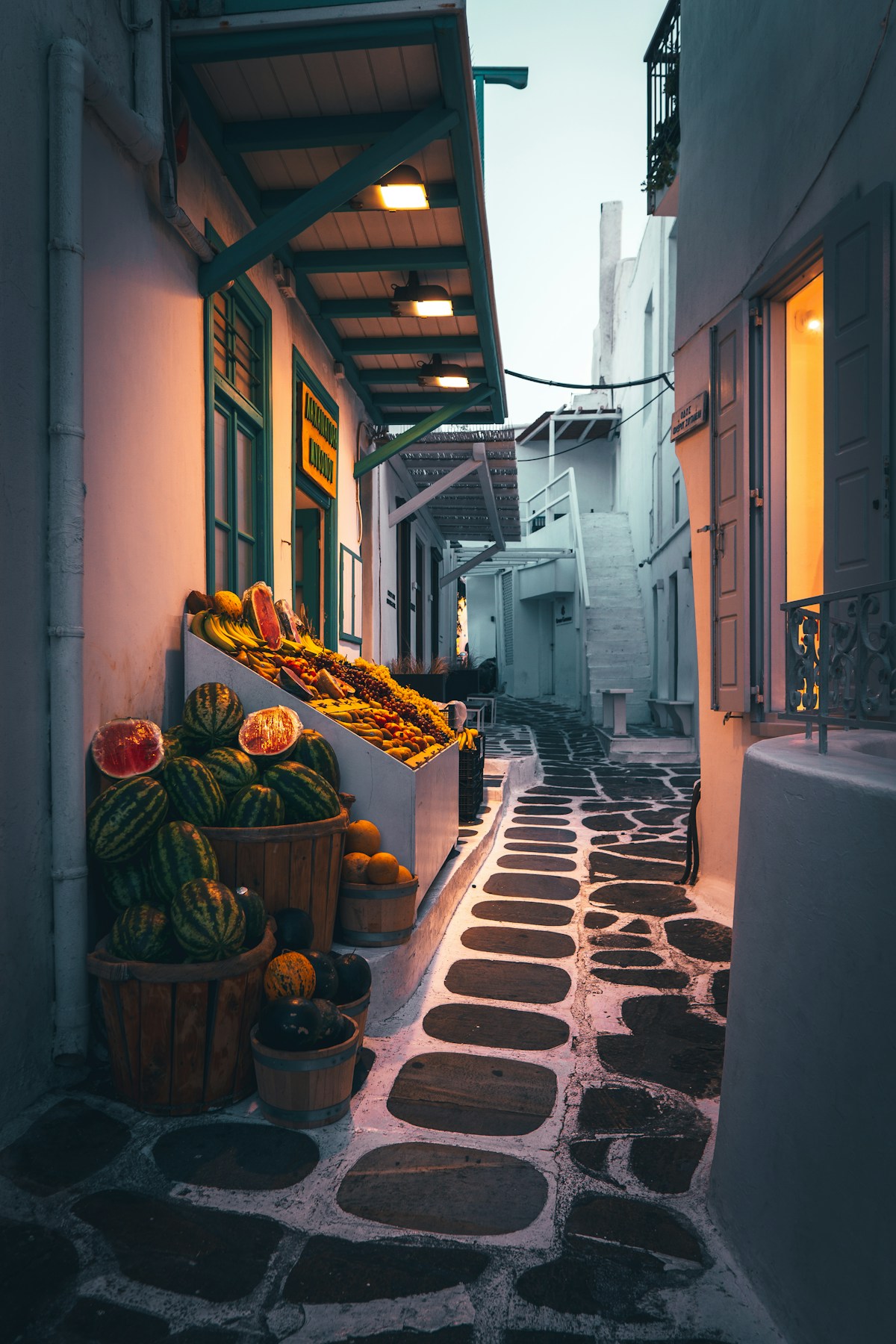
Mykonos is better known for its nightlife than its kitchen, which is exactly why the food here surprises most visitors. The island has a distinct culinary identity rooted in the Cyclades - spicy aged cheese, fresh Aegean fish, loukoumades straight from the fryer, and local wines made from grapes grown on terraced hillsides above the sea. A food tour cuts through the tourist-facing tavernas and takes you to where locals actually eat. All prices are approximate as of 2026.
Top Tours at a Glance
Here’s a quick comparison of top-rated tours on GetYourGuide:
| Tour | Duration | Price (from) | Group Size | Highlights |
|---|---|---|---|---|
| Mykonos Town Morning Food Walk | 3.5 hrs | from $72/person | Small group (max 8) | Loukoumades, kopanisti, grilled octopus |
| Cycladic Kitchen Wine & Tasting Tour | 4 hrs | from $88/person | Small group (max 10) | 4 local wines, aged graviera, Mykonos honey |
| Mykonos Cooking Class with Market Visit | 4 hrs | from $118/person | Small group (max 6) | Cycladic salad, grilled fish, loukoumades |
| Mykonos Street Food Tour | 2.5 hrs | from $58/person | Small group (max 12) | Tiropitakia, local bakeries, hidden lane stops |
| Mykonos Food & Windmills Walking Tour | 3 hrs | from $65/person | Group | Chora food culture, Alefkandra, harbour fish |
Browse all Mykonos food tours → GetYourGuide
What Makes Mykonos Cuisine Different
The island sits in the middle of the Aegean, which historically meant limited agricultural land but excellent fishing grounds and proximity to several other islands with distinct food traditions. The defining product is kopanisti - a PDO-protected soft cheese with a spicy, fermented edge that can only be made on the Cyclades. The fermentation relies on ambient island bacteria and temperature cycles that cannot be replicated elsewhere. You will taste it in tavernas, at delis, and on every serious food tour.
Fresh fish and seafood are the other constant. Mykonos Town’s small fishing harbour delivers catches each morning. Octopus is dried on wooden poles outside tavernas and slow-grilled to order. Red mullet (barbounia), sea bream (tsipoura), and small shrimp from the clear water near Rhenia are among the options that reach the table the same day they are caught.
The local wine tradition centres on Assyrtiko - a white grape variety native to the Cyclades that produces high-acidity wines with a mineral character suited to fish and cheese. A handful of small producers on Mykonos cultivate it in small quantities for local consumption.
Guided Food Tours in Mykonos Town
Mykonos Food Stories runs a 3.5-hour morning walk (approximately EUR 75 per person, maximum 8 guests) starting at the Fabrika bus terminal and moving into the winding lanes of Mykonos Town (Chora). Stops include a loukoumades producer where you watch the dough fried to order and eat them immediately, a deli specialising in kopanisti and local cured meats, a baker who makes tiropitakia (small cheese pastries) from local feta and phyllo, and a harbour-side fish taverna for a tasting plate of grilled octopus and fried whitebait.
Duration: 3.5 hours
Meeting point: Fabrika bus terminal, south end of Mykonos Town
What’s included: All tastings, guide, small glass of local wine at the final stop
Group size: Maximum 8
Best time: 9am departure, Tuesday through Sunday (markets are quieter on Monday)
Cycladic Kitchen Tours offers a 4-hour experience (approximately EUR 90 per person) that combines the market walk with a structured tasting flight of four local wines - two Assyrtiko expressions from different producers, one Moschato Samou (a sweet dessert wine), and one aged wine from the Tinos cooperative. Wine is poured alongside kopanisti, aged graviera from Naxos, and honey from Mykonos thyme hives. The wine focus suits visitors already familiar with Greek food who want to go deeper into the drinks.
Book either tour via GetYourGuide or direct with the operator. Both require 48-hour advance booking in peak season (July–August).
Loukoumades and Street Food
The best loukoumades in Mykonos Town are made at small dedicated shops rather than general cafes. Look for the ones with a queue before 11am - the fryer is freshest early and the honey-to-dough ratio tends to be better at the shops that have been doing this for decades rather than the ones with new signage.
A full portion (approximately EUR 5 to EUR 7) provides more than enough for one person. Order honey and cinnamon first before trying variations - the classic version remains the most balanced.
Tiropitakia - small triangular feta pastries - are the other street option worth eating to order rather than from a display case. Several bakeries in the back lanes behind the Paraportiani church make them fresh in the morning. Budget approximately EUR 1.50 to EUR 2.50 each.
Fish Tavernas: How to Find the Honest Ones
Mykonos has a significant volume of tourist-facing restaurants that import fish from the mainland and price it as if it were local. The simplest way to avoid them is to look for tavernas displaying a price per kilo on a board outside - this indicates they are selling fresh whole fish. Restaurants that only list per-dish prices with no weight indication are often serving portion-controlled frozen product.
Taverna Nikos near the waterfront in the old town (approximately EUR 30 to EUR 45 per person for a full meal) has maintained the same approach for decades - fresh fish at the front displayed on ice, price per kilo marked, grilled simply with lemon and olive oil. It is busy at 8pm and 9pm; arrive at 7pm or after 10pm to avoid the longest waits.
Kiki’s Tavern in Agios Sostis, north of town, operates on a cash-only, no-reservation basis and closes when the food runs out - usually by 3pm. The midday menu of grilled meats, salads, and freshly baked bread draws a mix of locals and visitors who have been told about it by other locals. Arrive between 1pm and 1:30pm. There is no phone number.
Cooking Classes
For those who want to leave Mykonos with a recipe rather than just a memory, two operators offer hands-on classes with market components.
Cook in Mykonos (approximately EUR 120 per person, maximum 6 guests) starts with a morning market visit to select ingredients, then moves to a private terrace kitchen for a 2-hour cooking session. The menu varies by season but consistently includes a Cycladic salad (kopanisti, local tomatoes, capers), a grilled fish course, and loukoumades for dessert. The guide explains the sourcing decisions at each market stop, which adds context that standalone tours cannot always give.
Mykonos Cooking Experience (approximately EUR 100 per person) runs a similar format with a slight emphasis on traditional pastry - participants make tiropitakia and a version of galaktoboureko (custard pastry) alongside the main dishes. Suited to visitors with an interest in baking.
Both classes run May through October and require booking at least 72 hours ahead.
Best Season for a Mykonos Food Tour
May, June, and September offer the best conditions - local markets are stocked, temperatures are comfortable for walking, and the morning hours in Mykonos Town are genuinely quiet before the cruise ship excursions arrive. July and August tours still run well but the lanes are significantly more crowded and early morning departures (before 9am) are noticeably better than late morning.
October is worth considering for serious food travellers - the tourist infrastructure thins out, fish is still fresh from the Aegean, and kopanisti is at its most mature after a summer of ripening. Some tour operators stop in late October, so confirm availability before planning a late-season trip.
Booking a Mykonos Food Tour
Browse Mykonos food tours on GetYourGuide and filter by “morning” and “small group” to narrow results to the better-structured options. Confirm that all tastings are included in the listed price - some tours charge separately at individual stops, which can add EUR 20 to EUR 30 to the stated cost. The tours listed above are fully inclusive.
Need a base? Search hotels in Mykonos.