Best Day Trips from Athens: Delphi, Sounion, Islands & More
Book an experience
Book this activity
These are the top-rated activities for this area — book ahead to lock in your preferred date.
Athens sits at the centre of one of Europe’s richest archaeological and natural landscapes. Within a 3-hour radius you have the oracle sanctuary at Delphi, the wildest temple in Greece at Cape Sounion, car-free island towns, the medieval Venetian town of Nafplio, and the rock monasteries of Meteora. Here’s what’s worth the journey, with transport options, operators, and honest assessments of how much time each deserves. All prices are approximate as of 2026.
Delphi
The ancient sanctuary of Delphi sits at 570m on the slopes of Mount Parnassus, 2.5 hours northwest of Athens. For 900 years it was the most influential religious site in the Greek world — kings and city-states sent delegations to consult the Oracle before major decisions. What remains is the Sacred Way (the processional path up to the Temple of Apollo), the ancient theatre with views down the valley, the stadium, and the Delphi Museum, which holds the best surviving bronze statue from ancient Greece, the Charioteer of Delphi.
KTEL Buses from Athens Liosion Terminal run to Delphi (2.5 hours, EUR 16.60 each way). Site entry EUR 12, museum EUR 12 (combined EUR 20). The bus is adequate but limits your time at the site — you need to leave by 4pm to catch the last service back.
Key Tours runs a full-day guided coach trip from EUR 65 per person. Departs 8am from Syntagma, includes a licensed guide at the site, the museum, a stop in the village of Arachova (famous for its ceramics and skiing — the village is quiet in summer), and entry fees. Returns around 8pm.
Athens Day Tours offers private car and guide to Delphi from EUR 250 for up to 4 people. Gives you flexibility to spend longer at the museum or stop at the Corycian Cave.
Duration: Full day (10–12 hours door to door from Athens)
Difficulty: Moderate — the archaeological site involves a steep uphill walk
Best season: April–June and September–October. Delphi is at altitude (cooler in summer, possible snow in winter), but July and August are busy and hot.
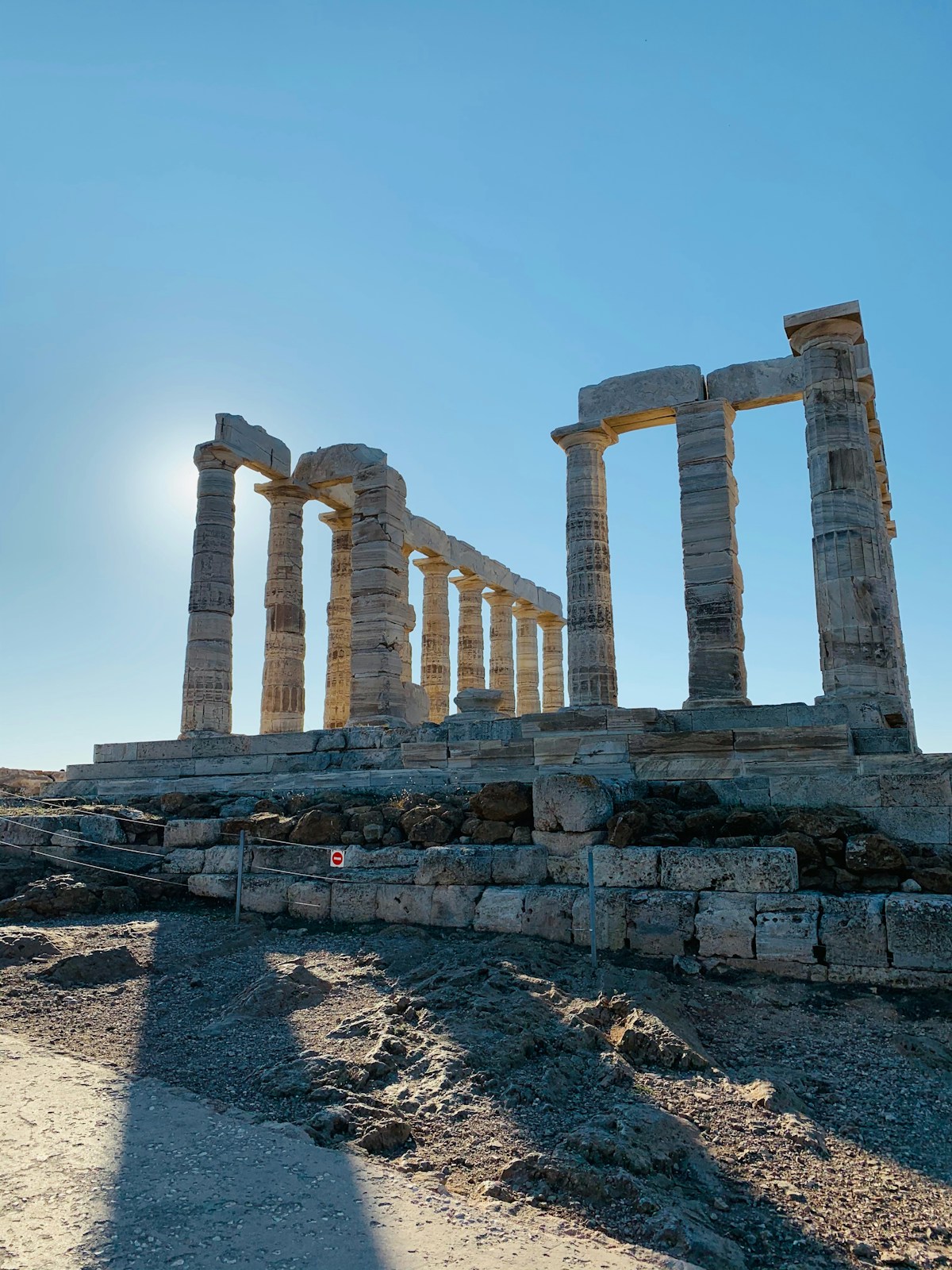
Cape Sounion and the Temple of Poseidon
Cape Sounion is 70km south of Athens on the tip of the Attica peninsula. The Temple of Poseidon, built in 444 BCE, sits on a sea cliff with the Aegean on three sides — the location is arguably more dramatic than the temple itself. Byron carved his name into one of the columns in 1810 (the scratch is still visible). The sunset here is one of the best in continental Greece.
KTEL Buses from Athens Pedion tou Areos terminal run along the coastal road to Sounion (1.5–2 hours, EUR 6.60). Return buses run until 8pm. Entry to the temple EUR 8.
Athens by Night / Sounion Sunset Tour — multiple operators run afternoon coach trips from EUR 25–35 per person, timed to arrive at Sounion 1.5 hours before sunset. Simple, reliable, and significantly cheaper than private transfer.
Private Car Hire from Athens: the coastal road (Route 91 via Varkiza and Vouliagmeni) is one of the most enjoyable drives in Attica. If you’re hiring a car anyway, add Sounion and the Attica Riviera to the route.
Duration: Half day (5–6 hours) from Athens
Difficulty: Easy
Best time: Late afternoon for sunset. Summer midday is exposed and hot.
Best season: Year-round — the site is open daily, and winter sunsets here are excellent.
Hydra, Poros and Aegina (Saronic Islands)
The three main Saronic islands are all reachable within 30 minutes to 2 hours from Piraeus port, making them the most practical island day trips from Athens.
Hydra — 2 hours by Flying Dolphin hydrofoil (EUR 30 one way from Piraeus). No motor vehicles on the island — horses and donkeys are the only transport. The port town is genuinely beautiful: neoclassical mansions, a natural harbour, and streets that go quiet by 10am once the day-trippers have left. Walk to Kaminia, the next cove, for the best sea swimming. The monasteries above the town are undervisited and worth the 45-minute walk up.
Aegina — 40 minutes by ferry (EUR 14) or 25 minutes by hydrofoil (EUR 22). The island has three distinct draws: the beach town of Aegina, the Temple of Aphaia (one of the best-preserved Doric temples in Greece, dating to 500 BCE), and the agricultural interior planted with pistachio orchards. Aegina is the source of most of Greece’s pistachio production.
Poros — 1 hour by hydrofoil (EUR 22). Quieter than Hydra, closer than Aegina in feel. The town is a pleasant wander but there’s less to see than the other two. Best combined with a night on Hydra.
Greek Island Day Cruises — operators like Saronic Ferries and Hellenic Seaways run daily services from Piraeus. Several tour operators offer combined day trips to 2–3 islands from EUR 75–120 per person including a lunch stop and guide on Aegina.
Duration: 6–10 hours depending on island and pace
Difficulty: Easy
Best season: April–October. Summer ferries run frequently; winter service is reduced.
Nafplio and Epidaurus
Nafplio, 140km southwest of Athens in the Peloponnese, was Greece’s first capital after independence in 1821. The town has a Venetian fortress (Bourtzi) in the harbour, an 18th-century citadel (Palamidi) above on the cliff requiring a 999-step climb, and a grid of neoclassical streets that are among the most pleasant in mainland Greece.
Combine with Epidaurus (30km away) for the ancient theatre — built in 340 BCE, seating 14,000, with acoustics so precise that a coin dropped in the centre can be heard from the top row. Plays and concerts still run here in summer.
KTEL Buses from Athens Kifissos Terminal run to Nafplio (2.5 hours, EUR 15). From Nafplio, local buses run to Epidaurus (30 minutes, EUR 2.50). Entry to Epidaurus EUR 12.
Athens Highlights Tours runs a Nafplio and Epidaurus full-day trip from EUR 55 per person, including guide at both sites and entry fees. Departs 8am, returns around 8:30pm.
Private driver from Athens to Nafplio (via the Corinth Canal, worth a stop) from EUR 180 for a day hire — the Corinth Canal stop adds 20 minutes and costs nothing to view.
Duration: Full day (10–12 hours)
Difficulty: Easy (except the Palamidi climb — 999 steps)
Best season: Year-round. Epidaurus summer theatre festival runs July–August.
Meteora
Meteora’s monasteries are built on top of freestanding sandstone pinnacles 400m high — six still active, all still inhabited by monks or nuns. The landscape is extraordinary; the monasteries are genuinely important repositories of Byzantine manuscripts and iconography.
The trip is long from Athens (4 hours by car, 4.5 hours by train). We firmly recommend an overnight stay in Kalambaka town below the rocks rather than a day trip.
Train from Athens (Larissa Station) to Kalambaka via Palaiofarsalos (4.5 hours, EUR 20–30). Three departures daily. This is the most scenic option — the route passes through the Vale of Tempe and the Thessalian plain.
Day trip by bus from Athens via KTEL: approximately 4.5 hours each way, EUR 28 return. Leaves you 3–4 hours at Meteora, which is enough for 2 monasteries.
Dolphin Hellas runs a Meteora day tour from Athens from EUR 85 per person (transport + guide). Departure 6am, return 10pm. The guide adds significant context to the Byzantine ecclesiastical history but the day is very long.
Duration: Full day from Athens (14–16 hours door to door) — but overnight strongly recommended
Difficulty: Moderate — monastery access involves steep steps (some monasteries require 200+ steps)
What’s included: Entry fees to monasteries (EUR 3 each, 6 monasteries open to visitors)
Best season: Spring and autumn. Summer works but the exposed rocks are hot at midday.
Booking Tips
KTEL buses for Delphi and Nafplio should be checked online 2–3 days ahead in summer — they’re popular and fill. Saronic island hydrofoils rarely need advance booking except on summer weekends. Guided day trips to Delphi and Meteora are worth booking a week ahead in July and August. For the Saronic islands, just show up at Piraeus Gate E8 or E9 and buy a ticket — services run hourly or better in summer.
If you’d prefer a guided tour for any of these destinations, our best tours in Athens guide covers Acropolis skip-the-line options, food walks, sunset sailing, and operator-led Delphi and Meteora excursions.
Frequently Asked Questions
- What's the easiest day trip from Athens?
- Cape Sounion is the easiest — 70km by road (1.5 hours), regular buses from Athens Pedion tou Areos terminal, and no complex logistics at the site itself. The Temple of Poseidon above the sea is one of Greece's most dramatic single views.
- Can I do Meteora as a day trip from Athens?
- Technically yes, but it's a 4-hour drive each way and you'll spend most of the day in a bus. Two nights in Kalambaka lets you do both the sunset and sunrise views on the rocks — the experience is incomparably better. Treat Meteora as an overnight destination.
- Which Saronic island makes the best day trip?
- Hydra is the most rewarding — no cars, beautiful port town, good walks to the interior monasteries. Aegina suits those interested in the Temple of Aphaia and pistachio orchards. Poros is fine but less distinctive. Hydra takes longer to reach (2 hours by Flying Dolphin), which self-selects for visitors who want more than a quick look.
- Is the Nafplio day trip worth doing?
- Yes — Nafplio is one of the most attractive small towns in Greece, with the Bourtzi fortress in the harbour and the Palamidi castle above the town. Combine it with Epidaurus (30 minutes away) for one of the best ancient theatres in Greece. A car makes this day trip significantly better than the bus option.
Ready to explore?
Browse hundreds of tours and activities. Book securely with free cancellation on most options.
Browse on GetYourGuide →We may earn a small commission — at no extra cost to you.