Lesvos Travel Guide: Olive Groves, Molyvos and Aegean Coast
Lesvos guide: Mytilene capital, Molyvos medieval village, Europe's finest olive oil, spring birdwatching, and ferry connections from Athens and Chios.
Lesvos is the third-largest Greek island and one of the most culturally substantial - a place with genuine intellectual heritage (the poet Sappho was born here in the 7th century BC), a PDO olive oil industry of European significance, and a birdwatching reputation that draws specialists from across the continent each spring. It is not a mainstream package destination, which is precisely its appeal. The coastline ranges from north-facing pebble coves to volcanic rock formations in the southwest, and the interior is a working agricultural landscape of olive groves, fishing villages, and stone-built market towns.
The island sits close to the Turkish coast - in places only 9 kilometres of water separate it from Anatolia - and the proximity shapes the architecture, cuisine, and character in subtle ways: the food includes more Turkish-influenced dishes than most of the Cyclades, and the landscape of the eastern coast feels more Aegean than Ionian.
Mytilene - the Capital
Mytilene, the island’s capital and port, is a working Greek town rather than a tourist centre. The waterfront promenade runs along a double harbour - one side faces north, the other south - with the old town rising behind. The Byzantine fortress (kastro) at the north end of the promontory dates from the 6th century with substantial Genoese additions; entry approximately €4 as of 2026, and the views over both harbours and towards the Turkish coast are among the best vantage points on the island.
The town has a lively covered market (agora), a good Archaeological Museum with finds from across Lesvos including Classical and Hellenistic sculpture, and the kind of café and ouzo bar culture you find in functioning port towns rather than resort strips. The best places to eat are away from the main waterfront - the streets behind the market have traditional tavernas serving local specialities including sardines from Kalloni Bay, locally cured olives, and ouzo from the island’s distilleries (Lesvos is the ouzo capital of Greece: Varvayannis and Plomari Isidoros Arvanitis are two of the most respected producers).
Ferry services to Piraeus, Chios, and Turkey all depart from Mytilene harbour. For a base near the port and the evening restaurant strip, see hotels in Mytilene.
Molyvos - the Medieval Village
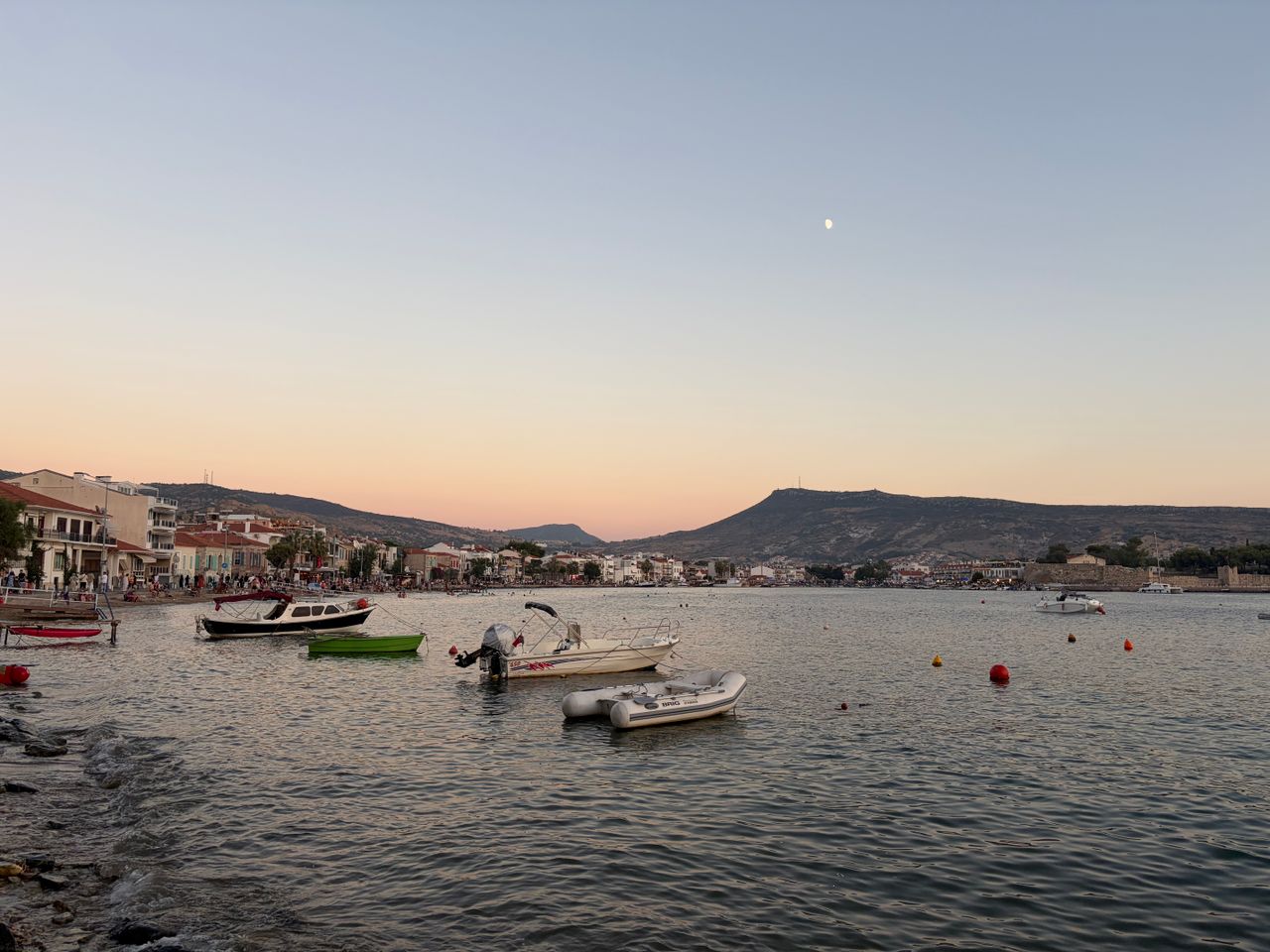
Molyvos (the medieval name; it is also called Mithymna) is the island’s most photographed place. The village climbs from a small harbour - still used by fishing boats - up through cobbled Ottoman-era lanes to a Genoese castle at the summit. The castle dates primarily from the 14th century with Byzantine foundations; it has good views over the north coast toward Turkey and is open to visitors for approximately €4 as of 2026.
The village’s upper lanes are an unusually intact example of Aegean vernacular architecture - stone houses with overhanging upper floors, wooden shutters, and geranium-filled courtyards. Many have been converted to accommodation. The harbour area below has several good fish restaurants. Molyvos beach, a mix of pebble and coarse sand, extends south from the harbour. To sleep inside the castle village, browse hotels in Molyvos.
Petra, 5 kilometres south of Molyvos, is a larger village with a good beach and a distinctive feature: the church of Agios Nikolaos, built on a solitary volcanic rock rising from the village centre, reached by 114 steps carved into the rock face.
Olive Oil Production
Lesvos has approximately 11 million olive trees - one of the highest densities anywhere in the Mediterranean - and olive oil is the island’s economic backbone. The trees are predominantly of the Kolovi variety, which produces a mild, fruity oil with low acidity that has held PDO status since 1994.
The area around Agiasos in the central interior has some of the oldest olive groves, with trees dating back several centuries. Agiasos itself is worth visiting - a well-preserved mountain village with a lively carnival tradition and a Byzantine monastery housing an icon attributed to Saint Luke. The olive oil cooperative at Polichnitos runs farm visits in season (approximately €10–15 per person including tasting, check locally for current schedules).
Plomari on the south coast is the centre of Lesvos’ ouzo industry - several distilleries offer tours and tastings, with the Varvayannis distillery the most visited. Ouzo and olive oil make the obvious purchases to bring home.
Birdwatching and Spring Migration
Lesvos is a genuine ornithological event during April and May. The island’s position near the eastern edge of the Aegean places it on a major flyway between Africa and northern Europe, and the habitat diversity - olive groves, wetlands, coastal scrub, and pine forest - supports an extraordinary range of species.
The Kalloni salt pans in the island’s centre are the prime site: a shallow coastal lagoon and associated wetlands that attract waders, flamingos, herons, and wildfowl. Over 270 species have been recorded on Lesvos in total; regular spring breeders include Krüper’s nuthatch (found in Greece only on Lesvos), Cinereous bunting, Olive-tree warbler, and Masked shrike. Raptors in passage include Short-toed eagle, Montagu’s harrier, and Levant sparrowhawk.
Specialist birdwatching tours typically run late April to mid-May. The area around Sigri on the west coast and the Petrified Forest (a protected geological park of ancient fossilised tree trunks, approximately 20 million years old) adds a secondary attraction to the western circuit.
Getting to Lesvos
By air: Mytilene Airport (MJT) receives direct flights from Athens year-round (55 minutes, from approximately €45 one-way). In summer there are direct charter flights from UK, German, and Dutch airports. Aegean Airlines and Sky Express cover the Athens route; Olympic Air adds capacity in peak season.
By ferry: Piraeus to Mytilene takes approximately 12 hours overnight. Hellenic Seaways and Aegean Speed Lines cover the route with 3–5 sailings per week. The route often calls at Chios en route. Book in advance in summer. There are also shorter crossings from Chios (approximately 3 hours) on smaller vessels.
To/from Turkey: Regular ferry crossings from Mytilene harbour to Dikili (approximately 1 hour) and Ayvalik (approximately 1.5 hours) operate in summer and year-round on reduced frequency. Fares approximately €30–45 one-way. Check schedules at the Mytilene port office or with Taşucu Lines/local operators.
Where to Stay in Lesvos
Mytilene (the capital) is the practical hub with ferry connections, the best restaurants, and airport access. Molyvos (Mithymna) in the north is the most atmospheric village on the island, a medieval castle town above a small harbour, and suits those wanting character over convenience. The south coast around Vatera has the longest beach and more affordable self-catering options.
Budget (from approximately €45–75/night)
Lesvion Hotel in Mytilene is a straightforward mid-budget option in the capital, well positioned for the port and the evening restaurant strip. Rooms are clean and functional with air-conditioning. From approximately €60/night as of 2026.
Budget rooms in Molyvos are available in the upper village lanes in converted stone houses. The best have small terraces and views over the rooftops toward the sea. From approximately €55/night as of 2026.
Self-catering studios near Vatera Beach on the south coast provide affordable accommodation near one of the longest sandy beaches in the eastern Aegean, suited to those with a hire car. From approximately €50/night as of 2026.
Mid-range (from approximately €80–150/night)
Pyrgos of Mytilene is a boutique hotel in a restored mansion in Mytilene town with high ceilings, period detail, and a garden. It is the most characterful mid-range option in the capital. From approximately €130/night as of 2026.
Molyvos I Hotel sits directly above the Molyvos harbour with views of the medieval castle. Rooms are comfortable and the castle and village lanes are walkable from the door. From approximately €100/night as of 2026.
Ino Village Hotel in Vathy area is a comfortable mid-range property with a pool, close to Pythagorion and the main archaeological sites. From approximately €90/night as of 2026.
Luxury (from approximately €180/night)
Loriet Hotel in Mytilene is set in an early 20th-century neoclassical mansion about two kilometres north of the harbour, with high ceilings, period furnishings, and a garden pool. It is the island’s most elegant property and the standout choice for those who appreciate historic architecture over resort facilities. From approximately €160/night as of 2026.
Heliotopos Hotel near Mytilene offers sea-view suites with a pool and spa services at the upper end of the island’s accommodation range. From approximately €195/night as of 2026.
Search hotels in Lesvos on Booking.com
Rates move sharply with the season, so check live hotel availability and prices for Lesvos before you fix your dates.
Best Time to Visit
April and May are the best months for birdwatching, wildflowers, and comfortable travel. Temperatures 18–24°C, crowds minimal, and the olive groves are green. Spring is when Lesvos is at its most beautiful before summer heat arrives.
June and September suit beach and culture tourism - sea temperature climbs to 24–26°C, the pace is relaxed, and accommodation prices are below July–August peaks.
July and August are the hottest months (30–35°C) and the busiest, though Lesvos never reaches the saturation of Santorini or Mykonos. Beaches on the south coast around Vatera (one of the longest sand beaches in the eastern Aegean, approximately 7km) are popular with Greek families.
Practical Notes
Lesvos is a large island - approximately 70km north to south - and a hire car is strongly recommended for exploring beyond Mytilene and Molyvos. Rental from Mytilene airport is approximately €35–55 per day in peak season. The island’s bus network covers main towns but schedules are limited for village-hopping.
The island has two main hospital facilities in Mytilene. Cash remains useful - smaller villages have limited ATM access. Most restaurants and accommodation accept cards in tourist areas.
Book Lesvos tours and experiences through GetYourGuide. Pick up a Greece eSIM before you travel.
Frequently Asked Questions
- How do I get to Lesvos from Athens?
- Lesvos (Mytilene) has an airport with frequent direct flights from Athens (approximately 55 minutes, from around €45 one-way as of 2026). Sky Express, Aegean Airlines, and Olympic Air cover the route, with multiple daily departures in summer. Ferry services from Piraeus take approximately 12 hours overnight and connect via Chios; conventional ferries run several times per week. For most visitors, flying is the practical choice.
- How close is Lesvos to Turkey?
- Very close - the Turkish coast at Dikili is approximately 9 kilometres from the southeast tip of Lesvos, and the city of Ayvalik is clearly visible from the island's eastern villages on clear days. There are regular ferry crossings between Mytilene and Dikili, and between Mytilene and Ayvalik (approximately 1–1.5 hours, around €30–45 one-way as of 2026). Kusadasi and Ephesus are approximately 3 hours from Dikili by road, making them reachable as a longer day trip via Turkey.
- Is Lesvos good for birdwatching?
- Lesvos is one of Europe's premier birdwatching destinations. Its position on the eastern edge of the Aegean makes it a major migration bottleneck for birds moving between Africa and Europe. Spring migration (April–May) is the peak period, when over 270 species have been recorded including Krüper's nuthatch, Cinereous bunting, Olive-tree warbler, and large raptors. The salt pans at Kalloni and the river mouths attract waders and wildfowl. Specialist tour operators run dedicated birdwatching trips to the island each spring.
- What is Lesvos olive oil like?
- Lesvos olive oil has PDO (Protected Designation of Origin) status and is considered among Greece's finest. The island has approximately 11 million olive trees - more per head of population than almost anywhere in the world - and production is central to the local economy. The oil is predominantly pressed from the Kolovi and Adramytini varieties, producing a fruity, mild oil with low acidity. You can buy directly from producers at farms around Agiasos and Plomari, or from specialist shops in Mytilene town. Prices are typically €8–15 for a 500ml bottle of premium cold-pressed oil as of 2026.
- What is the best village to stay in on Lesvos?
- Molyvos (also called Mithymna) in the north is the most atmospheric choice - the medieval village rises above a functioning fishing harbour with a Genoese castle at the summit. It is the postcard image of Lesvos and suits relaxed stays with good access to the north coast. Mytilene town offers the most amenities, restaurants, and transport connections. Petra (just south of Molyvos) and Plomari on the south coast are quieter alternatives with loyal repeat visitors.
Book an experience
Top experiences in Lesvos
Explore the best tours and activities in Lesvos, with instant confirmation and free cancellation on most bookings.
Planning to visit? Browse hotels in Lesvos, free cancellation on most bookings.