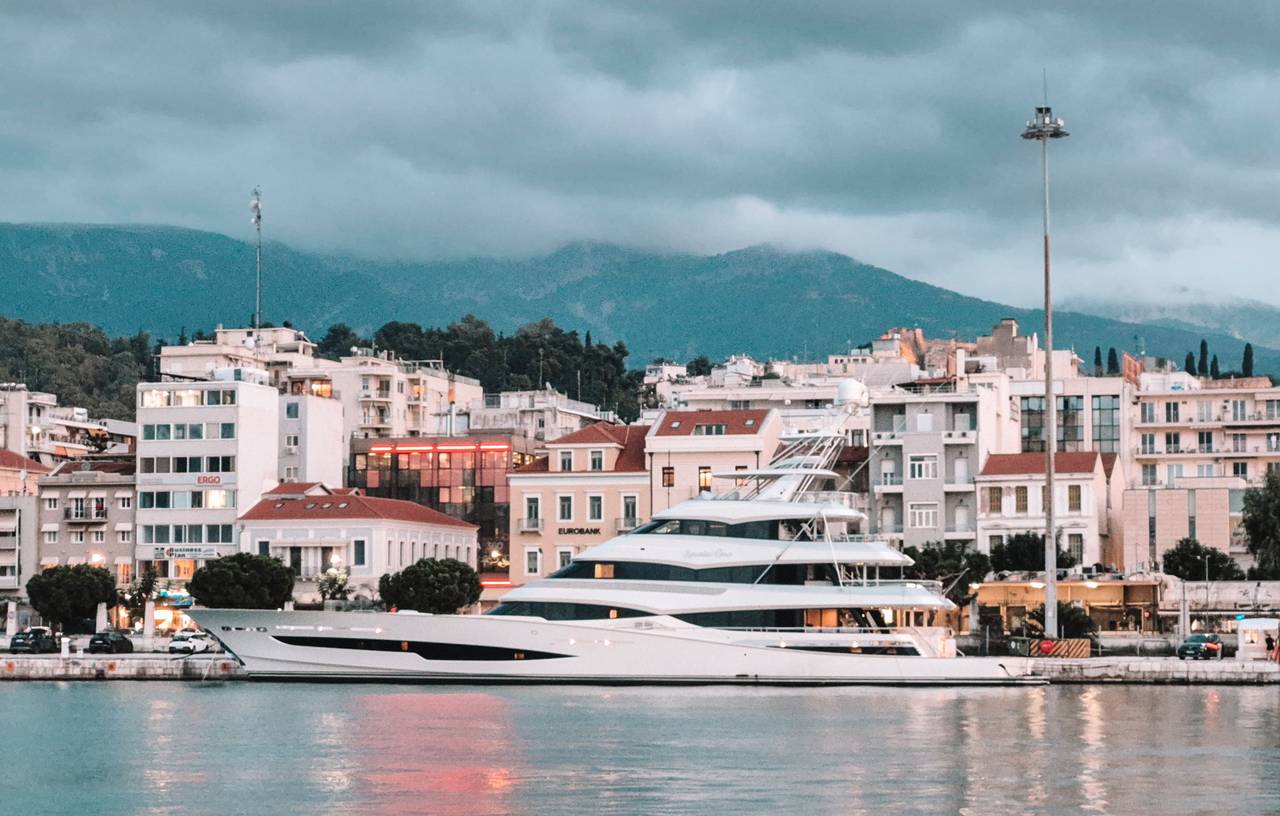
Patras is more than a ferry port waiting room. The city has a Byzantine fortress with commanding views over the Gulf of Corinth, the largest Orthodox cathedral in Greece, a restored Roman theatre, and one of Europe’s biggest carnival traditions. It is also a practical base for day trips to Delphi and Ancient Olympia. Here is what is worth your time in Patras, with entry fees, opening hours, and practical details.
Guided Experiences and Tours in Patras
| Tour | Duration | Price (from) | Highlights |
|---|---|---|---|
| Patras City Walking Tour | 2.5 hrs | from €35/person | Byzantine Kastro, Agios Andreas Cathedral, old quarter |
| Peloponnese Highlights Day Tour from Patras | 8 hrs | from €65/person | Ancient Olympia or Delphi with local guide |
| Patras Carnival Experience (seasonal) | Half day | from €45/person | Parade route, costume hire, waterfront festivities |
Browse all Patras and Peloponnese tours → GetYourGuide
Byzantine Kastro of Patras
The Kastro is the most rewarding single thing to do in Patras. The fortress sits on a hill above the old quarter, roughly 80 metres above sea level, with panoramic views across the Gulf of Corinth and the Rion Strait. On a clear day you can see the mountains of Nafpaktia and Fokida to the north and the Peloponnese plateau to the south.
The structure has Roman foundations from the early 1st century AD but was substantially built under Byzantine Emperor Justinian in the 6th century. Later modifications came under the Franks (13th century) and Ottomans (15th–16th century), leaving a layered fortress that reflects every major period of Patras’ history.
What to see: The outer walls and the interior courtyards are the main draw. The theatre area inside the walls is used for summer performances. The highest point of the battlements offers the best views.
Practical: Entry is free. Open during daylight hours (approximately 8am–8pm in summer, 8am–5pm in winter - hours vary; check locally). The walk up from Psila Alonia square takes 10 minutes on a paved path. Wear comfortable shoes - the internal paths are uneven.
Agios Andreas Cathedral
The Cathedral of Saint Andrew (Mitropolis) stands on the waterfront south of the ferry port, completed in 1979 after decades of construction. It is the largest Orthodox church in Greece by capacity (5,500 worshippers) and one of the most architecturally imposing religious buildings in the country.
The cathedral holds particular significance: Patras claims to be the site where the Apostle Andrew was martyred in 60 AD, and the church houses his relics - the skull of Saint Andrew and part of the cross on which he was crucified. The reliquary is displayed behind the iconostasis and is accessible to visitors.
What to see inside: The frescoes covering the dome and nave, the elaborate gilded iconostasis, and the reliquary of Saint Andrew. The sheer scale of the interior - the dome reaches 38 metres at its apex - makes an impression even for visitors with no particular interest in Orthodox Christianity.
Practical: Entry is free. Open daily, typically 7am–1pm and 5pm–8pm (hours vary; the cathedral closes for afternoon services). Modest dress required - shoulders and knees covered; a scarf or wrap is useful.
Roman Odeon (Odeon of Patras)
The Odeon is a restored Roman theatre a short walk from the Kastro, built in the 1st or 2nd century AD and partially preserved under medieval fortifications until excavated in the 20th century. The seating area (cavea) and the stage building (scaenae frons) are substantially intact.
The Odeon is used for outdoor performances in summer (theatre, music, and cultural events through the Patras International Festival - check locally for programming). Outside performance season, it is open as an archaeological site.
Practical: Entry is typically free or €2–3 during the open archaeological season (hours vary; approximately 8am–3pm Tuesday–Sunday). Check with the local tourism office for current access. Located on Agiou Andreou Street, a 5-minute walk from the Kastro path entrance.
Psila Alonia Square and the Old Quarter
Psila Alonia is the main square of the upper old quarter, shaded by large plane and palm trees and ringed with kafeneions and cafés. It is the social heart of the traditional Patras that exists outside the port and ferry tourist circuit. The atmosphere is unhurried, and the square fills with locals in the late afternoon and evening.
The lanes running downhill from Psila Alonia toward the waterfront pass neoclassical mansions from the 19th-century commercial prosperity (many now in various states of restoration), small Orthodox churches, and the occasional surviving traditional shop front. It is worth an hour on foot without a fixed plan.
Carnival Season Events
Patras Carnival is the defining cultural event of the city’s year. Running from mid-January to Clean Monday, the season builds through themed balls, children’s parades, and neighbourhood parties before the climax weekend:
Saturday night: The night parade through the city centre, with brass bands, costumed groups, and floats. Gerokostopoulou Street and Othonos-Amalias Avenue are the main routes.
Sunday afternoon: The grand float parade - the main event of the Carnival season. Satirical papier-mâché floats (some reaching several stories), marching bands, and tens of thousands of spectators in costume pack the parade route. Arrive early to secure a position along Gerokostopoulou Street.
Sunday to Monday night: The burning of the Carnival King effigy at the St Nikolaos pier in the harbour, followed by a fireworks display over the water.
Practical notes: Accommodation books out months ahead for the final weekend - plan early. The city is crowded but the atmosphere is genuinely exceptional. Most spectators dress in costume; a basic costume is easy to put together from the shops in the old quarter in the days before the event.
For 2027 dates, the full parade schedule, Grand Parade route, and accommodation tips, see our Patras Carnival 2027 guide.
Waterfront Walk and Marina
The Patras waterfront stretches along Othonos-Amalias Avenue from the ferry port south toward Agios Andreas Cathedral. The new marina development (Neos Limenas) at the port end is the most active stretch, with cafés, bars, and a small promenade. The view across the Rion Strait to the Rio-Antirio Bridge from the waterfront at sunset is one of the better views the city offers.
The Rio-Antirio Bridge itself is worth seeing at close range from the Rio side (approximately 8 km from central Patras by car). The 2.9 km cable-stayed span - one of the world’s longest - is most dramatic from the shoreline below the towers.
For the full city overview including ferry connections, where to stay, and getting around, see our Patras travel guide. For day trips from Patras, including Delphi and Ancient Olympia, see our day trips guide. Browse hotels in Patras - central and port-area options compared.
See Also
- Patras Travel Guide - ferry port, Carnival overview, getting to Patras
- Best Restaurants in Patras - harbour fish tavernas, ouzeries, and budget souvlaki
- Day Trips from Patras - Delphi, Ancient Olympia, and the Rio-Antirio Bridge
- Delphi Travel Guide - Temple of Apollo, the Oracle, and the Delphi museum
- Ancient Olympia Guide - the sanctuary where the Olympic Games began
- Patras Carnival 2027 - Grand Parade (14 March), Night Parade, Children’s Carnival, and Bourboulia
- Peloponnese Road Trip - Patras as a start point for the full peninsula circuit